
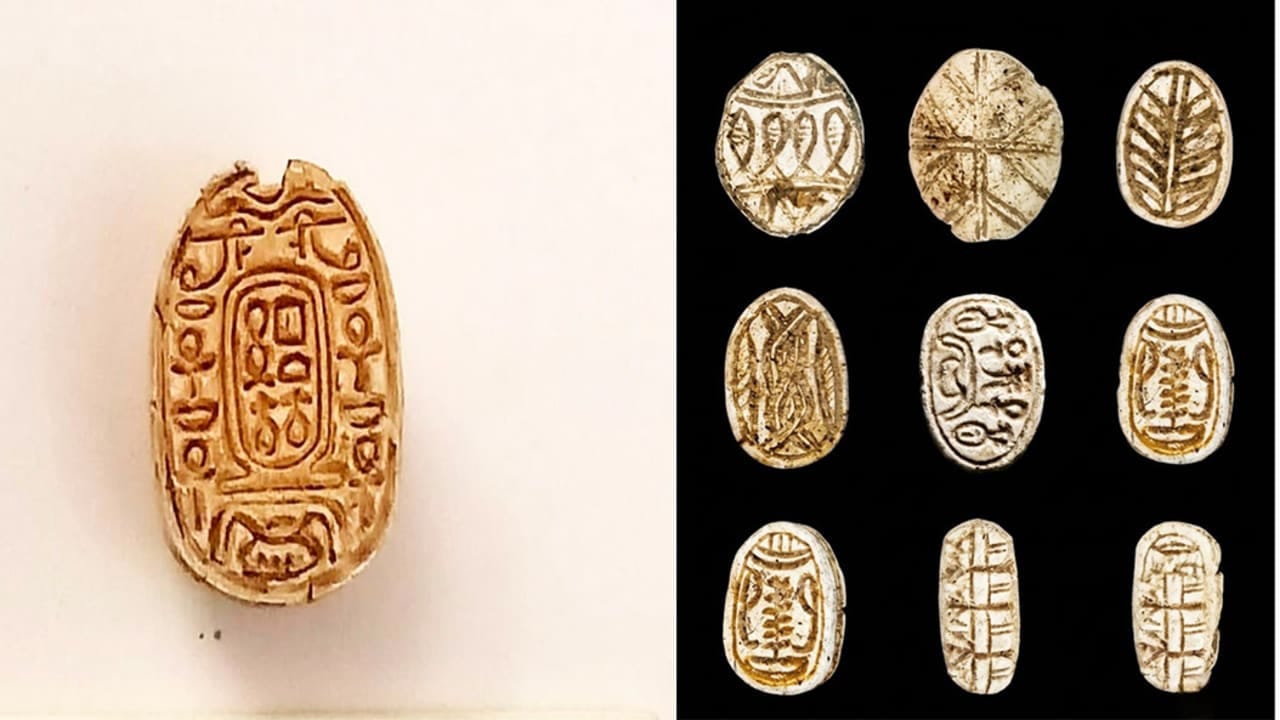
ByMIRIAM SELA-EITAMAUGUST 22, 2026 10:29Egyptian archaeologists unearthed an ancient cemetery whose roots stretch back through the Greco-Roman era to the Predynastic period, the Egyptian Tourisma and Antiquities Ministry announced earlier this month.Discovered at the Kom El-Khalgan archaeological site in Dakahlia Governorate, the oldest finds at the site date back to the Lower Egyptian prehistoric cultures, Buto I and Buto II, in the first half of the fourth millennium BCE.In the cemetery, archaeologists found a group of tombs with simple oval pits carved into the sandy layer, containing remains buried in various funerary positions, indicating the different burial rites of the time.The tombs were also characterized by the simplicity of their funerary furnishings, such as small handmade pottery vessels and some seashells, even though the density of burials point to the area being heavily populated at the time.A second group of tombs dating to Egypt’s Second Intermediate Period (circa 1782 to 1550 BCE) to the New Kingdom era, were also found at the site.Aerial photo of the ancient cemetery discovered at the Kom El-Khalgan archaeological site in Egypt's Dakahlia Governorate, August 21, 2026. (credit: EGYPTIAN TOURISM AND ANTIQUITIES MINISTRY)Confirms settlement in region during Hyksos’ reignThe finds confirm that the area had been settled during the Hyksos’ reign during the 15th Dynasty given its proximity to Avaris, which had served as the capital city at the time.Among this group, the there are two styles of tombs: mastabas, which are flat-roofed, rectangular structures with inward sloping sides, and tombs with cornices.Similar to the earlier group of burials, preliminary research here points to a diverse set of burial positions, varied age groups, and funerary customs.Funerary furnishings found within these tombs include jewelry, amulets, scarabs, bronze tools and weapons, pottery vessels and Tell el-Yahudiyeh (TEY) style juglets.A mudbrick tomb containing a collection of pottery vessels and bronze tools and dating back to the early Eighteenth Dynasty was also found.From the Ptolemaic period, excavations revealed a number of simple burial pits, including the burial of a child inside two amphorae that had been reused as a burial vessel.Remains of ancient residential buildings also foundAlongside the cemetery, archaeologists also uncovered the remains of residential area dating to the Second Intermediate Period, including mudbrick buildings, grain storage silos, ovens, and hearths.Surrounding the residential and funerary infastructure, researchers at the dig found a group of sinusoidal (wavy) walls, commonly seen in Egyptian architecture between the Middle and New kingdoms.As well, the excavations yielded a collection of other artifacts, including pottery vessels, stone tools, and large quantities of fish, bird, and animal bones.Artifacts found at ancient cemetery discovered at the Kom El-Khalgan archaeological site in Egypt's Dakahlia Governorate, August 21, 2026. (credit: EGYPTIAN TOURISM AND ANTIQUITIES MINISTRY)The foundations of a building with thick mudbrick walls, pottery shards, and stone tools dating to the beginning of the New Kingdom were also found.Tourism and Antiquities Minister Sherif Fathy praised the archaeologists efforts and affirmed the importance of the find.Dr. Hisham El-Leithy. Egypt’s Supreme Council of Antiquities secretary-general, noted that the discoveries offers insight into ancient settlement patterns, funerary practices, and the way people interacted with nature in antiquity.He added that excavations at the site are still ongoing.Follow us on Google
Layers of history: Egypt unearths 6,000-year cemetery spanning Predynastic to Ptolemaic eras
Full Article
Original Source
Read the full article at Jpost →KhanList aggregates and links to publicly available news content. We do not host full articles from third-party sources. Always verify important information with original sources.