
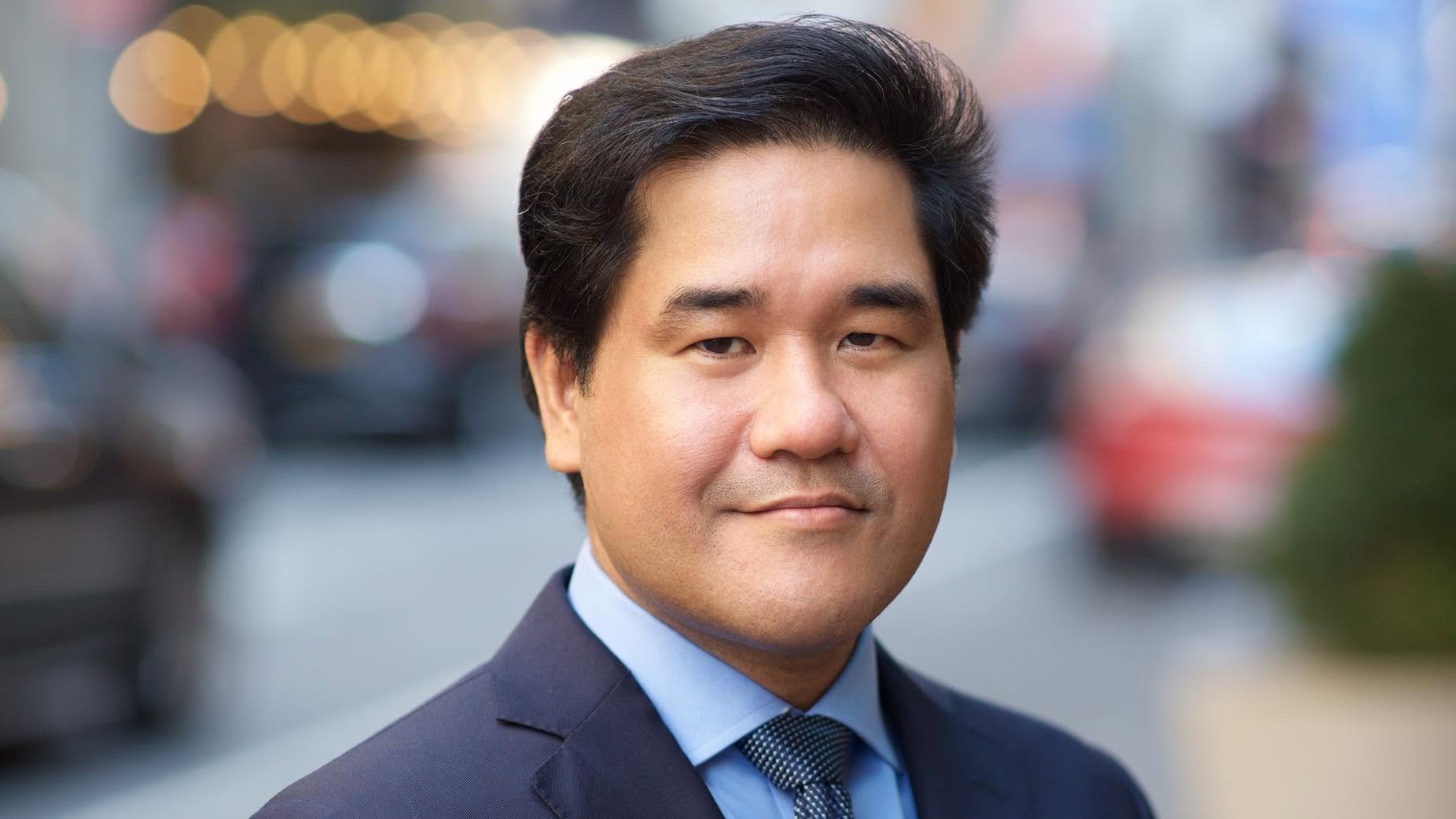
MANILA, Philippines – For Karlo Dizon, the idea behind Kartilya.PH — a free research archive of selected Philippine legal materials powered with an AI search engine — began with a basic problem that the Philippines is still in the process of solving: widespread access to justice. Dizon, a Filipino lawyer and technologist who was born in Bataan, and now moves between New York, the Philippines, and Guam, said he had seen relatives struggle to access legal services. For many people, hiring a lawyer is something they consider only in the most serious circumstances, he said. But Dizon believes the law should not feel like an exclusive resource. “The law is a public resource,” he said. “It’s publicly available.” The problem, he argued, is that having the law publicly available is not the same as making it accessible. People may know the question but it’s often intimidating to even attempt to begin looking for these legal answers. That, Dizon said, is where AI can change the equation. Dizon is a political science graduate from Yale, holds a masters in comparative politics from the London School of Economics, and a juris doctor from Stanford. He currently serves on the New York State Bar Association’s Committee on Artificial Intelligence and Emerging Technologies. Meanwhile, Rein Serrano is Kartilya’s tech lead, a graduate of the Ateneo de Manila University in Management Information Systems and a full-stack software engineer at Manulife. Turning legal research into natural-language questions Remember how AI made computing coding more accessible to people by letting people program using natural, everyday language? Kartilya works like that. It turns legal language, which could be esoteric to lay people, into something far more understandable. Instead of requiring a user to know the relevant doctrine or case citation, the platform allows them to ask a question in ordinary language and search a corpus of Philippine legal materials. AI, Dizon said, allows people to approach legal information by asking a specific question in plain language. Isn’t this something that a general use LLM like ChatGPT can already do? What makes Kartilya unique is that it features a “structured corpus” that contains over 8,000 provisions, the 1987 Constitution, major Codes, statutes and rules, text from the LawPhil project including court decisions and a jurisprudence catalog of 4,164 records from 2019 through April 29, 2026. It’s a body of data that continues to be expanded as well. Dizon explains: “Instead of having an unbounded LLM that searches its entire corpus of information, you have a more bounded LLM that searches only legal information — Philippine law in this case.” Aside from a closed, protected database, Dizon also highlights other instruction layers for Kartilya that ultimately aims to strengthen its information retrieval, and information synthesis process to address the problem of hallucinations. KARTILYA. A sample query on the Kartilya website. “We added a verification layer where every single proposition that is presented to you is linked to an actual source [that you can look at],” Dizon said. The AI also checks that actual source before it’s ever presented to you. A more technical explanation can be found on the site. Dizon acknowledged that the system can still encounter problems behind the scenes. Legal language can be extremely precise, and even seemingly minor differences in wording can matter. An AI system may treat words as interchangeable when lawyers would not. That is why, he said, users are encouraged to inspect the underlying primary sources themselves. Kartilya works under the philosophy that AI explanation is not meant to replace the law, but it is meant to make the law easier to reach. “Primary sources are always going to be there,” Dizon said. For privacy, search queries are immediately hashed into keys, making them non-readable to humans, and are deleted after approximately seven days. Public queries are never stored or viewed by the team. Making lawyers more accessible, not obsolete That distinction is also important to Dizon’s vision for the legal profession. One of the common fears surrounding AI in law is that it will eliminate the need for lawyers. Dizon sees the possibility of the opposite happening. A person might use the platform to understand a contract involving family property, or to get a basic sense of their rights in a dispute with a landlord. But when the matter involves criminal liability, significant amounts of money, numerous parties, or complex litigation, Dizon said, the need for a lawyer becomes greater. “Just because people understand the legal process doesn’t mean that they have the time or the ability to go through the whole rigmarole of litigation,” he said. There are filings to make, evidence to collect, witnesses to depose, and cases to pursue. His hope is therefore that AI can lower the barriers to entering the legal system while creating more opportunities for lawyers. Better access to information could potentially make legal services more competitive and affordable, while bringing more people into the system who previously might have been too intimidated or unable to afford representation. Even the threat of legal action can be intimidating, Dizon noted. Simply being told that someone is taking you to court can be enough to discourage a person from pursuing something they may actually have a legal right to do. More information, he believes, can make that process less frightening. The next step: explain the law itself Kartilya is still a work in progress. Dizon said the platform has a few hundred regular users, with feedback generally positive. One recurring problem, however, is that a search can lead users to a judicial opinion or a provision in a code, only for them to encounter another wall of difficult legal language. The next step, therefore, is to put AI tools directly on opinion and code pages. The goal is to allow users to ask questions about particular provisions and have the system explain portions of a judicial opinion or statute. Language accessibility is another part of the roadmap. Dizon said the team wants to make the platform available in Philippine languages, including Tagalog. For now, the startup platform is being built by a small team of roughly four full-time people, along with interns, volunteers, and other contributors. The team has been developing Kartilya for about a year. AI belongs in the law school, too That experience informs Dizon’s view of another emerging debate: whether law schools should restrict students’ use of AI. He pointed to the different approaches being taken by American universities. Some institutions have restricted AI use such as University of the Philippines, while others have been more open to students experimenting with the technology. Dizon understands why schools are concerned but he also believes the legal profession has reached a point where avoiding AI altogether may leave students unprepared for the world they are about to enter. “I think the reality is all the lawyers and all the judges are going to be using AI,” he said. The question, in his view, is no longer simply whether students should use AI. It is how they can learn to reason and write effectively while using it. Legal education has always adapted to technological changes, Dizon noted. Legal research once meant working through physical books. Technology eventually transformed that process, and AI is the latest major change. He believes law schools should retain traditional approaches to teaching, but also create spaces — such as AI labs or dedicated programs — where students can develop the skills they will need in practice. He also says they are exploring a version of Kartilya that could be enhanced for legislative use. At the most immediate level, that could mean giving congressional offices better tools for legal research and bill drafting, as well as establishing integrity and traceability of legal documents. The Filipino’s role in the AI race Dizon’s ambitions for Kartilya are also tied to a broader question about the Philippines’ place in the AI economy. He believes the country needs a national and sovereign AI strategy. He pointed to countries such as Saudi Arabia that are investing heavily across the AI stack, from energy and chips to large language models. The Philippines may not be able to compete with those countries in every part of that infrastructure. But Dizon believes there are areas where the country has advantages — particularly language and the country’s broader educational and human-capital base. That could mean developing AI systems and infrastructure around distinctly Philippine needs rather than simply importing technology built elsewhere. Legal AI is just one possible example, and learnings from Kartilya, for instance, may be adapted and deployed in other settings. Kartilya, for Dizon, is an attempt to rethink how Filipinos encounter the law: from something that can feel distant, technical and intimidating into something that can be searched, questioned and understood. Dizon is also watching the possibility of a national legal AI database in the Philippines. He wants to see a verified legal corpus become part of the country’s broader legal and governmental infrastructure, and hopes that if a national system is eventually created, some version of the ideas behind Kartilya will be part of it. – Rappler.com
Lawyer, technologist Karlo Dizon wants to make PH law easier to understand with AI
Full Article
Original Source
Read the full article at Rappler →KhanList aggregates and links to publicly available news content. We do not host full articles from third-party sources. Always verify important information with original sources.