
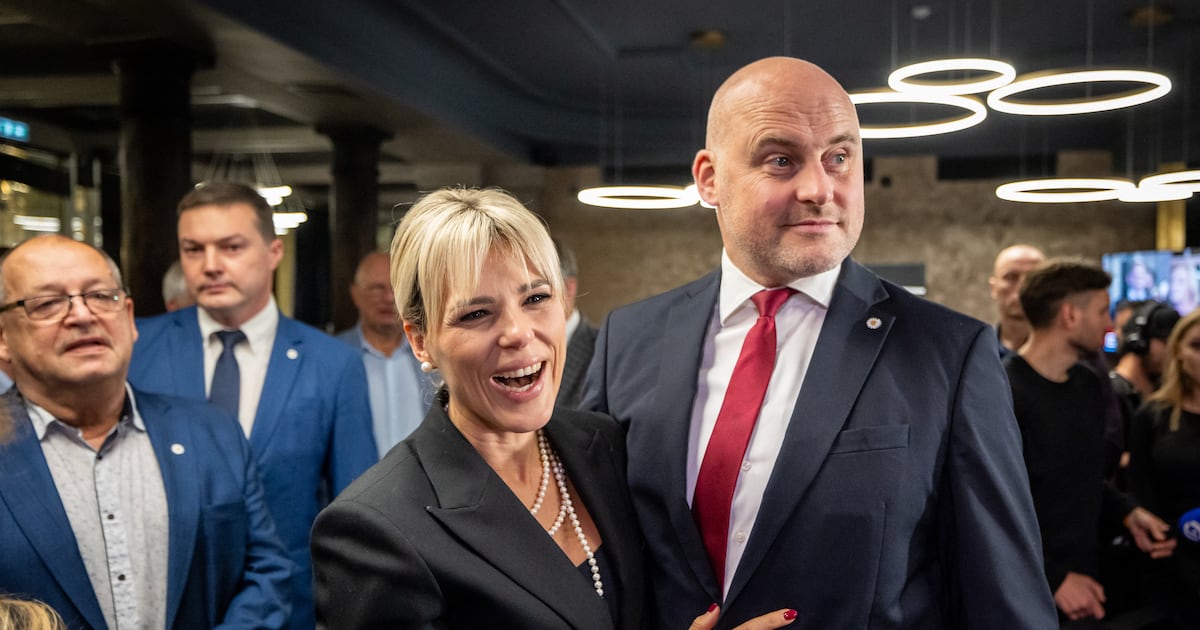
Latvian prime minister Andris Kulbergs was set to retain power and form a pro-Ukrainian coalition after his centrist United List secured the biggest parliamentary election victory since Latvia regained independence in 1991.With 97 per cent of ballots counted after Saturday’s election in the Nato and EU country bordering Russia, United List was on 35.3 per cent, enough for 42 seats in the 100-seat parliament.A businessman and amateur rally driver, Kulbergs (47), came to power in May after the previous coalition crumbled over its handling of incidents in which stray Ukrainian military drones flew undetected into Latvia.Latvia’s economy has underperformed its Baltic neighbours for more than a decade and Kulbergs has vowed to improve governance, cut red tape and reduce public spending, political scientist Roberts Kits said.READ MORE“Kulbergs played on being a get-things-done type of guy and has persuaded the voters that he can do things differently, bring some fresh energy,” he said.“This means the responsibility is huge. People expect him to deliver, but the question remains whether he has the team to do it.”United List appeared able to secure a parliamentary majority with either the nationalist National Alliance or the liberal Progressives, Kits said.Kulbergs pledged continuing support to Ukraine and to keep a hard line towards Moscow.[ Latvians vote in election in shadow of drone incursions and war in UkraineOpens in new window ]“Any economic ties with Russia makes us weak. Yes, it can bring some extra money, but it’s a weakness Russia might exploit,” he told reporters at his party’s headquarters on election night as supporters celebrated the scale of the win.“It’s remarkably good. I was not expecting such a result,” Kulbergs said.Election officials sort ballots at a polling station during elections for Latvia's 15th Parliament (Saeima) in Riga. Photo: Valda Kalnina/EPA Voter turnout was 51.8 per cent, down from 59.4 per cent in 2022.United List was followed by the populist, MAGA-style Latvia First, which was on 13.1 per cent. Latvia First had courted the country’s substantial ethnic Russian minority in the run-up to the vote.Third in the ranking was the pro-Russian Sovereign Power party, on 11.7 per cent, followed by the National Alliance, which promotes a hardline approach to the Kremlin, at 8.9 per cent.Throughout his campaign, Kulbergs promised more anti-drone capability for Latvia and to maintain defence spending at 5 per cent of gross domestic product, one of the highest levels in Nato.His pro-Kremlin rivals said Latvia should stop any aid to Ukraine and instead focus on tackling cost of living issues, particularly among the country’s Russian-speaking minority.Latvia's prime minister Andris Kulbergs looks at his watch as he waits for the first exit poll results of the general election. Photo: Wojtek Radwanski/AFP via Getty Although pro-Russian parties increased their representation, Kits said they remained sidelined and were unlikely to influence government policy.Latvia’s ethnic Russian minority is split between those who oppose Moscow’s war in Ukraine and others who voice frustration with policies at home aimed at limiting their influence on public life, which many of them see as discriminatory.Latvia, with a population of 1.9 million, is sandwiched between the Baltic Sea and Russia and Belarus to the east, with EU and Nato allies Estonia and Lithuania to the north and south. - Reuters
Latvian PM on track to lead pro-Ukraine coalition after election win
Full Article
Original Source
Read the full article at Irishtimes →KhanList aggregates and links to publicly available news content. We do not host full articles from third-party sources. Always verify important information with original sources.