
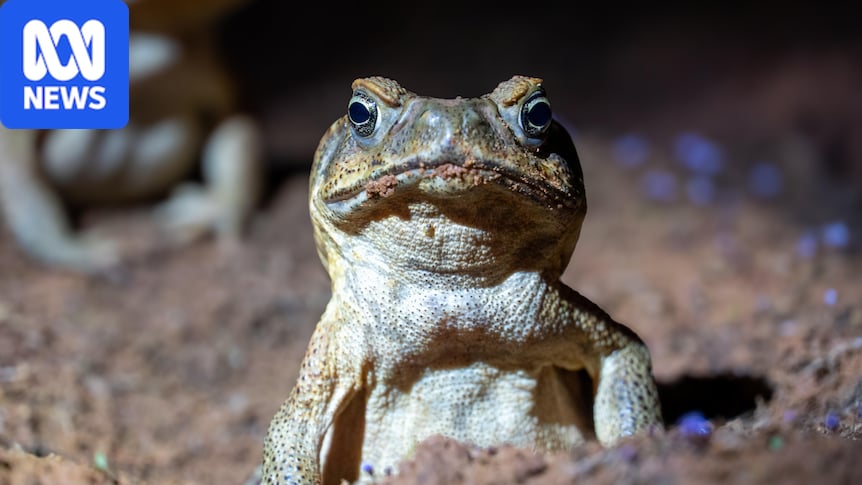
The latest bid to halt the ongoing cane toad invasion of northern Western Australia is set to begin after final funding and approval.The current estimated front line of the toad's spread has the pests around 100km from Broome, 2,200km north of Perth.Scientists are now hoping a "waterless barrier" across WA's northern Pilbara will help halt the further spread of the invasive species.Scientists, traditional owners, pastoralists and Rio Tinto have teamed up in an attempt to stop the cane toad reaching the Pilbara. (Supplied: Lily Youngsmith)The barrier proposal, to be implemented south of Broome, will see artificial watering holes such as dams and storage tanks cut off, in turn removing the toads' water supply.This project involves modifying water points across six pastoral stations, which cover 7,500 square kilometres of land.An additional $28m funding injection from Rio Tinto and the Rhodes Ridge joint venture will see official work on the containment zone start next year.Locations of the various water points across the Kimberley. (Supplied)A 'national tragedy'The toads have already killed millions of Australian native animals, ranging from snakes to goannas and crocodiles."The loss of these animals from across that landscape is a national tragedy and it's a loss of natural heritage and cultural heritage for Indigenous landowners," Curtin University biologist Ben Phillips said."The Pilbara is another region of Australia chock-full of plants and animals found nowhere else on the planet. Cane toads will thrive in the Pilbara." Professor Phillips said the project represented the best opportunity to prevent the worst from happening.Judy Dunlop has been involved with the project for three years. (ABC Kimberley: Ruby Littler)Curtin University ecologist Judy Dunlop said toad-proofing water points had proven successful in other locations."By removing the critical thing they need, which is water, we prevent them from continuing their spread," Dr Dunlop said."The build itself will take the next two to five years and we will be doing a lot of work on the sidelines as well as monitoring animals."Protecting native wildlifeKarajarri Traditional Lands Association chief executive Martin Bin Rashid said traditional owners had been consulted throughout the process."We've got a ranger program, we have a heritage team that are going to assist the project leads and construction workers," he said."Making sure we also look after those special water holes that hold significant stories and Dreamtime stories for our people and give life to country."Martin Bin Rashid says it is crucial to act now. (ABC Kimberley: Ruby Littler)The region's pastoralists are also on board."It's a big station so there's plenty of water points; it ends up being about 100 waterless barriers," Anna Plains Station owner David Stoate said."It took a bit of time to come around to the idea of the project because it's such a big job."A journey of 1,000 miles starts with a single step, so that's very much what we're doing with this project."David Stoate manages Anna Plains Station, which covers an area of 3,600 square kilometres. (ABC Kimberley: Ruby Littler)Funding commitmentThe waterless barrier proposal has been floated since 2016, with the Barnett Liberal-National government at the time allocating about $340,000 in funding for community consultation.Funding for the conservation initiative initially reached $12 million, with the Rio/Rhodes Ridge contribution, to be allocated over five years, more than doubling that figure.Rio Tinto's Chris Osborn said the Pilbara was a special place and important to protect."I think it's a model for how really critical problems can be solved when you get the right partners involved," he said."Science-based solutions with practical input from traditional owner groups, from pastoralists, [that] will help this project be a success."
Last-ditch bid to halt cane toad invasion of WA getting underway
Full Article
Original Source
Read the full article at Abc →KhanList aggregates and links to publicly available news content. We do not host full articles from third-party sources. Always verify important information with original sources.