
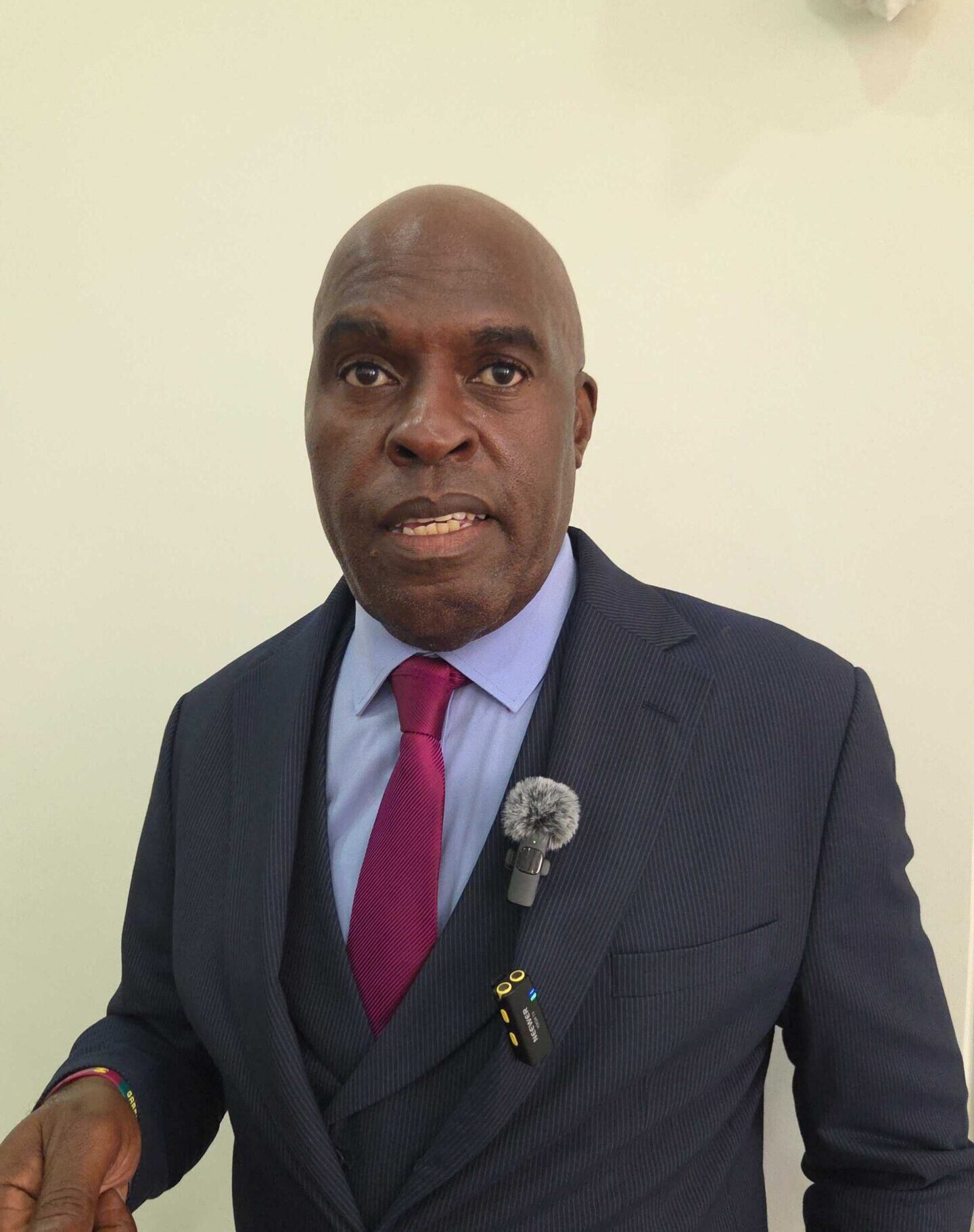
Minister of Legal Affairs and Criminal Justice Michael Lashley. (Photo credit: Ricardo Roberts / Barbados TODAY) The prominent criminal defence barrister now overseeing the administration of the criminal justice system has defended the bill to end the practice of accepting unsworn statements from the dock. Minister of Legal Affairs and Criminal Justice Michael Lashley said the amendments were intended to put criminal trials on a fairer, safer and more efficient footing. The Administration of Justice (Miscellaneous Provisions) Bill 2026 would create new rules for dealing with hostile witnesses and allow transcripts of electronically recorded evidence to be used in court. It would also repeal provisions dealing with fitness to plead, diminished responsibility and insanity under the Criminal Procedure Act. Referring to a 2023 criminal justice reform conference that called for updating the rules of evidence, he said the amendments had to be considered in the wider context of the administration of justice. “It states that laws be enacted to modernise rules of evidence related to disclosure, hearsay, the admissibility of previous convictions and uncontested evidence,” Lashley said. You Might Be Interested In The changes were intended to allow for the more expeditious disposal of criminal cases and bring Barbados’ laws into modern practice, he declared. The bill’s proposed abolition of unsworn statements would require an accused person who chooses to give evidence to do so from the witness stand, where that evidence could be tested through cross-examination. Lashley added: “The bill, to my mind, constitutes a total reform of key aspects of criminal procedure. It also reflects a strengthening of evidentiary rules. And respectfully, it creates the more modern and just criminal justice system.” He pointed to several measures already introduced to improve the justice system, including judge-alone trials, changes to bail and pre-trial detention, witness protection, amendments relating to jury trials, a High Court firearms division and plea bargaining. Barbados would also join several jurisdictions that have abolished unsworn statements, including England, Anguilla, the Bahamas, the British Virgin Islands, St Kitts and Nevis, Saint Lucia, St Vincent and the Grenadines, Trinidad and Tobago, and Turks and Caicos. Lashley rejected the view that abolishing unsworn statements would remove protections for accused persons, pointing instead to victims’ rights. “A 10-year-old girl is raped by a man, but the 10-year-old girl, who’s the virtual complainant, she got to go on that stand and be cross-examined by the man’s defence lawyer. But then he has the option, and under the Evidence Act, he has the option to remain silent, to stay in the dock and not be cross-examined. The question is, is it fair?” He argued that the change would place an accused person’s evidence on the same footing as that of other witnesses. “The evidence of all the witnesses now are placed on the same footing.” The bill would also establish a framework for dealing with hostile or adverse witnesses, allowing a party to seek the court’s permission to cross-examine its own witness where the witness becomes evasive or is believed not to be telling the truth. Lashley continued: “If a party [to the] proceeding calls in an adverse witness and that party believes that the adverse witness is becoming evasive, or not seeking to tell the truth, that party can now apply to the court for leave and cross-examine his own witness.” The criminal justice minister pledged that safeguards would be built into the process, including a requirement to give notice at the earliest opportunity of the intention to cross-examine the witness. He also addressed provisions introduced under the 2018 Criminal Procedure Amendment Bill which allowed murder accused to undergo psychiatric assessments to assist in determining their fitness to plead. Lashley said the measure was well-intended but had resulted in delays when psychiatric assessments or reports were unavailable. “Although the amendment was well-intended, it resulted in delays. It resulted in persons coming to court with full disclosure, and the prosecution ready to start the trial and then when you ask her whether the person had a psychiatric evaluation or report, it either can’t be found, or there’s none.” He said the bill would repeal those provisions and return the cases to the common-law position, including provisions dealing with insanity and diminished responsibility. Lashley also highlighted provisions on previous inconsistent statements, saying they would give prosecutors and defence lawyers another tool when dealing with differences between a witness’ oral evidence and an earlier statement. The minister strongly supported provisions allowing transcripts of electronically recorded interviews to be used in court, saying poor-quality recordings can make it difficult for lawyers and judges to clearly follow what was said. He said transcripts would help assess evidence and witnesses and improve fairness in criminal trials. Lashley also called for greater use of technology in the Magistrates’ Courts, including the eventual use of full trials through video conferencing. He said the Magistrates’ Courts were the foundation of the criminal justice system and should be modernised through measures including case management, greater use of technology and expanded prosecutorial resources. The amendments were part of a wider effort to reduce delays, strengthen the administration of justice, and “create a just and effective criminal justice system”, he told the House. (LG)
Lashley defends bill to end unsworn statements in criminal trials
Full Article
Original Source
Read the full article at Barbadostoday →KhanList aggregates and links to publicly available news content. We do not host full articles from third-party sources. Always verify important information with original sources.