
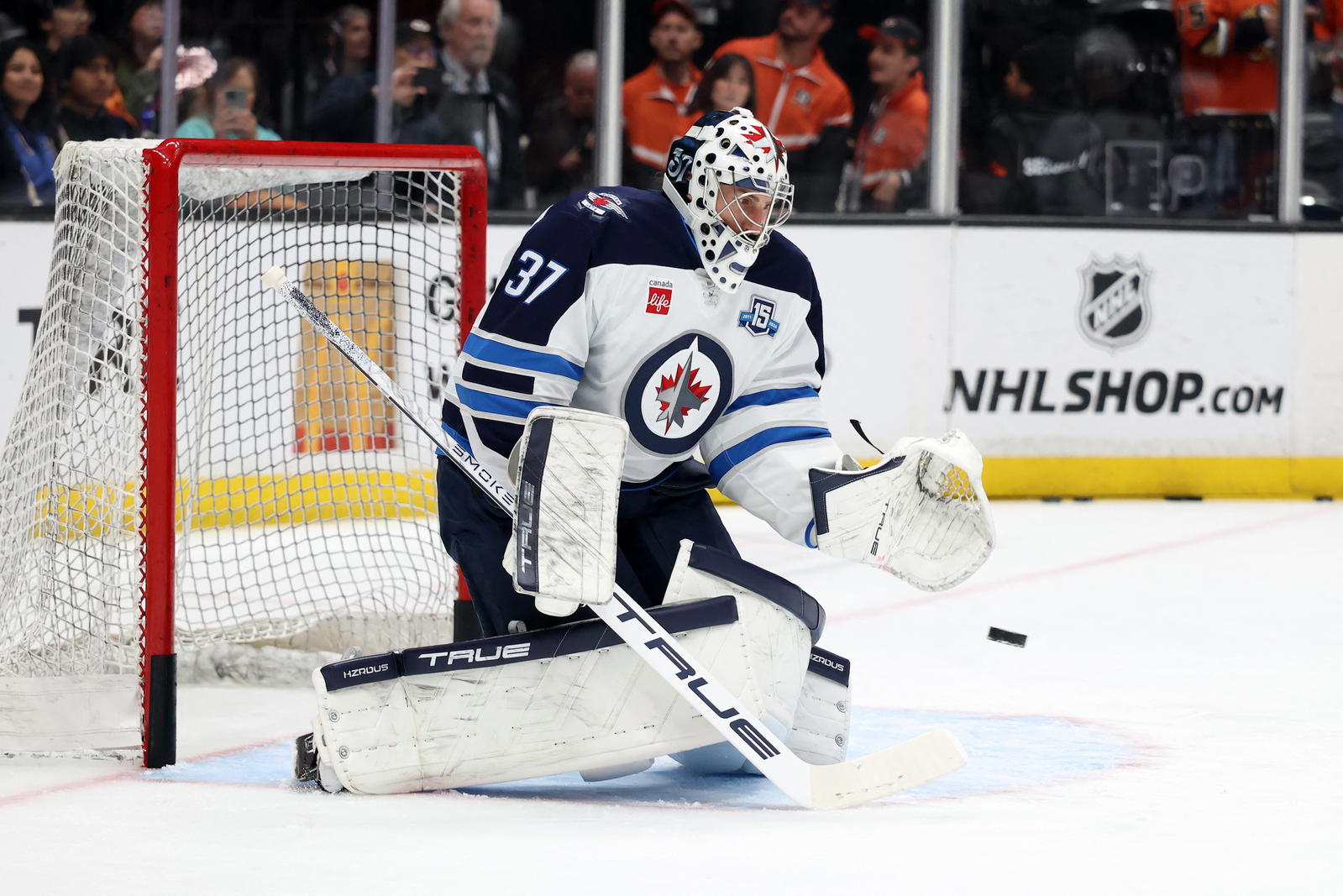
The Winnipeg Jets are dealing with goalie Connor Hellebuyck's trade demand, and the Detroit Red Wings are dealing with center Dylan Larkin's trade demand. But Jets and Wings brass are pushing back. What future is ahead for the two stars?As the NHL season moves past its second week, there's been no significant movement on two prominent NHL stars in a trade-demand showdown with their respective teams. In Detroit, the Red Wings are dealing with star center Dylan Larkin – a former captain and Michigan native who asked out of Motown. In Winnipeg, superstar goalie Connor Hellebuyck has demanded a trade and refused to appear at training camp, a move that resulted in the Jets suspending him indefinitely.You can say that the age of NHL player empowerment is upon us now based on a variety of factors, but Red Wings interim GM Shawn Horcoff and Jets GM Kevin Cheveldayoff are pushing back. Just as you'd argue that Hellebuyck and Larkin are within their rights to try and control their destiny as players, spouses and fathers, it's also true that NHL teams are acting well within their rights to do what they feel is best for the organization.Related storiesLarkin and Hellebuyck might not want to hear it, but the bottom line for the parties involved in a trade demand battle is that teams ultimately dictate the value of their players. Those are the stakes for Cheveldayoff and Horcoff at this moment. Neither team can afford to accept a trade that doesn't deliver what the Red Wings and Jets need at this point in each team's competitive cycle. And those are two different things.Not only do teams have to be satisfied with the trade return on star players they’re dealing away, the teams that are interested need the right amount of salary cap space to fit in new players under the team's financial umbrella.This explains why it has been impossible for Cheveldayoff to trade Hellebuyck. Interested teams either don't have the space to be cap-compliant, they don't have the trade capital to satisfy the Jets, or both. Or maybe a team would have the means to trade for Hellebuyck, but only if they sent a veteran goalie back Winnipeg's way. That could be a deal-killer from the Jets' perspective.Larkin's situation is different in that he did report to training camp and has played games, but his trade request has not been rescinded, and there's no indication that he's changed his mind about leaving Detroit. While Horcoff may not necessarily need players who can contribute right now in a potential return package, he still needs to be able to defend any Larkin trade not only for the moment, but for the long-term. It's only natural that he is erring on the side of caution and not just trading Larkin to a team of his preference just to make the player and their agent happy.In the end, Cheveldayoff and Horcoff are beholden to two groups of people: team ownership, and the fans. While maintaining good relationships with players is also important, it falls below being able to look ownership and consumers in the eye and tell them, without reservation, that they've done what was best for the team. If that means waiting on trades, so be it. Jets fans and their Red Wings counterparts deserve GMs who aren't afraid of stepping on a few toes as they try to figure out the dance moves that will lead to a Stanley Cup championship.Players can complain about it, just as GMs can complain about the proliferation of no-trade and no-move-clauses. But this is a system both sides have collectively bargained, and that means these standoffs are going to continue.For action-packed issues, access to the entire magazine archive and a free issue, subscribe to The Hockey News at THN.com/free.
Larkin And Hellebuyck Trade Standoffs Show NHL GMs Pushing Back On Player Empowerment
Full Article
Original Source
Read the full article at Thehockeynews →KhanList aggregates and links to publicly available news content. We do not host full articles from third-party sources. Always verify important information with original sources.