
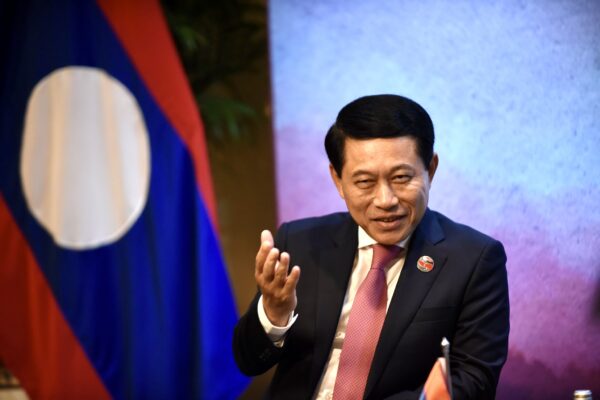
ASEAN Beat | Politics | Southeast Asia Saleumxay Kommasith, a former foreign minister and permanent representative to the UN, has been appointed to the top job. Laos’ National Assembly yesterday approved a major leadership change that included the removal of Prime Minister Sonexay Siphandone. In what the state-run Vientiane Times described as “a significant change in senior state leadership,” lawmakers yesterday voted unanimously to appoint Sonexay’s deputy Saleumxay Kommasith as the country’s new prime minister. Sonexay was appointed president of the National Assembly, succeeding the late Xaysomphone Phomvihane. The position has been vacant since Xaysomphone, the son of revered communist leader Kaysone Phomvihane, died in August at the age of 70. The Central Committee of the ruling Lao People’s Revolutionary Party described his passing as “an immense loss for the Party, the State and the Lao people of all ethnic groups.” According to the Laotian Times, 57-year-old Saleumxay has a background in diplomacy, having spent much of his career in the Ministry of Foreign Affairs. He has previously served as Laos’ representative to the United Nations and as foreign minister between 2016 and 2024, and was also appointed as a deputy prime minister in 2022. Beyond the need to fill the vacant National Assembly position, Lao media reports were reticent about the reasons for Sonexay’s removal, and in Laos it is often hard to separate performance-based from patronage-based appointments. Nonetheless, the fact that he was kept on as prime minister at the last national congress of the LPRP in January, presumably with the expectation that he would serve for a full five-year term, suggests that the reasons for his removal are probably more short-term. Indeed, his successor’s address to the National Assembly after yesterday’s vote may offer some clues as to the change. In his remarks to lawmakers, Saleumxay praised the country’s current economic trajectory, stating that the economy grew by 4.8 percent in the first nine months of 2026, up from 4.6 percent over the same period last year. But according to the Vientiane Times, he also noted that agriculture “continues to face difficulties. Floods, pest outbreaks, and African swine fever have affected production, while fuel price volatility has increased production and transport costs.” Laos’ economy has been under severe strain in recent years. After the COVID-19 pandemic, the country was hit by a debt-driven economic crisis that was marked by spiraling inflation, a rapid depreciation of the kip, and, for a period in mid-2022, fuel shortages that threatened the country’s food security. While Laos has since managed to stabilize its economy somewhat, the impact of the energy supply shock emanating from the U.S.-Iran war has threatened to disturb this progress, as the new prime minister’s remarks yesterday suggest. Whatever the drivers, yesterday’s leadership shake-up is just the latest in a number of reshuffles that have broken the historically placid surface of Lao political life. The most recent of these was in late 2022, when Phankham Viphavanh was removed as prime minister, in a move that was widely recognized as a response to the economic crisis. On that occasion, the beneficiary was none other than Sonexay. According to the Laotian Times, Laos also reshuffled nine senior government officials in June 2025, including the governor of the central bank and ministers responsible for finance, education, health, labor, agriculture, and industry and commerce.
Laos Replaces Prime Minister in Major Leadership Reshuffle
Full Article
Original Source
Read the full article at Thediplomat →KhanList aggregates and links to publicly available news content. We do not host full articles from third-party sources. Always verify important information with original sources.