
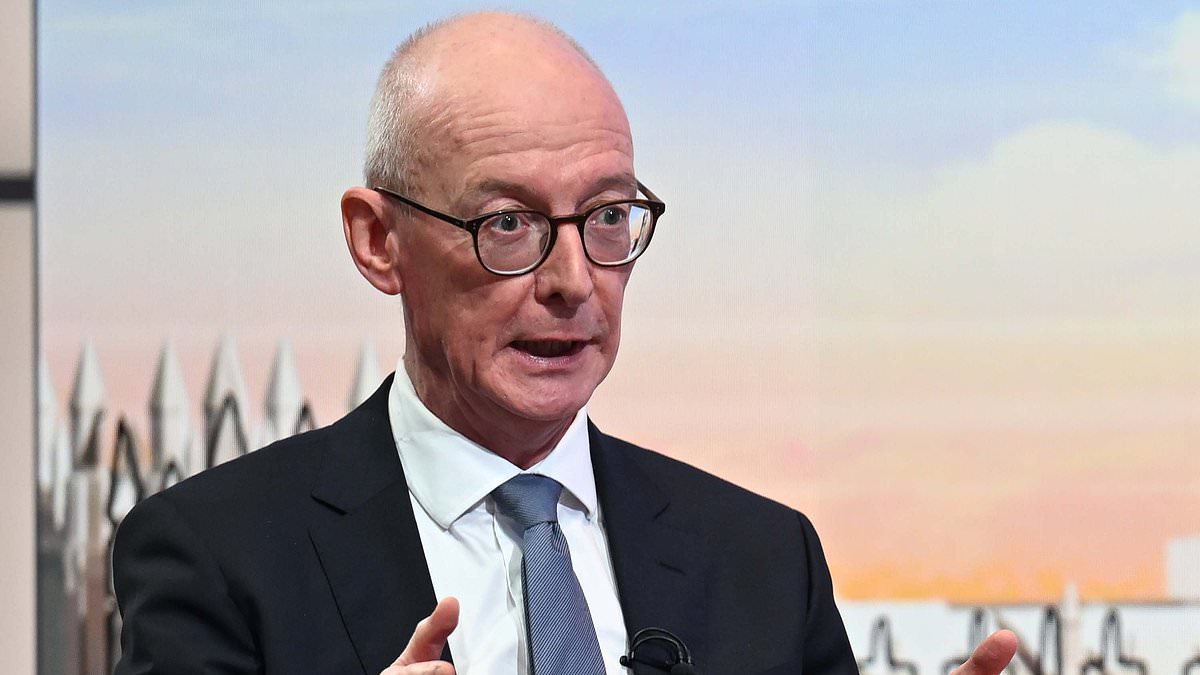
Pat McFadden today failed to say if Labour will cut the benefits bill by the next election - as the architect of plans to tackle youth inactivity admitted it will take 10 years to make savings.The Work and Pensions Secretary dodged committing to a reduction in overall spending on working-age welfare by the time the country next goes to the polls.Mr McFadden instead said the 'best way' to cut the amount going on benefits was through the 'long-term reset' being proposed by the Government.At the heart of those plans are efforts to tackle the almost one million young people not in education, employment or training – so-called NEETs.Alan Milburn, the former Labour health secretary, is due to publish a major report on Tuesday with his recommendations for tackling the youth inactivity crisis.He is set to outline plans for young people to have a legal guarantee of a job, training or employment support, for young people to keep more of their wages before they lose any benefits if they get into work, and to remove under-25s off the main sickness and disability benefits.But, speaking to the BBC on Sunday, Mr Milburn admitted his proposals for getting more young people into employment would involve billions of pounds of extra spending.He also suggested it would take a decade for his plans to begin saving taxpayers' cash. Work and Pensions Secretary Pat McFadden dodged committing to a reduction in overall spending on working-age welfare by the time the country next goes to the polls Alan Milburn is due to publish a major report on Tuesday with his recommendations for tackling the youth inactivity crisis. He suggested it would take a decade for his plans to deliver savingsAsked how long it would take to get the benefits bill down, Mr Milburn told the Sunday With Laura Kuenssberg show: 'This is a 10-year plan and you just got to be candid with people about this.'Everybody thinks, wave the magic wand, snap your fingers, and you can do it in two or three years. I'm telling you, you can't. You can if you just do crude cuts.'If you do crude cuts, absolutely fine. But if you do crude cuts in benefits, all that happens is that young people show up somewhere else on the Government ledger.'He added: 'It's a 10-year programme for a reason because that's the amount of time that we think it will take to get to a reasonable level of young people in this country being NEET.'Mr Milburn confirmed his plans would need up-front investment - such as through subsidising wages for more young people - before they would begin to deliver savings.'There will be a need for additional investment and that will run into billions I think, over a 10-year period,' he said.'But what you get back is you get welfare savings back, and then you get the so-called fiscal benefits of young people not being reliant on a benefit but being paid a wage.'He also said that some young people would lose out on benefits under his proposals.'There will be some young people who lose out, of course,' Mr Milburn said. 'But what we'll do is we'll make sure that the support is there and the opportunity is there for young people.'So it's not a question about whether we spend money; it's how we spend it.'We're already spending £22billion a year keeping young people inactive and on benefits and not in a job.'That's a disaster for their life chances. So yes, there will be less money being spent on benefits and there'll be more money being spent on opportunities and support.'And what we'll also be saying this week is that those opportunities and that support should be a guaranteed entitlement in law, a legal rate, a legal entitlement for the first time that young people will have.'He outlined how the Government currently spends 25 times as much on benefits for young people than it spends on supporting them into work, saying he wanted to change that ratio to two to one.Mr McFadden later pointed to Mr Milburn's plans as he called for a 'complete reset of the system in terms of what it offers young people'.Appearing on the same programme, the Work and Pensions Secretary was challenged to say whether the bill for working-age benefits would be higher or lower by the next general election.'I can't say that,' he replied. 'We uprate benefits every year and I think that's important to keep people up with the cost of living - these are some of the poorest people in the country.'The best way to get the benefits bill down is exactly with the long-term reset that we are talking about.'You will have parties who come in here waving around a big number. It's not credible, because it's not what they did when they were in power.'And it's not the way to go about it, because the way to go about a shift like this is to make sure you have a new settlement for people.'That you have extra support to enable people to change their lives for the better and that is what this report has at its heart.'Mr McFadden took a swipe at previous failed efforts to reform the welfare system under former prime minister Keir Starmer, which were sunk by a huge revolt by Labour MPs.'Let me tell you where this goes wrong, when people pick a number and retrofit a policy to it,' he added. 'We've had some recent experience of this and that is why this is something very different.'Tory shadow work and pensions secretary Helen Whately said some areas of the Milburn review appear to be heading in the 'right direction'.She told Sky News: 'So one area – and it's something I've been talking about for over a year now, and we have set this out in our proposals for welfare reform – is that we need to reform sickness benefits, the PIP (Personal Independence Payment) system.'We should move away from the system at the moment which is handing out cash for relatively mild conditions and, instead of cash, to be giving young people – in fact, people of all ages – treatment and support to be able to work.'Alan Milburn is talking about doing this in his review, so that's the right direction of travel, including changing the system for existing claimants.'We think he should do it for all ages, not just under 25. You should not have a different system for a 24-year-old and a 26-year-old.'But Ms Whately said a legal guarantee of work or training for the under-25s 'doesn't make sense', as she instead called on the Government to make it easier for firms to employ young people.She told the BBC: 'What we are saying that the Government should be doing is reducing the tax burden on businesses, reducing the regulatory burden on businesses.'We have said we would halve the jobs tax for under-25s, because I talk to businesses who say they really want to employ young people but they just can't afford to anymore, and the regulation that the Labour Party have put in place has made it harder.'
Labour's Pat McFadden fails to say whether Britain's benefits bill will come down by next election - as architect of NEETs plan admits it will take 10 years to make savings
Full Article
Original Source
Read the full article at Dailymail →KhanList aggregates and links to publicly available news content. We do not host full articles from third-party sources. Always verify important information with original sources.