
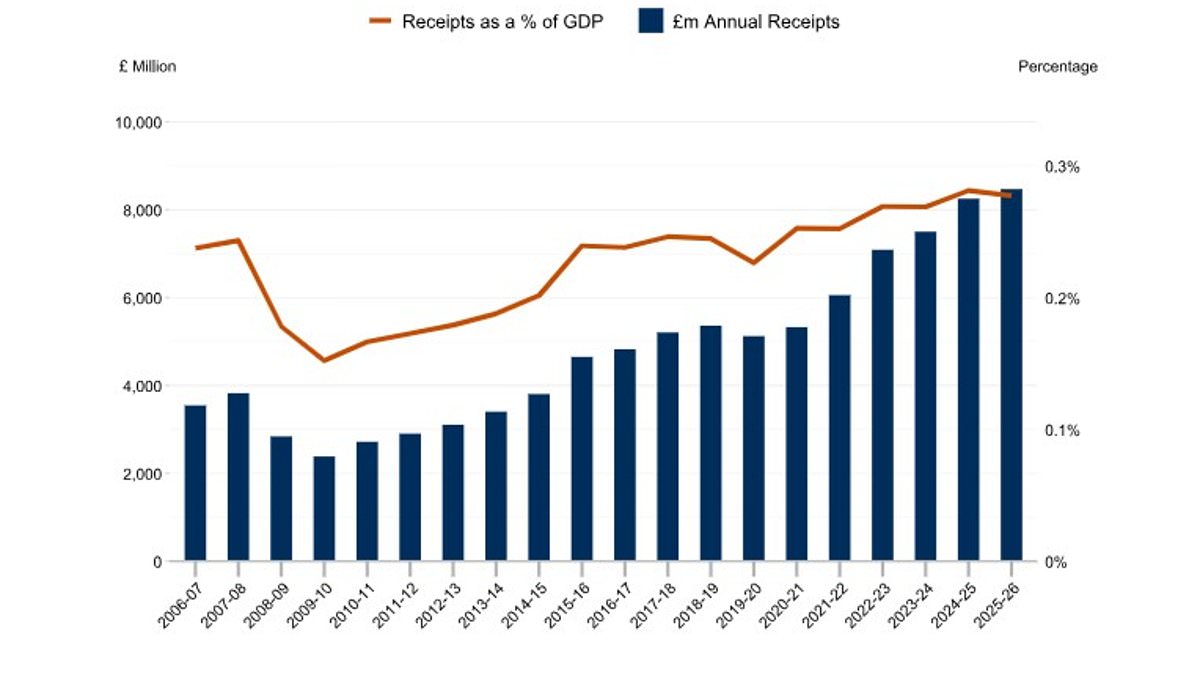
The amount of money the Treasury rakes in from inheritance tax (IHT) will continue to balloon in the coming years. IHT receipts are on track to raise £9billion this financial year, comprising 0.3 per cent of Britain's gross domestic product, Office for Budget Responsibility (OBR) figures show.IHT receipts are then expected to surge to £15billion in 2031-32, driven by rising house prices and equity, a growing proportion of UK deaths subject to IHT and the impact of policies announced in the 2024 Autumn Budget, the OBR said. HM Revenue & Customs collected £8.5billion in IHT in the last tax year, up from around £5.3billion five years earlier, representing an increase of around 60 per cent. This further net widening will mean a further 66 per cent rise in the tax. This month, HMRC said IHT receipts for September 2026 were the highest on record.In 2024, former Chancellor Rachel Reeves made a number of changes to the IHT regime which will hit more families. Reeves kept the IHT nil-rate band, of £325,000, and residence nil-rate band, of £175,000, frozen for a further two years, until April 5, 2030. This was extended to April 2031 in the 2025 Autumn Budget. Silence is golden? John Healey was silent about inheritance tax this week, but more families will have to pay itThe regular inheritance tax rate is 40 per cent, but only on the portion of the estate that is above the relevant thresholds, known as nil rate bands.As property prices rise and the nil-rate band of £325,000 stays frozen, more households will fall in scope for inheritance tax. Since April 2026, inherited farming assets worth more than £2.5million have faced 20 per cent IHT. Ministers first announced the change in 2024, initially saying the threshold would be set at £1million.Following a backlash, Labour raised the threshold for farmers to £2.5million and said the allowance could be transferred between spouses and civil partners, meaning in some cases £5million of value is protected. Major change coming from April 2027 The next major IHT change is coming in April 2027, and it is a big one sneaking up on families.From April 6, 2027, any unspent money left in a pension pot will start forming part of an estate for the purposes of IHT. So, if you still have money left in your pension pot when you die, it might be subject to 40 per cent tax. The Government is introducing the change because it wants to reduce the use of pensions as a vehicle to pass on wealth free from IHT. Funds transferred to a spouse or civil partner remain exempt after April 6, 2027, meaning this change will mainly affect families on the second partner's passing away. Currently, most personal and workplace pensions fall out of scope for IHT purposes, notably for those aged 75 or under. Marianna Hunt, of Fidelity International, told This is Money: 'This will mean some families who previously wouldn't have paid IHT suddenly face a bill, while others could find their existing bill is significantly higher.'HMRC estimates that around 10,500 estates will become liable for IHT in 2027-28 as a result of this change, while a further 38,500 will face a bigger bill than they would have done under the old rules. 'For those already facing an IHT bill, the average amount owed is expected to increase by around £34,000 when pension assets are included.'What can you do now to sidestep the raid? Hunt added: 'Make sure you're taking advantage of the allowances available to you.'For example, individuals can generally pass on £325,000 free of inheritance tax, with an additional £175,000 allowance potentially available when leaving a home to children or grandchildren. 'Married couples and civil partners can potentially pass on up to £1 million between them, provided they qualify for the relevant allowances.'It's also worth considering making gifts during your lifetime rather than leaving everything until you die. 'You can generally give away £3,000 each tax year using your annual gifting exemption, and larger gifts can potentially fall outside your estate altogether if you survive for seven years after making them. 'Other allowances to look into include the wedding gift exemption, the small gifts allowance and the exemption for normal expenditure out of income. The earlier you start planning, the more options you may have to reduce the tax bill your loved ones eventually face.'John Healey did not mention IHT in his Budget speech on Thursday but it was briefly mentioned in the Budget document. The Government published draft legislation aimed at clarifying the IHT treatment of liabilities relating to property held in trust. A chart from HMRC showing inheritance tax receipts over timeHow much have inheritance tax receipts risen?IHT receipts over the last 20 years have grown from £3.5billion in 2006-07, to £8.5billion in 2025-26, HMRC said. HMRC said the rise in receipts from 2006 to 2008 was due to increases in the value of tax-liable assets in this period, particularly residential property. IHT receipts in 2020 to 2021 increased compared to the previous year, partly due to the higher number of wealth transfers that took place during this tax year, itself the result of higher-than-usual deaths due to the effect of the Covid-19 pandemic. The continuation of frozen IHT thresholds has also driven up IHT receipts over time. The OBR said on Thursday: 'An increasing proportion of IHT revenue is forecast to come from changes to the inheritance tax regime announced at and since Autumn Budget 2024, including taxing inherited pension pots and introducing changes to agricultural and business property reliefs, which account for around one-sixth of total revenue by the end of the forecast. 'The behavioural responses to these measures and the tax base for inheritable pension wealth are particularly uncertain.'Protect Your Money – sign-up to our six-week plan The Burnham Budget is over... but what does it mean for YOU? Click here to sign up to Simon Lambert's subscriber-exclusive newsletter series and learn exactly how to Protect Your Money > Sign-up to Protect Your Money
Labour's inheritance tax take will surge 66% to £15bn within five years and average bill to rise by £34,000
Full Article
Original Source
Read the full article at Dailymail →KhanList aggregates and links to publicly available news content. We do not host full articles from third-party sources. Always verify important information with original sources.