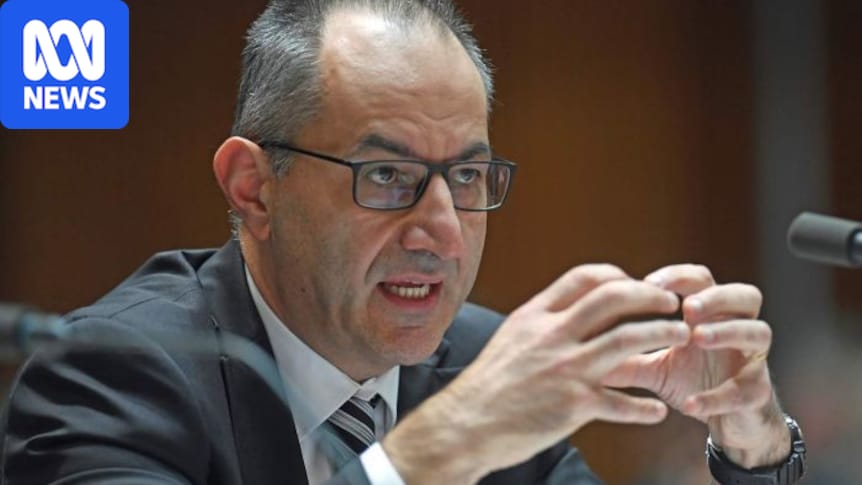
Removing the automatic return permit process embedded in laws to temporarily exclude citizens from Australia on security grounds is worth pursuing, says a key figure involved in the initial scheme.Former home affairs secretary Mike Pezzullo said there is merit in a "compromise" approach to bolster current provisions within both temporary exclusion order (TEO) and passport laws by granting more discretionary power to the relevant ministers.The recent return of Islamic State-linked women to Australia, along with revelations that at least 13 men currently in Iraqi prisons could also seek to travel home, has fuelled debate about ways to strengthen the federal government's ability to restrict their movement.One Nation leader Pauline Hanson this week wrote to the crossbench and Coalition asking them to support her private members' bill that would stop the return of Australians who joined Islamic State (IS) and cancel passports of convicted terrorists.One Nation leader Pauline Hanson is pushing to ban Australians who join IS. (ABC News: Keane Bourke)The Coalition has also flagged plans to expand its own counter-terror proposal, which currently includes making it an offence to assist IS "sympathisers" to return to Australia.Neither party has the numbers in parliament to seriously progress their competing bills, but both believe prosecuting the issue is politically advantageous as they seek to paint opponents as weak on national security.But Labor has argued Ms Hanson's plan would "last about 30 seconds in the High Court" and warned refusing to accept citizens would make it harder for Australia to deport foreign nationals on similar grounds.Meanwhile, a constitutional law expert has suggested it would be "extremely difficult" to get a court to make the type of order proposed by One Nation, due to the high threshold of proving a citizen posed a threat.Replace automatic return with discretion, says former officialCurrently, the home affairs minister can issue a TEO to prevent an Australian overseas from returning for up to two years if they suspect it would prevent a terror act or if ASIO has assessed the person to be a direct or indirect security risk.The person subjected to a TEO remains entitled to a passport and can apply for a return permit, which the government is required to then automatically issue, though they can attach conditions.Only one Australian was subjected to a TEO out of multiple cohorts of so-called ISIS brides who returned from Syria earlier this year.The woman, Hodan Abby, was last month automatically granted a permit to return subject to strict surveillance conditions.Mr Pezzullo, who was home affairs secretary when the TEO regime was legislated by the Morrison government, said he believed it would be constitutionally "safe" to amend the act to allow ministerial discretion over return permits."The automatic return permit has never been tested or never been subjected to any adverse legal advice that removing it wouldn't survive contact with the High Court," he said.Mr Pezzullo also suggested aligning passport laws with the TEO legislation so that if a minister was concerned a person could be a person could be a threat to security, based on an ASIO assessment or otherwise, they could withhold issuing the document for a similar two-year period."Two years is not an onerous lifetime punishment … the minister couldn't do it capriciously; they would have to have reasonable grounds to believe the person's return would be harmful to our society," he said.Labor says current laws at 'limit' of constitutionMs Hanson's bill would go further than this by creating a foreign terrorist fight exclusion order, allowing the blocking of passports for anyone subject to that order and also stopping the automatic issue of return permits when a case is under consideration.But Home Affairs Minister Tony Burke said on Thursday the Morrison-era laws used by the government to manage the return of IS-linked Australians already went "right to the limit of what you could do constitutionally".Tony Burke is concerned about the precedent banning Australian citizens could set. (ABC News: Callum Flinn)"So on all the advice that I've had, something like what's being proposed [by One Nation] would last about 30 seconds in the High Court," he said. "Every Australian, me, included, doesn't want these individuals back."The reality is every country in the world has to take back its own citizens."Mr Burke said people should be "very wary" of letting go of the principle that countries have to take their citizens back, given Australia also deports foreign criminals."There are about 750 people every year who I make leave," he said."I would not want to go down a path where somehow we started a principle that countries don't have to take their citizens back."Mr Pezzullo said he agreed with Mr Burke on this issue."I've found in quite a number of cases when we were pressing hard to deport someone, it would sometimes be raised [by foreign counterparts] that 'you [Australia] don't like to take people back,'" he said.Mr Pezzullo said this issue could be factored into considerations of "public interest" when a minister was determining whether to grant a return permit to someone issued a TEO.Opposition Leader Angus Taylor said he was happy to work with "everybody across the parliament" to make sure terrorists did not return to Australia.Angus Taylor wants to ensure terrorists cannot return to Australia. (ABC News: Matt Roberts)"One Nation and others can support our legislation that we have introduced to the parliament to prevent third-party repatriation of terrorists to this country," he said.Legal expert flags 'extremely' high threshold in Hanson planMs Hanson has claimed her private member's bill was designed to withstand a High Court challenge, but there remains uncertainty among experts.A professor of constitutional law at the University of Sydney, Anne Twomey, said no-one could know if One Nation's bill was "constitutionally valid" as the High Court had never been asked to determine if Australians had an implied right to return and reside in the country.But she said the criteria for the type of exclusion order One Nation was proposing were "much harder to satisfy" than the current scheme, as the court would have to be satisfied that the risk posed by the person trying to enter Australia could not be managed by other measures.Anne Twomey says the High Court has never been asked to determine if Australians had an implied right to return. (ABC News: Liam Patrick)"This would require actual evidence — which is very difficult to obtain concerning a person's conduct in a foreign country," she said."It would be extremely difficult to get a court to make such an order."Professor Twomey said it was also important to consider if the person was genuinely a terror threat to Australians."[In that case,] it is probably much safer for the Australian community to have them in custody in Australia, or under a control order, than have them wandering free elsewhere in the world where they can freely perpetrate terrorist acts against Australians," she said.
Labor warns One Nation terror laws would not survive High Court
Full Article
Original Source
Read the full article at Abc →KhanList aggregates and links to publicly available news content. We do not host full articles from third-party sources. Always verify important information with original sources.