
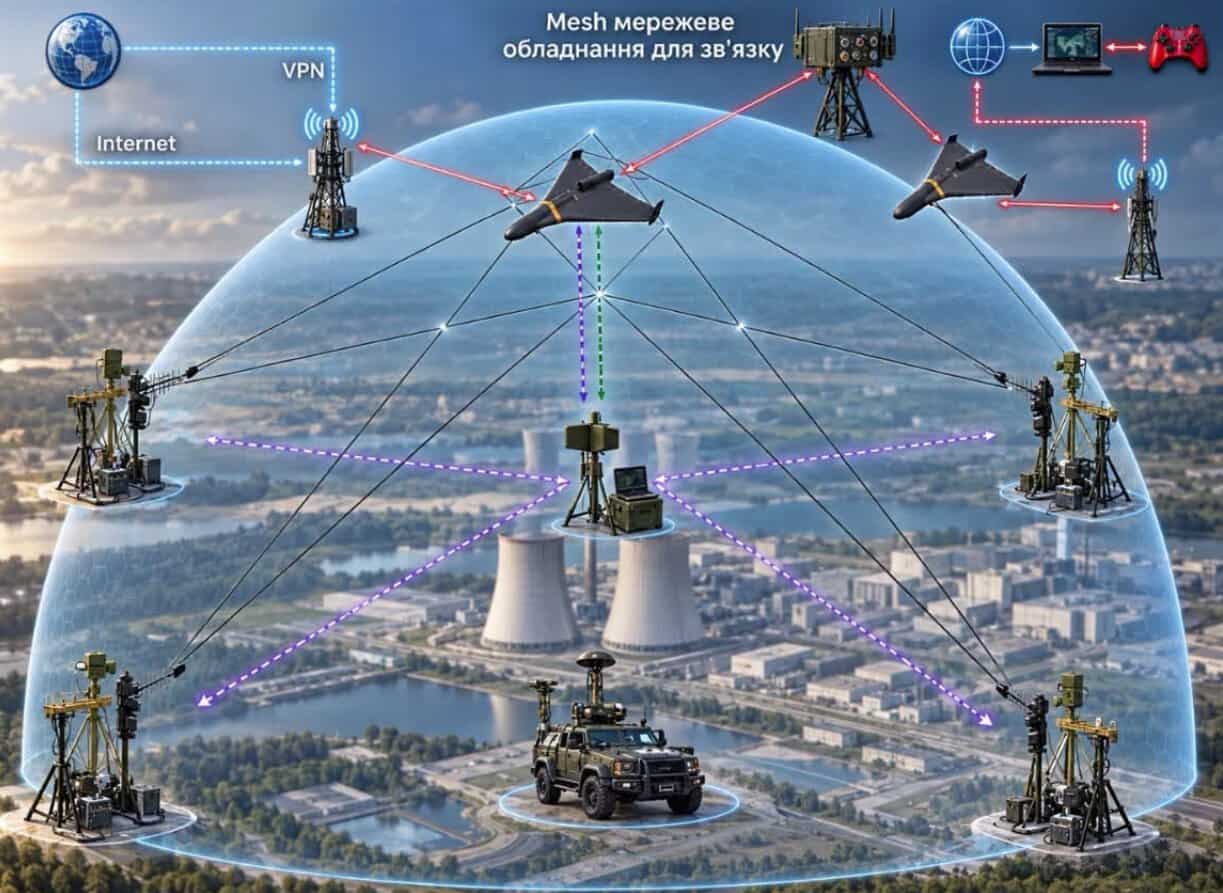
A large-scale electronic warfare shield that jams the communication links of Russian Shahed long-range attack drones has been activated by Ukrainian engineers in hundreds of locations across Kyiv. Fitted after several weeks, the protective dome targets the specific radio frequencies in use by remote operators, bringing a tactical pause in drone deployments. Disrupting dynamic MESH radio networks To search for targets and navigate, Russian operators rely on radio modems on their drones, connected by means of a MESH network. A MESH network relies on a decentralised topology where devices or nodes connect directly to one another rather than passing through a single central router or base station. If one route is blocked, dynamic routing algorithms instantly direct transmission via an alternative path through intermediate devices. A branched construction means the communication link is resilient compared to a standard architecture. By blanketing the capital with jamming signals, the new electronic shield successfully splits this decentralised drone connection from its operators. Urban deployment and logistical ingenuity To provide defence, antennas needed to be mounted across hundreds of rooftops and buildings throughout the city to execute the defense task. “The tasks were large-scale and ambitious—to complete a huge volume of work across the entire city in a few weeks,” said defence technology adviser Serhii Beskrestnov, highlighting that major electronic warfare equipment manufacturers worked around the clock in pursuit of delivering the hardware requirements. By activating its electronic dome, the Shahed drone’s remote radio links were disrupted, giving Russian engineers a compelling incentive to look for alternative technical solutions while modernising them to bypass the interference. Autonomous ground robots support operations In addition to counter-drone technology, unmanned systems have scaled extensively into forward ground operations. This reduces the risk to human life during casualty evacuations, as unmanned ground vehicle (UGV) technology eliminates direct-fire exposure for human drivers. The Third Army Corps began rolling out fleets of purpose-built UGVs to tackle forward casualty evacuations and supply frontline troops with logistical and medical cargo. In their first year of service, the robots evacuated over 600 wounded soldiers from active combat operations. Battling difficult terrain and debris fields while fending off line-of-sight electronic jamming, the systems completed more than 18,000 active service missions.The robots featured modular payloads adapted for medical freight, forward reconnaissance, and minefield clearance as needed. This marks an important technical milestone toward deploying ruggedised remote UGV chassis across high-attrition ground missions.Get the latest in engineering, tech, space & science - delivered daily to your inbox.
Kyiv EW Shield Blocks Shahed Drone MESH Networks Across City
Full Article
Original Source
Read the full article at Interestingengineering →KhanList aggregates and links to publicly available news content. We do not host full articles from third-party sources. Always verify important information with original sources.