
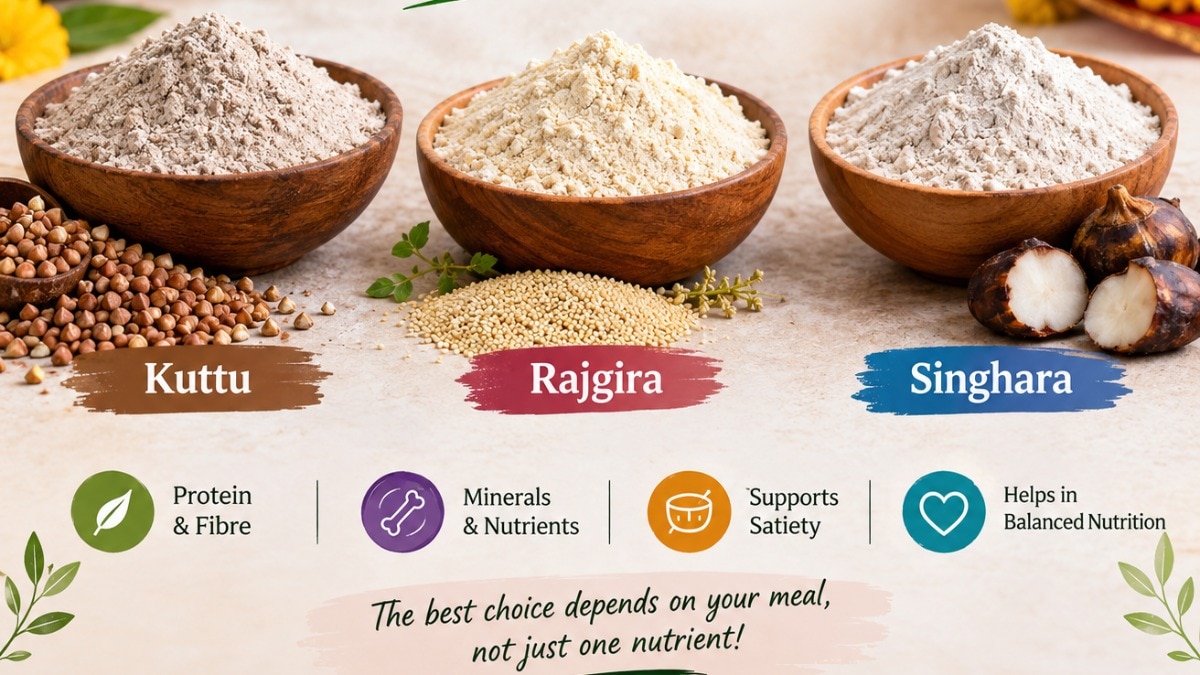
Choosing the right flour during Navratri fasting can help add variety to meals, but no single option is automatically the healthiest. Kuttu, rajgira, singhara and sama ke chawal differ in their nutritional composition, including protein, fibre, carbohydrates and minerals.According to Palak Nagpal, Clinical Nutritionist, the focus should be on the overall meal rather than judging a flour by one nutrient alone. Portion size, cooking methods, added oil and the foods eaten alongside it can all influence the nutritional value of a fasting meal.WHAT ARE THE DIFFERENT TYPES OF ATTA CONSUMED DURING FASTING?Four commonly used fasting options are kuttu (buckwheat), rajgira (amaranth), singhara (water chestnut) and sama ke chawal (barnyard millet).Kuttu provides fibre and minerals, while rajgira contributes protein and minerals such as calcium and iron. Singhara flour is primarily a source of carbohydrates, while sama ke chawal provides energy through carbohydrates. Each has a different nutritional profile, making variety important when planning meals during Navratri.HOW DO KUTTU, RAJGIRA AND SINGHARA COMPARE NUTRITIONALLY?The approximate nutritional values below illustrate how some of these flours compare per 100 g of raw ingredient. Actual values may vary depending on the variety, processing and product.FlourProtein (per 100 g)Fibre (per 100 g)Calories (per 100 g)Kuttu (buckwheat)10 g9 g323 kcalRajgira (amaranth)13 g7 g356 kcalSinghara (water chestnut)Approximately 13 g*Not verifiedApproximately 330 kcal* Note: These are indicative figures and should be cross-checked against a reliable food-composition database or the specific product label before publication. Nutritional values vary by product and processing.Rajgira offers a higher protein content among the figures listed, while kuttu provides a combination of protein and fibre. However, these numbers represent 100 g of raw flour, not a typical serving. The amount consumed in one meal will determine the actual nutrient intake.IS KUTTU BETTER THAN SINGHARA OR RAJGIRA?Not in every respect. Kuttu contributes fibre and minerals, while rajgira provides protein and minerals. Singhara flour supplies carbohydrates and some protein.There is no sound basis for declaring one flour universally superior. Each contributes different nutrients, and a varied diet can offer a broader range of nutritional benefits than relying on a single ingredient.The choice should depend on individual dietary needs, the quantity consumed and how the flour is prepared.WHICH FLOUR IS BEST FOR PROTEIN DURING VRAT?Rajgira and kuttu are sensible choices when regular grains and pulses are avoided during fasting. Rajgira generally provides a good amount of protein per 100 g of raw ingredient, while kuttu offers both protein and fibre.However, flour alone may not provide enough protein in a typical serving. Where permitted during fasting, pairing these foods with curd, milk or paneer can help increase the protein content of a meal.For example, rajgira cheela with a paneer filling or kuttu roti with curd can provide a more balanced combination of nutrients than a flour-based dish eaten on its own.WHICH FASTING FLOUR IS BETTER FOR WEIGHT MANAGEMENT?There is no single fasting flour that guarantees better weight management. The overall meal, portion size and cooking method matter more than choosing one flour over another.A kuttu puri deep-fried in oil can be considerably more energy-dense than a simple kuttu roti. Similarly, the amount of oil or ghee used to prepare a rajgira cheela or singhara roti affects its total calorie content.Choosing rotis or cheelas more often than deep-fried puris, while including a suitable protein source and vegetables where permitted, can help make fasting meals more balanced.WHICH FLOUR CONTAINS MORE FIBRE AND MAY KEEP YOU FULLER FOR LONGER?Kuttu is a useful option because it can contribute both fibre and protein. These nutrients can support satiety, but fullness also depends on portion size, hydration, meal composition and individual digestive responses.A meal combining kuttu roti with curd or paneer may be more satisfying than eating a small flour-based snack on its own. However, the effect will vary depending on the quantities consumed and the person's nutritional needs.CAN FASTING FLOURS CAUSE A QUICK RISE IN BLOOD SUGAR?Carbohydrate-rich fasting foods can raise blood glucose, but the response depends on several factors, including the flour's processing, particle size, cooking method, portion and accompanying foods.It is not possible to reliably rank kuttu, rajgira, singhara and sama ke chawal by their glycaemic response without comparable testing. Total carbohydrate content alone does not tell us how quickly a food will raise blood sugar.Combining flour-based dishes with suitable sources of protein, fibre and fat may help moderate the overall glucose response. People with diabetes should pay attention to portions and seek medical advice on fasting safely, particularly if they take medicines that can cause low blood sugar.ARE PACKAGED FASTING FLOURS DIFFERENT FROM FRESHLY GROUND FLOUR?Not necessarily. A pure, single-ingredient packaged flour may be nutritionally similar to freshly ground flour made from the same ingredient.Differences can arise from processing, storage conditions, contamination or the addition of other ingredients. When buying packaged fasting flour, check the ingredient list, FSSAI licence details, manufacturing and expiry dates, and storage instructions.Avoid assuming that a packaged product is healthier simply because it is labelled as fasting flour. The ingredients and preparation method remain important.ARE ALL FASTING FLOURS EQUALLY EASY TO DIGEST?No. Digestive tolerance varies from person to person. Fibre content, portion size, preparation and existing digestive sensitivities can influence how someone feels after eating a particular flour.A sudden increase in fibre may cause bloating in some people, while inadequate fibre and fluid intake can contribute to constipation. Thorough cooking and adequate hydration may help, although individual tolerance still matters.If a particular flour repeatedly causes discomfort, consider the portion and preparation method rather than assuming that all fasting flours will have the same effect.DOES THE WAY YOU COOK FASTING FLOUR CHANGE ITS NUTRITIONAL VALUE?Yes. Although the flour's basic nutrient composition may remain broadly similar, the finished dish can differ considerably in calories and fat.Roti: Usually requires relatively little added fat.Cheela: Can be paired with curd, paneer and suitable vegetables.Paratha: Added oil or ghee increases its energy content.Puri: Deep-frying increases fat content and usually raises calories per serving.Cooking also affects starch structure, texture and digestibility. Cooling and reheating certain starchy foods can increase resistant starch, but the effect varies and does not automatically make every preparation low in glycaemic impact.WHICH IS HEALTHIER DURING VRAT: KUTTU PURI, SINGHARA ROTI OR RAJGIRA CHEELA?A rajgira cheela prepared with a modest amount of oil and accompanied by curd or paneer can be a useful option for a balanced fasting meal. Singhara roti with a suitable protein-rich accompaniment is another choice.Kuttu puri is not inherently unhealthy, but deep-frying makes it easier to consume more energy in a smaller portion. The flour, preparation method and serving size should all be considered together.HOW TO COMBINE FASTING FLOURS FOR A MORE BALANCED MEALPairing fasting flours with suitable protein sources and, where permitted, vegetables or nuts can help provide a wider range of nutrients.Some combinations include:Kuttu roti with curd or paneerRajgira cheela with paneer filling and curdSinghara roti with a paneer-based accompanimentSama rice with curd and peanuts, with portions adjusted to appetite and nutritional needsThese combinations can provide protein, fats and other nutrients instead of making the meal predominantly starch-based.Ultimately, Navratri fasting does not require choosing one perfect flour. Kuttu, rajgira, singhara and sama ke chawal can all fit into a varied diet. As Palak Nagpal, Clinical Nutritionist, emphasises, the broader principle is to focus on variety and balance rather than expecting one food to meet every nutritional need.- Ends
Kuttu vs rajgira vs singhara: Which atta is healthiest for Navratri fasting?
Full Article
Original Source
Read the full article at Indiatoday →KhanList aggregates and links to publicly available news content. We do not host full articles from third-party sources. Always verify important information with original sources.