
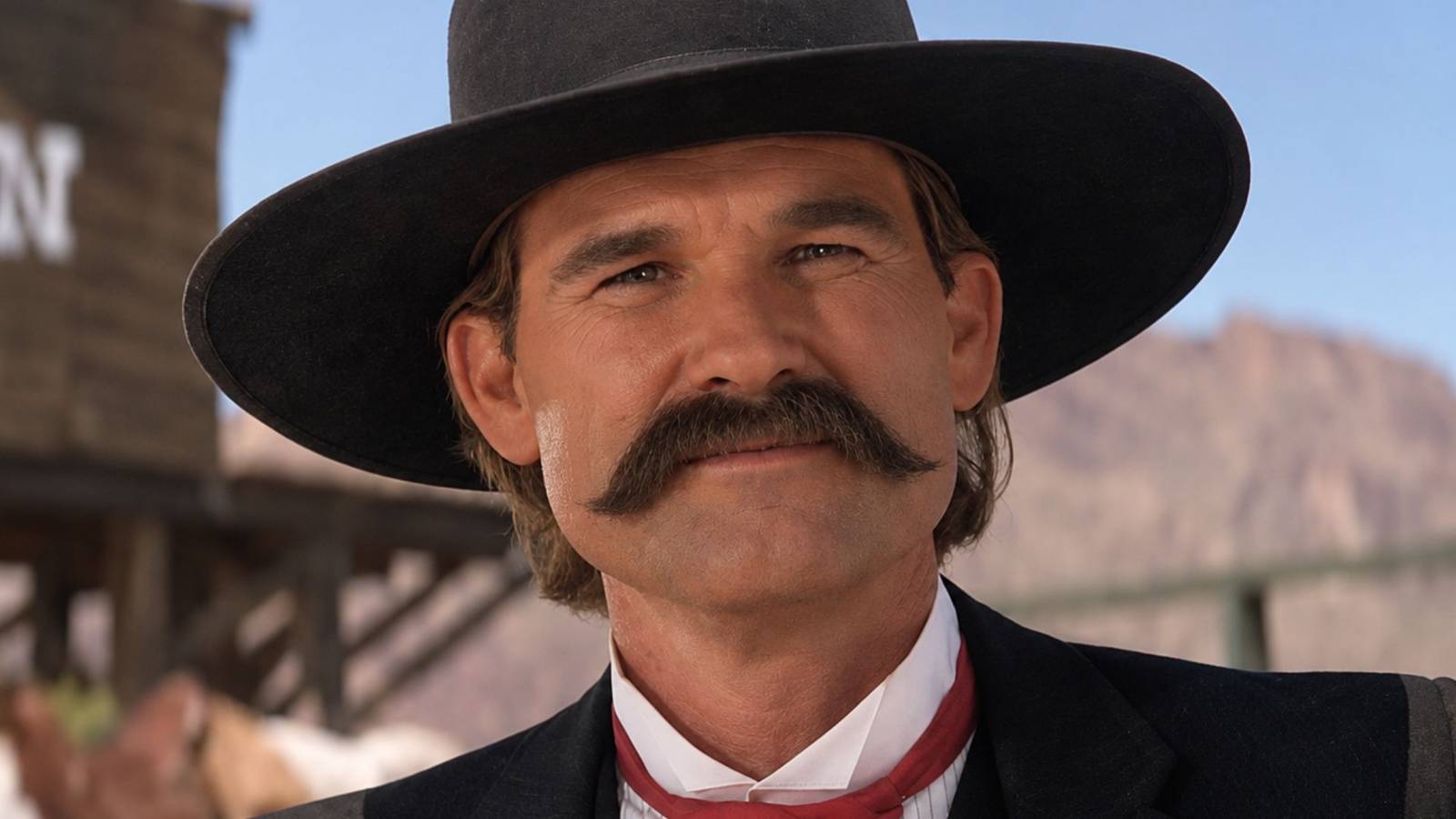
Published Nov 9, 2026, 12:15 PM EST Simon Gallagher has worked in movie and TV journalism for more than 17 years. He has written more than 6000 articles and reviews, and edited thousands more. He is an expert in the entertainment industry, particularly in the golden age of screen superheroes. Simon is also a Rotten Tomatoes approved critic. There aren't many modern westerns that can compete with the enduring legacy of popularity of 1993's classic Tombstone. Even decades after its initial release, the movie remains one of the greatest western movies released since the revival of the genre. The whole thing is excellent, and hugely rewatchable, but that legacy is really driven by Val Kilmer's career-defining Doc Holliday and Kurt Russell's archetypal, righteous hero, Wyatt Earp. Despite some well-publicized production issues and Kevin Costner's apparent desire to sabotage it entirely, Tombstone also has one of the greatest scripts in modern Western history. It's eminently quotable, not just when Doc Holliday is goading his enemies, but in some of the quieter moments as well. Away from the grand action sequences and spilled blood and gunpowder, Tombstone's best quote - and its most significant line - arrives right at the end, in the final scene. It has nothing to do with vengeance. It has nothing to do with shootouts or law enforcement or outlaws. It's a final quiet reflection on the life of Wyatt Earp, and that closing line says more about the great American hero than any good fight ever could: “Tom Mix wept." Tombstone's Final Line Explained: Who Is Tom Mix? The full final line, spoken by narrator Robert Mitchum, is "Wyatt Earp died in Los Angeles in 1929. Among the pallbearers at his funeral were early Western stars William S. Hart and Tom Mix. Tom Mix wept." After the bloody climax of the gunfight at the O.K. Corral, Tombstone reveals what happened to Wyatt Earp in the decades following arguably the most famous battle in Wild West history. Mitchum explains that Earp died in Los Angeles in 1929 at the age of 88, after pursuing a peaceful life with Josephine Marcus. We see the couple dancing together in freshly fallen snow before it's revealed that, upon his death, Earp's funeral pallbearers included the two classic Hollywood Western stars. Crucially, the final word isn't given to Josephine or Earp himself, or any of the people whose lives were touched by his heroism or his career in law. Instead, it's an actor whose career was defined by his relationship with Earp. Tom Mix was Hollywood's first silent Western movie megastar, appearing in over a hundred movies and helping to establish the archetype of the gun-toting Wild West hero that so many of the Golden Age Western movies were built on. Mix actually knew Wyatt Earp personally during the lawman's later years in California, and the iconic figure would frequently visit his movie sets and gave him one of his personal pocket watches. The line also records a genuine historical event: the actor did indeed act as one of the pallbearers, and it was heartbreaking to see his friend laid to rest. So why was that what Tombstone chose to close on? Why Tombstone's Final Line Is So Powerful Despite that final line being just three words, there was a lot of power in it and a lot of thematic importance. It may not have been deliberate, but it's impossible not to see something of the shortest verse in the King James Bible reflected here, for a start: "Jesus wept." In both cases, the line is a simple statement that hides massive emotional meaning. Earp's death - like that of Lazarus in the Bible - is more than the mere passing of a mortal man. It marked the definitive end of an era when the West passed into mythology as the Old West. Wyatt Earp's passing could have been marked by mention of the number of outlaws he put in the ground, of a tactical victory at the O.K. Corral, or the fact that he gained vengeance for the cowardly attacks on his brothers. Instead, his final legacy is a gentle assessment of his place in history. His death was enough to drive a key figure in setting the archetype for cowboys to tears. He died decades after the gunfight at the O.K. Corral, and that settled score was merely part of his story. His real destiny also included what he did in the peaceful decades that we don't see captured on screen. In Tombstone, he became a living inspiration for generations of silver screen fictional heroes, setting the blueprint that stretched well beyond his death and even well beyond Tombstone's reach. Fundamentally, it's a meta comment that has incredible depth behind it. By ending on the image of Hollywood's first most famous cowboy weeping at the death of his real-life counterpart, Tombstone underlines the importance that Wyatt Earp had, both in American culture and in the establishment of the Wild West legend itself. Tombstone 8/10 Release Date December 25, 1993 Runtime 130 minutes
Kurt Russell's Masterpiece Still Has The Best Final 3 Words In Western History
Full Article
Original Source
Read the full article at Screenrant →KhanList aggregates and links to publicly available news content. We do not host full articles from third-party sources. Always verify important information with original sources.