
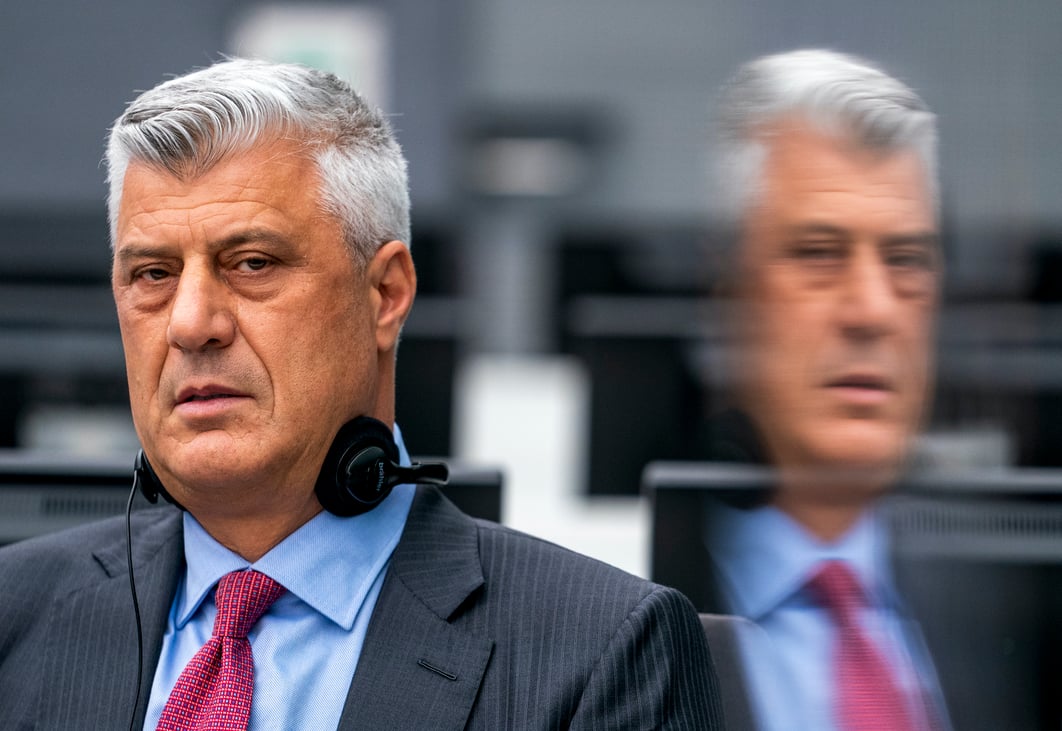
Secret recordings helped convict Kosovo’s former president and two associates, while gaps in the evidence cleared another defendant.THE HAGUE, Netherlands (CN) — Already sentenced to 25 years for war crimes, Kosovo’s former President Hashim Thaçi received another 17 months Tuesday for using detention visits to send witnesses instructions on how to testify.The Kosovo Specialist Chambers convicted Thaçi of attempted obstruction, revealing confidential witness information and contempt. The sentence must be served separately from the prison term imposed Sept. 16 for war crimes, including murder and torture. That earlier judgment remained open to appeal.Thaçi, a Kosovo Liberation Army leader who later became prime minister and president, was detained in The Hague when associates visited him in 2023. As witnesses prepared to testify about wartime leadership and responsibility, he gave visitors messages to carry back to Kosovo, bypassing restrictions on witness contact.After a July visit, guerrilla veteran Fadil Fazliu met witness Rrustem Mustafa in Pristina and conveyed Thaçi’s instructions, including advice to deny receiving communications from him if prosecutors asked. Former intelligence chief Bashkim Smakaj received written instructions for witness Bislim Zyrapi and later met him.Judge Christopher Gosnell relied on court-authorized recordings, messages, telephone records and computer evidence linking instructions recovered from Smakaj’s home to a computer at Thaçi’s detention center.“Mr. Thaçi tells Mr. Fazliu repeatedly that he must write down these messages, expressing concern that Mr. Fazliu would forget them, indicating that these were not mere reminiscences about the war among old friends, but instructions for onward transmission,” Gosnell wrote in the published judgment summary. The full judgment remained confidential Tuesday.Smakaj and Fazliu each received 12 months for attempted obstruction and helping Thaçi violate court orders. Both had served their sentences in detention and were discharged. Former commander Isni Kilaj was acquitted entirely. Hajredin Kuçi, a former deputy prime minister and justice minister, received a one-month sentence, suspended for a year, for prohibited witness contact.Prosecutors sought six years for Thaçi. All five defendants pleaded not guilty.Kilaj’s acquittal turned on missing evidence of steps to contact a protected witness or participation by a third person, required for group obstruction.Alexander Heinze, a visiting professor specializing in criminal law at Philipps University Marburg, endorsed that distinction between preparation and criminal attempt. He said prosecutors relied on Kosovo’s domestic criminal law to pursue group obstruction charges over Thaçi’s use of persuasion and loyalty rather than threats or bribes. The defense disputed whether a provision used domestically against physically obstructive crowds could cover witness coaching.Heinze said the sentences were closer to other international courts’ treatment of nonviolent witness interference than prosecutors’ demands, viewing them as a compromise given the expected backlash in Kosovo. He also cautioned that real interference risks did not automatically justify years of detention; continued confinement required concrete, individualized reasons.Thaçi’s rise to power followed the 1998-99 war between ethnic Albanian guerrillas and Serbian forces. NATO’s bombing campaign preceded Serbia’s withdrawal; Kosovo declared independence in 2008, which Serbia does not recognize.Established under Kosovo law in 2015 following investigations into crimes attributed to guerrilla members, the internationally staffed court operates in the Netherlands partly because of witness intimidation concerns. It belongs to Kosovo’s justice system and prosecutes certain wartime and postwar crimes, plus interference with its proceedings.Arbër Ahmeti, a researcher studying hybrid tribunals at the University of Vienna, said the court treated intimidation as a structural problem, combining extensive protections with substantial sentences. Earlier Kosovo-related proceedings at the U.N.’s Yugoslav war crimes tribunal often resulted in fines or a few months behind bars, he said; this was the court’s third prosecution for offenses against the administration of justice.In September, Thaçi and three other former guerrilla leaders were convicted over crimes against perceived opponents across Kosovo and northern Albania. Notices of appeal are due Nov. 27.Sara L. Ochs, an associate professor specializing in international criminal law at Elon University School of Law, saw accountability for powerful defendants but deeper alienation among Kosovars who regarded Thaçi as a hero. She described the effect as “simultaneously enhancing the court’s international legitimacy while further compromising its local legitimacy within Kosovo.”Amer Alija, a lawyer working on war crimes issues at Amer Alija & Associates and the Humanitarian Law Center Kosovo, stressed testimony’s often decisive role. These and earlier obstruction convictions reinforced the need to protect witnesses while safeguarding defendants’ rights, he said.Specialist Prosecutor Kimberly West pledged further investigations. “These attempts undermine the integrity of the judicial process and must be confronted head on,” she said.Kuçi, who worked on another defendant’s defense team, was convicted over a congratulatory message to Mustafa that breached a no-contact order. His lawyer, Alexander Admiraal of Takens Admiraal Advocaten, welcomed Kuçi being cleared over the plan to approach three witnesses, but called his conviction over the message to Mustafa incomprehensible and said he would appeal.Jonathan Rees, a barrister at 5 Paper Buildings representing Smakaj, said: “We are of the view that the verdict today is not supported by evidence and we will be appealing it.” The remaining defendants’ lawyers, including Thaçi’s, did not respond to requests for comment.The convictions can be challenged before the court’s appeals panel. Smakaj’s sentence was served and Kuçi’s suspended; both planned to seek acquittal on appeal.Courthouse News reporter Eunseo Hong is based in the Netherlands.Subscribe to our free newslettersOur weekly newsletter Closing Arguments offers the latest about ongoing trials, major litigation and rulings in courthouses around the U.S. and the world, while the monthly Under the Lights dishes the legal dirt from Hollywood, sports, Big Tech and the arts.Additional Reads
Kosovo’s former president convicted over messages to witnesses
Full Article
Original Source
Read the full article at Courthousenews →KhanList aggregates and links to publicly available news content. We do not host full articles from third-party sources. Always verify important information with original sources.