
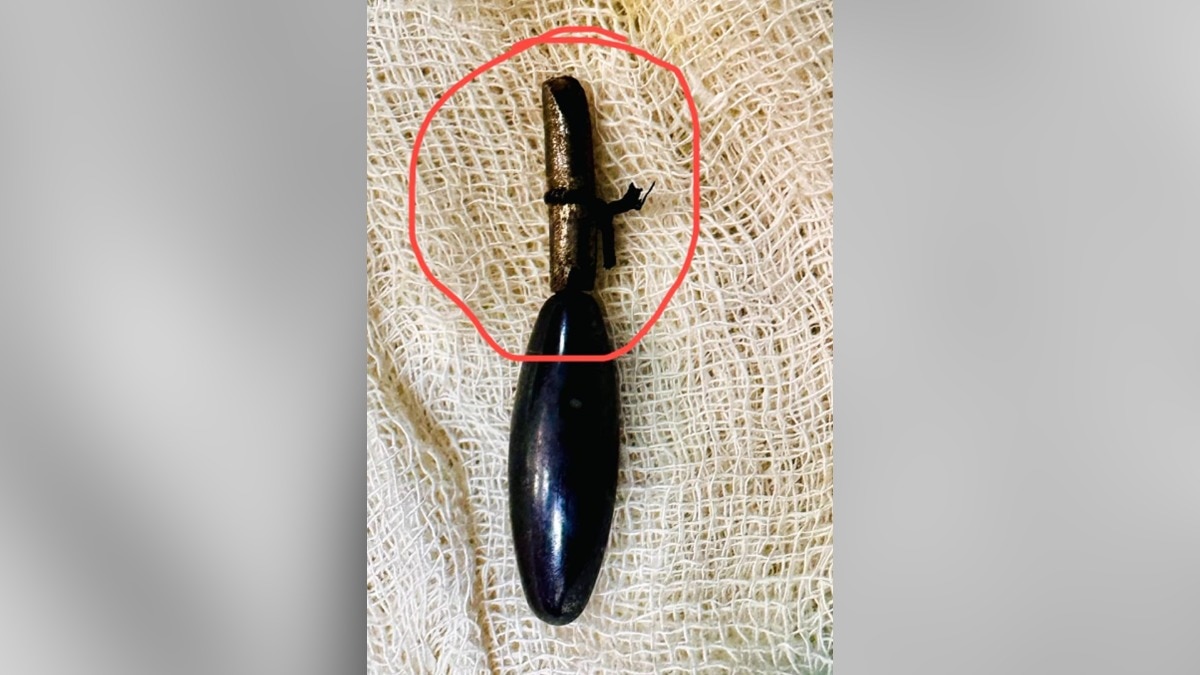
In a complex and life-threatening medical situation, doctors at Medical College and Hospital, Kolkata, successfully removed a large magnet lodged in the airway of a six-year-old child using an innovative medical technique. The challenging procedure was carried out by doctors from the hospital’s ENT (Ear, Nose and Throat) department.On Tuesday morning, the parents of six-year-old Araka Talik, a resident of Maheshpur in Baduria, brought him to the hospital’s ENT outpatient department for treatment. A large magnet had entered the child’s respiratory tract and become lodged in his right bronchus, causing breathing difficulties and raising concerns about a potentially life-threatening situation. He was subsequently admitted to the ENT department.After initially stabilising the child’s condition, doctors attempted to remove the magnet through rigid bronchoscopy. However, because of its large size and unusual shape, the magnet was firmly lodged inside the bronchus and could not be removed using conventional bronchoscopy forceps.To overcome this challenge, doctors developed a specially designed, small, elongated rectangular magnet measuring just 3 millimetres in length. The device was then used to plan the next stage of the procedure. On Thursday, November 5, a second specialised procedure was undertaken under the leadership of Dr Soumendranath Bandyopadhyay, Head of the ENT Department, and Professor Dr Diptanshu Mukherjee, along with Dr Debashis Ghosh of the Anaesthesia Department. The specially designed magnet was attached to the tip of the bronchoscopy forceps and used to retrieve the larger magnet.Finally, through a small opening made in the front of the windpipe (tracheostomy), Professor Dr Diptanshu Mukherjee successfully removed the large magnet using forceps. Following the procedure, normal airflow to both lungs was restored. The child was subsequently shifted to the Paediatric Intensive Care Unit (PICU) and is now gradually recovering under the supervision of the paediatric department’s medical team.The successful completion of this complex procedure is a remarkable example of medical expertise, innovative thinking, prompt decision-making and coordination among different departments.- Ends
Kolkata doctors develop tiny magnet to remove larger one from 6-year-old's airway
Full Article
Original Source
Read the full article at Indiatoday →KhanList aggregates and links to publicly available news content. We do not host full articles from third-party sources. Always verify important information with original sources.