
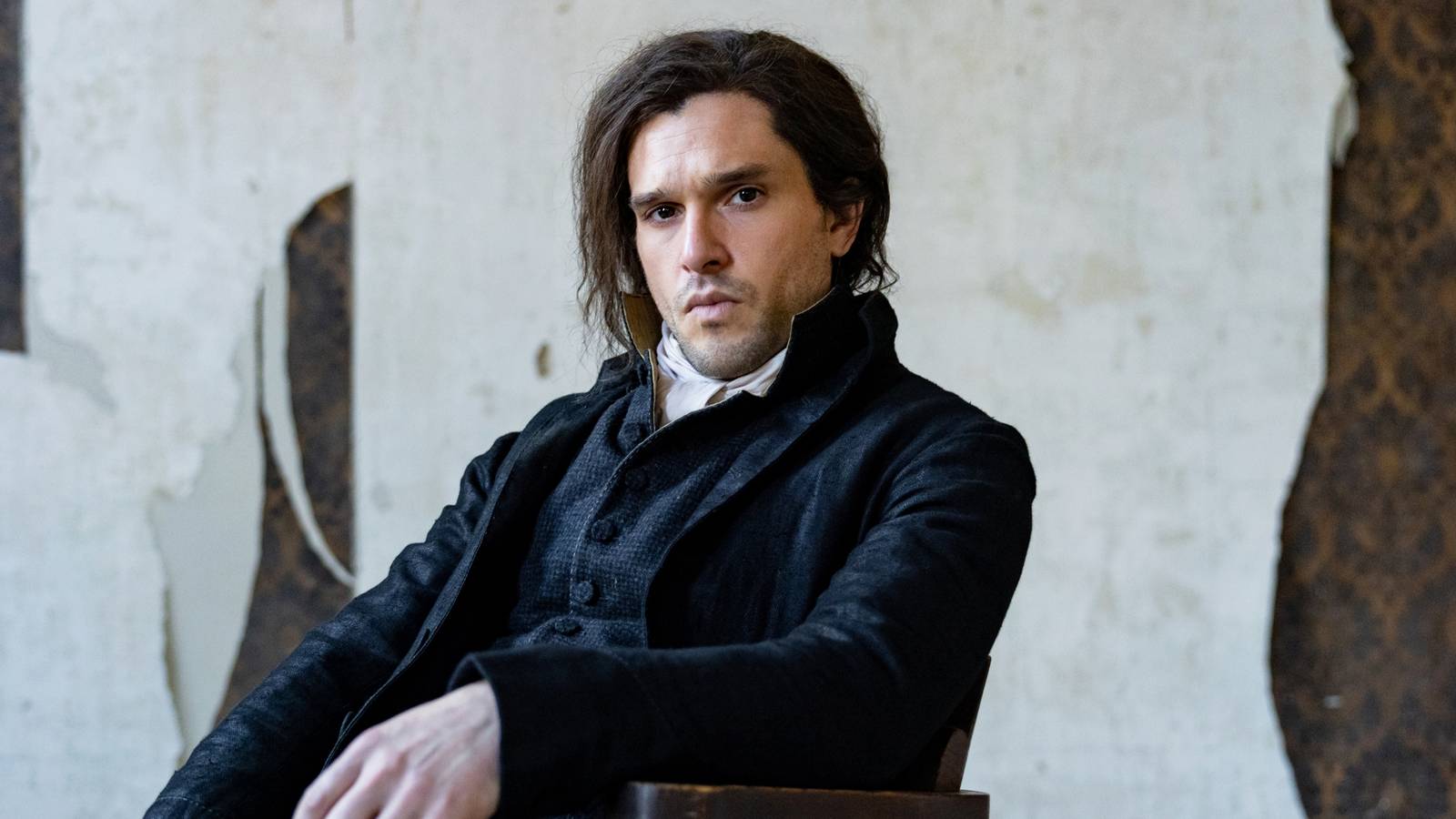
Image via MGM+ Published Sep 4, 2026, 10:00 AM EDT Kelcie Mattson is a Senior Features author at Collider. Based in the Midwest, she also contributes Lists, reviews, and television recaps. A lifelong fan of niche sci-fi, epic fantasy, Gothic horror, elaborate action, and witty detective fiction, becoming a pop culture devotee was inevitable once the Disney Renaissance, Turner Classic Movies, BBC period dramas, and her local library piqued her imagination. Rarely seen without a book in one hand and a cup of coffee in the other, Kelcie explores media history (especially older, foreign, and independent films) as much as possible. In her spare time, she enjoys video games, amateur photography, geeking out over music, and attending fan conventions with her Trekkie family. Sign in to your Collider account Although global history has no shortage of fiction writers with popularity and influence in spades, Charles Dickens' cultural omnipresence rivals that of Jane Austen and Agatha Christie. Pick any of the Victorian-era author's most famous titles, and there's a not-insignificant chance of a new retelling popping up every few decades. Yet none of them, except maybe A Christmas Carol, are as exceedingly popular as his 1859 door-stopper, A Tale of Two Cities. Dickens' operatic epic about "the best of times" and "the worst of times" is estimated to have sold over 200,000 million copies and counting — making it one of the most stratospherically best-selling books of all time (and a staple across countless high school English classes). Since the last small-screen version of A Tale of Two Cities aired on England's ITV network in 1989, one can argue that a new version, especially one that casts its mind toward contemporary audiences, has been slower to arrive than tradition dictates. Well, wait no longer: creator-writer Daniel West (Gunpower) and director Richard Clark (Outlander) have partnered with Federation Stories, Thriker Films, MGM+, and the BBC for a four-part production (provided for review in its entirety). Starring a superb ensemble cast co-led by Game of Thrones' Kit Harington, this Two Cities is filled with heart and elegance. Although this interpretation's changes don't all reinvent the wheel with equal consistency, it offers more necessary modern updates than downsides — plus, all the glamorous, blockbuster trappings of the period-drama miniseries heyday. What Is ‘A Tale of Two Cities’ About? One fateful night in 1764, young Lucie Manette (Mirren Mack) barely escapes France with her life. Assuming that their attackers murdered her beloved father, Alexandre (Yannick Renier), Lucie spends the next 18 years in London under the care of the late Jasper Lorry and his widow, Hester (Sharon Duncan-Brewster). Charles Darnay (François Civil), born in France but living in England by choice, arrives at the women's doorstep with news about a very much alive Alexandre, whose long-term allies have freed him from a brutal captivity. Before Charles and Lucie can finalize Alexandre's rescue by returning to their shared childhood home, however, false accusations land Charles in London's prisons. The charge? Treason. The sentence, if he's convicted? Execution. Defiant and determined, Lucie employs unconventional barrister Sydney Carton (Harington) in Charles' defense. In the years that follow, these three strangers' lives entwine in increasingly passionate and dangerous ways, all while France's citizens revolt against their aristocratic oppressors. ‘A Tale of Two Cities’ Biggest Changes Could’ve Been Even Bolder Image via MGM+ Like any adaptation, A Tale of Two Cities takes both small and large creative liberties. If the former deviations are intuitive, then some of those within the latter category are less effective overall. Without venturing too far into spoiler territory, amplifying Lucie's relationships with Charles and Sydney into an active love triangle rather than one reciprocal romance with an unrequited dimension certainly amplifies the sheer dramatic value and the trio's emotional throughlines. Love triangles are arguably played out in many ways, and they can also be just as engaging as any other trope under the sun. In Two Cities' case, this one arrives at the expense of one dynamic feeling underdeveloped, even though the foundations for Lucie's connection with both her suitors begin on equal footing. One almost wishes for an extra episode so that important later-stage developments are depicted onscreen rather than conveyed through dialogue, even though the pacing for each installment is excellent. Other elements also aren't deal-breakers by default, but a stronger, less traditional approach would've served to further enhance the narrative complexities at play. Dickens routinely critiqued institutional corruption and class-based inequality, even if his lambastings tended to oversimplify topics. Even for a fictional narrative that's inseparably shaped by the lead-up to the French Revolution and the Reign of Terror, capturing every component of such a profoundly complicated and resoundingly influential uprising is a difficult needle to thread across four hours. That said, West humanizes every major character — whether they wholeheartedly endorse using bloodshed to free themselves from the nobility's callous depravity (because resistance via civil disobedience has never been available to them), morally chafe against personal revenge or the Terror's executions, or are just a nameless, blithely indifferent guillotine operator. ‘A Tale of Two Cities’ Stellar Cast Embodies This Reimagination’s Best Qualities What undoubtedly thrives is Mack's luminous performance as Lucie. With a demeanor as tenacious, clever, and vulnerable as the actress, this is a heroine worth following through a saga defined by affection and altruism as much as fury, violence, deceit, and espionage intrigue. Giving historical heroines a politically anachronistic spirit has almost become its own kind of cliché, but it's only an unwelcome rebellion when it trips into the kind of vacuous "girl power" trope that lacks textured purpose or fails to engage with the protagonist's wider socioeconomic circumstances. Although the second point does befall Lucie (and it admittedly would've been nice for her professional pursuits to be afforded more long-term weight and relevancy), West's scripts position Lucie as a main character in her own right – entire galaxies away from Dickens' concoction, an innocent maiden who exists as a plot device to inspire his male leads. Speaking of her warring beaus, both the profuse yearning of a romantic melodrama and the gentle intimacy of a character study infuse Mack's respective scenes with Harington and Civil. As the book's antihero and its most famous character, Harington slides between a public persona of rogue-ish charisma and brooding self-loathing, with Sydney nursing his despair through alcohol, anger, and other self-destructive behaviors. Charles is an earnest and more clear-cut hero, repulsed by the inheritance he has disowned and fighting side-by-side with American civilians for their own Revolutionary War. And in the rare instances when Sydney and Charles share the screen one-on-one, they share the abrasive tension of two foils with more underlying similarities than either would care to admit. With all due respect to Harington and Civil, however, it's Duncan-Brewster's Hester and Roxane Duran's (Interview with the Vampire Season 2) Thérèse Defarge who complete Two Cities' most truly captivating trifecta. One once again longs for more episodes, this time just to spend more time with each marvelously compelling woman in all their protective warmth, suppressed mourning, and in Thérèse's case, a righteous rage as all-consuming as a wildfire. Visualized through evocative camera framing, a range of naturalistic-inspired lighting, and excellent art design across interior spaces, city reproductions, and countrysides, the first small-screen adaptation of A Tale of Two Cities in almost four decades is perhaps even more simultaneously timeless and timely than before. At times right on the money, while falling just shy of pure magnificence in other areas, this superb production is a testament to why Dickens' sprawling cast and psychological melodrama remain an example of such engaging, enduring storytelling — from that world-famous opening line until its equally renowned closing sentence. A Tale of Two Cities premieres September 6 on MGM+. Release Date September 6, 2026 Network BBC One Directors Richard Clark Writers Daniel West Cast François Civil Charles Darnay In 1782 London, Lucie Manette learns that her father, presumed dead for nearly 20 years, may still be alive in Paris. Her hopes become entangled with Charles Darnay, the French emigre carrying the message, after he is arrested for treason. Lucie turns to brilliant but erratic lawyer Sydney Carton for help, setting all three on a path shaped by romance, political upheaval, divided loyalties, and the growing dangers of revolutionary France. Pros & Cons The sublime performances of Mirren Mack, Sharon Duncan-Brewster, and Roxane Duran lead an excellent ensemble cast with no weak links. The production quality is both thematically purposeful and beautiful to watch. The scripts substantially improve the underdeveloped Lucie of Charles Dickens' novel. Some of the adaptation's biggest changes, while sensible on paper and compellingly acted, won't necessarily work for every viewer. The individual episodes are well-paced, but one additional installment might've prevented the love triangle from feeling somewhat lopsided.
Kit Harington's 4-Part 'A Tale of Two Cities' Is a Charles Dickens Adaptation for the Modern Era | Review
Full Article
Original Source
Read the full article at Collider →KhanList aggregates and links to publicly available news content. We do not host full articles from third-party sources. Always verify important information with original sources.