
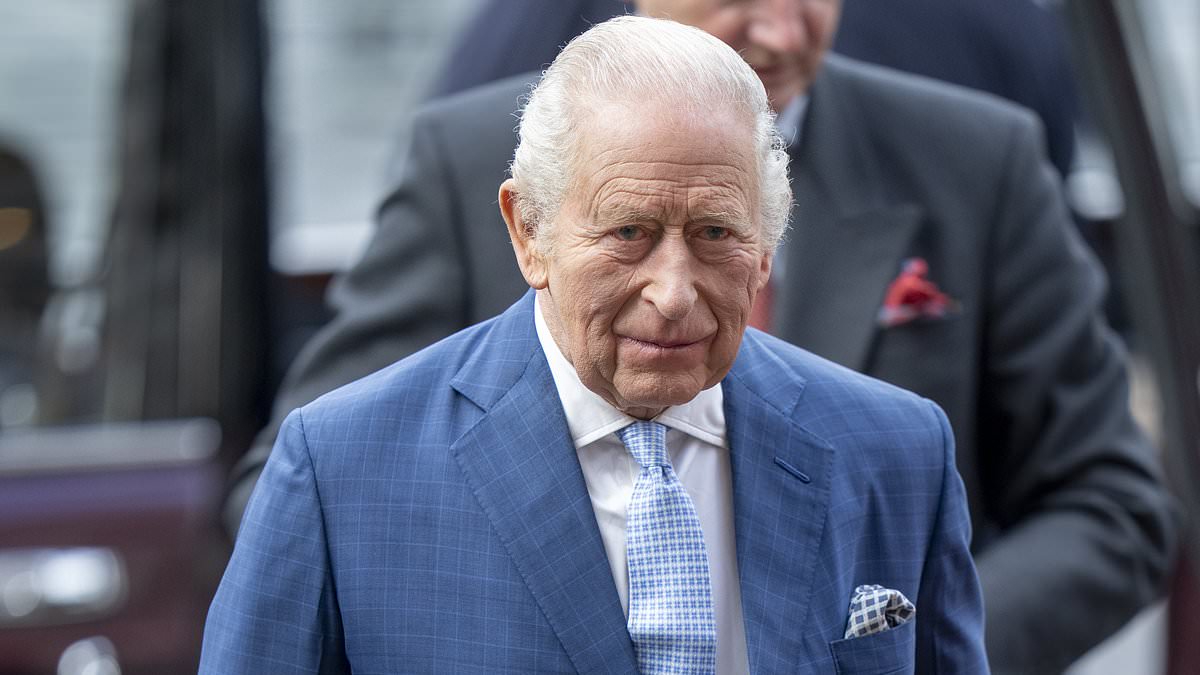
The King has volunteered to pay the Government's controversial new mansion tax on royal properties, despite being legally exempt.His decision means the Royal Family could face annual bills running into thousands of pounds on some of the country's most famous residences, including Buckingham Palace and Windsor Castle.The move is understood to have been communicated to the Treasury and reflects the Royal Household's commitment to 'transparency and accountability'.It comes after King Charles became the first monarch in history to publish his tax bill earlier this year, revealing that he paid £12.9million in 2024-2025, placing him among the top 100 UK taxpayers.Many of the properties that may attract tax under the arrangement are not privately owned by the King, but are held by him as head of state for the benefit of future generations.The new levy, officially known as the High Value Council Tax Surcharge (HVCTS), was announced last year by Chancellor Rachel Reeves and will sting owners of Britain's most expensive homes.It is due to come into force on April 1, 2028, and will apply to residential properties in England valued at £2million or more.Properties valued up to £2.5million will face an annual bill of £2,500, rising to a maximum of £7,500 for those worth more than £5million.The Treasury has confirmed that, as with the rest of the tax system, the Crown will be exempt from HVCTS. Following the King's decision to pay it anyway, it is unclear which palaces will be affected. King Charles has volunteered to pay the controversial 'mansion tax' that will apply to residential properties worth more than £2million The King owns the Sandringham estate privately, having inherited it from his late mother. The Royal Family traditionally spends Christmas thereBuckingham Palace and Windsor Castle are both held by the King in his capacity as Sovereign rather than being his personal possessions.The Palace of Holyroodhouse in Edinburgh, the King's official Scottish residence, will not be eligible as the tax only applies in England. Ministers in Scotland are currently considering their own mansion tax for properties worth more than £1million.Other Crown-held royal properties which could be affected include Clarence House, the King's official London residence, St James's Palace and Kensington Palace.The King is likely to pay the surcharge on his private estates.Sandringham House in Norfolk, where the Royal Family traditionally spends Christmas, was purchased by Edward VII in 1862 and has remained in private royal ownership ever since.Balmoral Castle in Aberdeenshire is another privately owned royal estate inherited by the King from his late mother, but it is unlikely to be affected due to its location. Hillsborough Castle, the royal residence in Northern Ireland, also falls outside the tax's scope.Highgrove House, the King's country estate in Gloucestershire, is owned by the Duchy of Cornwall, meaning that any tax bill will need to be paid by his son Prince William, the current Duke of Cornwall.However, William and his family will not have to pay for Forest Lodge, their Windsor Great Park home, as their lease is only for 20 years - one year short of the 21 years needed to qualify for the mansion tax. Instead, the bill will go to the Crown Estate.Meanwhile, Prince Edward, the Duke of Edinburgh, holds a 150-year lease on Bagshot Park in Windsor, potentially making him liable.The King's decision to pay the levy follows a convention started by his mother, the late Queen Elizabeth, who volunteered to start paying income and capital gains taxes from 1993.When his tax bill was revealed earlier this year, the palace said Charles had paid more than £30 million since becoming King, adding it was part of his 'commitment to transparency and accountability'.
King volunteers to pay controversial 'mansion tax' on Royal palaces when it comes into force in 2028
Full Article
Original Source
Read the full article at Dailymail →KhanList aggregates and links to publicly available news content. We do not host full articles from third-party sources. Always verify important information with original sources.