
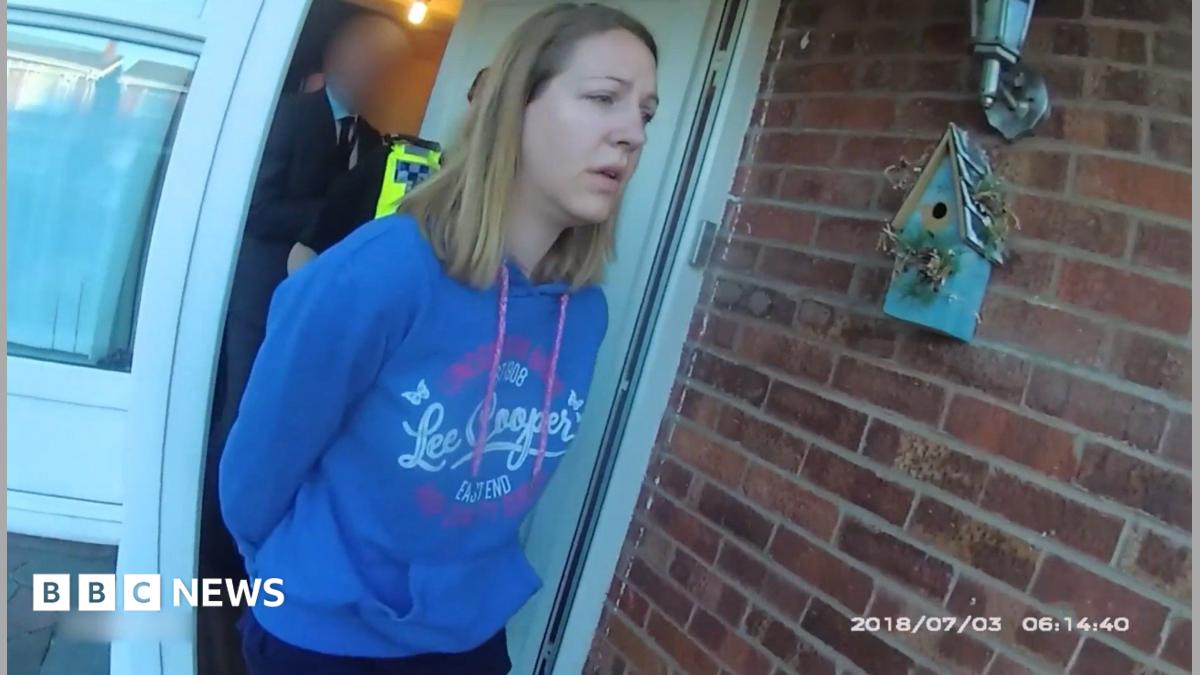
Image source, Cheshire PoliceImage caption, Lucy Letby was convicted of the murders of seven babies, and the attempted murder of seven others - one of whom she attempted to kill twiceByLauren Hirst and Judith MoritzSpecial correspondentThe deaths and near-deaths of some babies who were attacked by nurse Lucy Letby could have been prevented if safeguarding practices had been followed, the public inquiry into her crimes has found.Delivering the conclusion of her inquiry, chairwoman Lady Justice Thirlwall said it would never be possible to know for sure how many lives could have been saved.But she found there was a "complete failure to protect babies on the neonatal unit" at the Countess of Chester Hospital, where Letby, now 36, murdered seven babies and attempted to murder seven others - one of them twice.Thirlwall described a system of "dysfunctional management and governance".Letby was sentenced to 14 whole life terms in 2023 and received another in 2024 after a retrial found her guilty of one of the attempted murder counts the original jury had been unable to reach a verdict on. Thirlwall said: "If all the babies whom [Letby] was convicted of murdering were removed from the annual number of deaths in the neonatal unit, the mortality figures would have been three in 2015 and three in 2016 - broadly consistent with previous years," she wrote. "Since July 2016 there has been one death on the unit, in Sept 2019."Below are the key findings from the report. 'Missed opportunities'The first three deaths in June 2015 (babies A, C and D) were not viewed as a cluster of deaths, even though this was the annual number of deaths, concentrated into two weeks.The fourth death, (baby E) in August 2015, was unexpected and therefore reviewed at a serious incident panel meeting attended by the medical director and director of nursing - but it was treated as a formality."What is surprising is that no connection was made by any of the people involved to the earlier deaths," Thirlwall noted.By August of that year, the total of four deaths was the highest since 2008, and was to double by the end of the year.Thirlwall found that if a doctor – named in the report as Dr ZA - had not disregarded the insulin test result for baby F in August 2015 then there should have been safeguarding action.The report also found:The safeguarding action would have prevented the attacks on babies G and H, J, K, L, M and N and the deaths of baby I, O and PIf safeguarding action had been taken by October 2015 - after the death of baby I - by moving Letby off the ward, the deaths of babies O and P would have been prevented, as would the attacks on babies J, K, L, M and NIn, February 2016 Dr Ravi Jayaram should have reported what he had seen with regard to baby KIn May 2016, no-one raised safeguarding at meeting with execs - if they had done it would have prevented the deaths of babies O and PImage source, PA MediaImage caption, Lady Justice Thirlwall oversaw the inquiry into the Lucy Letby caseExecutives 'controlled narrative'Thirlwall found hospital bosses "repeatedly failed in the duty of candour with parents, investigators and regulators".She added their behaviour was 'high-handed, against all safeguarding principles, and foolhardy."Medical director Ian Harvey "sought to control the narrative", and presented the case as he saw it.He made sure that only documents that supported his case were seen, if necessary writing them himself.The report also found:Director of nursing Alison Kelly, the head of safeguarding, knew she had to act when there was a suspicion that a baby had been harmed, and others might be at risk – but did notChief executive Tony Chambers was dictatorial in his approach to consultants, and executive presentations to the hospital's board were an "exercise in spin"He added to the unnecessary delay in contacting policeHis intention throughout was to stall or obstruct the police investigation, which he succeeded in doing for almost a yearThe report was critical of a raft of internal and external reviews commissioned by hospital leadership after concerns were raised about LetbyDirector of nursing for urgent care Karen Rees had "lost all judgement" and had a "hostile approach", Thirlwall found.She also found that unit manager Eirian Powell's judgement "was affected by the view that Letby was a very good nurse".'Reprehensible' treatmentThe parents of babies were "kept in the dark for years" over concerns that their children may have been deliberately harmed.Thirlwall found their treatment to be "reprehensible", and said hospital executives used the risk of upsetting the parents as a convenient argument to justify not calling the police.In relation to the treatment of doctors, she said it should "never have been about nurses against doctors … it was about keeping babies safe".Doctors were found not to have been given the protection of the Speak Out Safely whistleblowing policy, and senior managers tried to "manage out" consultants, and suggested they might be referred to the General Medical Council watchdog.Image source, Cheshire PoliceImage caption, Letby was found to have falsified records Allegations first described as 'witch hunt'Letby took out a grievance against the hospital in 2017, after being moved off her normal duties amid allegations about her.The report found that "the way Letby's grievance and its consequences were handled was deplorable", adding that the investigating officer in charge "could bring neither independence nor objectivity to it".The evidence of Alison Kelly and Ian Harvey was found to be "factually inaccurate and misleading", and the chair of the governance panel, Annette Weatherly, was "unfair in her approach", having initially described the allegations against Letby as a "witch hunt".Letby falsified recordsPolice were called into the hospital in 2017.Thirlwall added that "no-one seems to have understood that safeguarding action is required when a member of staff is suspected of causing deliberate harm - and does not require colleagues to be sure of guilt"."All the safeguarding guidance in the world makes no difference to the safety of babies if those to whom concerns are expressed do nothing."She highlighted that there was "still no NHS-wide protocol on deliberate harm".The report found Letby had ignored management instructions when she disliked them and shouted at her manager.She had falsified records and one infant in her care had been found covered in their own faeces.She was also found to have been repeatedly untruthful in her dealings with friends and colleagues, and was noted by patients to have been "inappropriate" and "callous" in her manner.Image source, PA MediaImage caption, Lady Justice Thirlwell made a number of recommendationsAccess to insulin 'should be restricted'Thirlwall made 17 recommendations in her report, which ran to over 1,100 pages over three volumes. She said that cots and incubators in neonatal units should be fitted with baby monitors, and access to insulin - which Letby was convicted of administering to two of the babies she killed - should be controlled by either biometric data or CCTV monitoring.She also said a "suspicion of deliberate harm" policy, which outlines the steps to be taken by managers when suspicions are raised, needed to be created, and that NHS staff should be contractually obligated to follow the policy and other safeguarding guidance. Get in touchTell us which stories we should cover in the North WestMore on this story
Key findings from Lucy Letby Thirlwall Inquiry
Full Article
Original Source
Read the full article at Bbc →KhanList aggregates and links to publicly available news content. We do not host full articles from third-party sources. Always verify important information with original sources.