
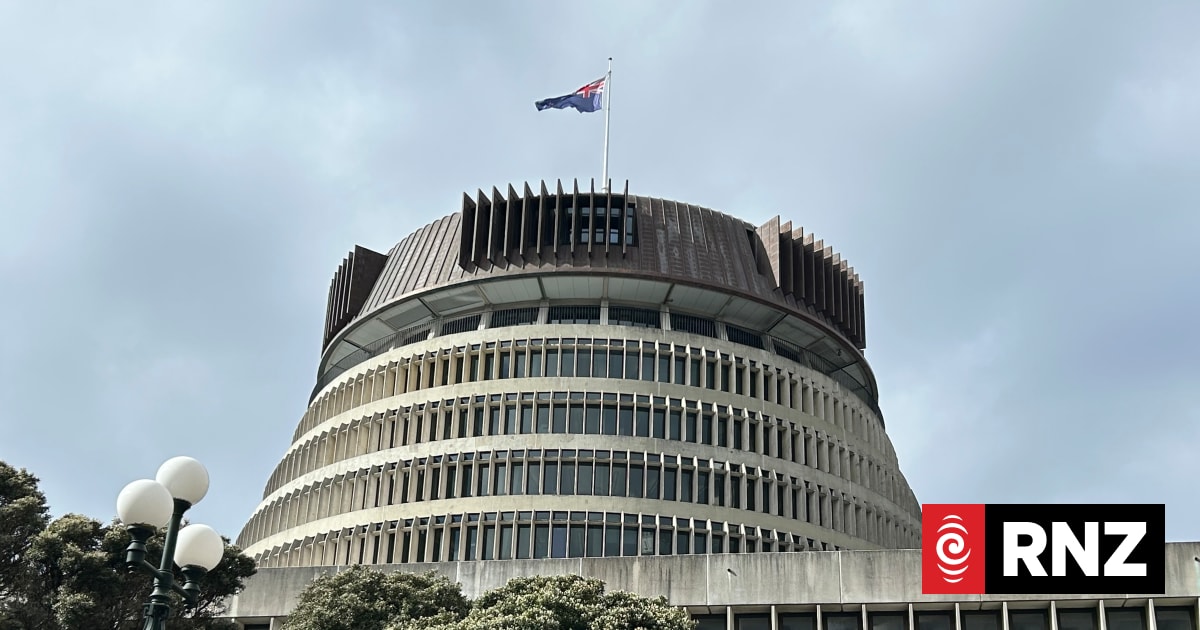
Now the final election results are in, a number of deadlines are looming, while negotiations between National, ACT, New Zealand First and Opportunity begin.The clock is ticking for Mike Butterick and Ryan Hamilton - two National candidates who lost their seats by thin margins and may consider a recount.Wednesday, 2 December: recount deadlineThe Electoral Commission says any applications for a judicial recount must be filed with a district court no later than Wednesday.Butterick lost Wairarapa by 81 votes and Hamilton lost Hamilton East by 173 - each close enough that it may be worth applying for a recount. If either or both of those seats flipped after a recount, the right bloc would have enough seats to form a government without Opportunity.Butterick told RNZ he had not yet decided whether he would pursue a recount. Hamilton could not be reached.Thursday, 3 December: the return of the writA parliamentary formality, this is when the election result is returned to the Clerk of the House of Representatives. It effectively gives MPs the right to be MPs.Governor-General Dame Cindy Kiro will then issue a proclamation summoning Parliament to meet within six weeks.However, that could all change, if there were recount applications. The return of the writ would be delayed until recounts were completed.Friday, 4 December: deadline for a ministerial reshuffleMinisters who are not returning to Parliament must leave office by the end of the day after the return of the writ.Prime Minister Christopher Luxon faces a big reshuffle to keep his caretaker government ticking over, considering three of his senior ministers - Nicola Willis, Chris Bishop and Paul Goldsmith - are out the door.Luxon's office said he intended to hand their roles to existing ministers on an acting basis, until a new government was formed.He'd do that "in the coming days", a spokesperson said on Sunday.The portfolios to be dished out are finance, economic growth and social investment (all held by Willis), attorney-general, housing, infrastructure, RMA reform, transport and associate finance (all held by Bishop), arts, culture and heritage, defence, GCSB and NZSIS, justice, media and communications, Pacific peoples, public service and digitising government, space, Treaty of Waitangi negotiations and veterans (all held by Goldsmith).Thursday, 14 January: deadline for new Parliament sittingParliament must sit no later than six weeks after the writ is returned, so this date assumes that happens on 3 December.It can sit anytime between the return of the writ and 14 January.Three royal commissioners - usually the chief justice and two other senior judges - will open Parliament on the governor-general's behalf and inform MPs that the governor-general will attend in person the next day.Once the commissioners depart, the members remain, so they can be sworn in. They will also elect a new speaker.The speaker is typically a member of the main governing party and requires majority support from across Parliament.No set day: formation of the governmentFor this, the country just has to wait.Leaders of the negotiating parties have said they want to give New Zealanders certainty as soon as possible, but they must balance that with striking a deal that goes the distance. Rushing it risks a collapse during the term, which would send voters back to the polls.A signed deal - or deals - are unlikely to be sitting under the tree on Christmas Day, given that is just under four weeks away.In 2023, the talks took three weeks from the final result, but Opportunity is added to the mix this time and getting all four parties to agree on a deal is probably a stretch.
Key dates loom in the parliamentary timeline
Full Article
Original Source
Read the full article at Rnz →KhanList aggregates and links to publicly available news content. We do not host full articles from third-party sources. Always verify important information with original sources.