
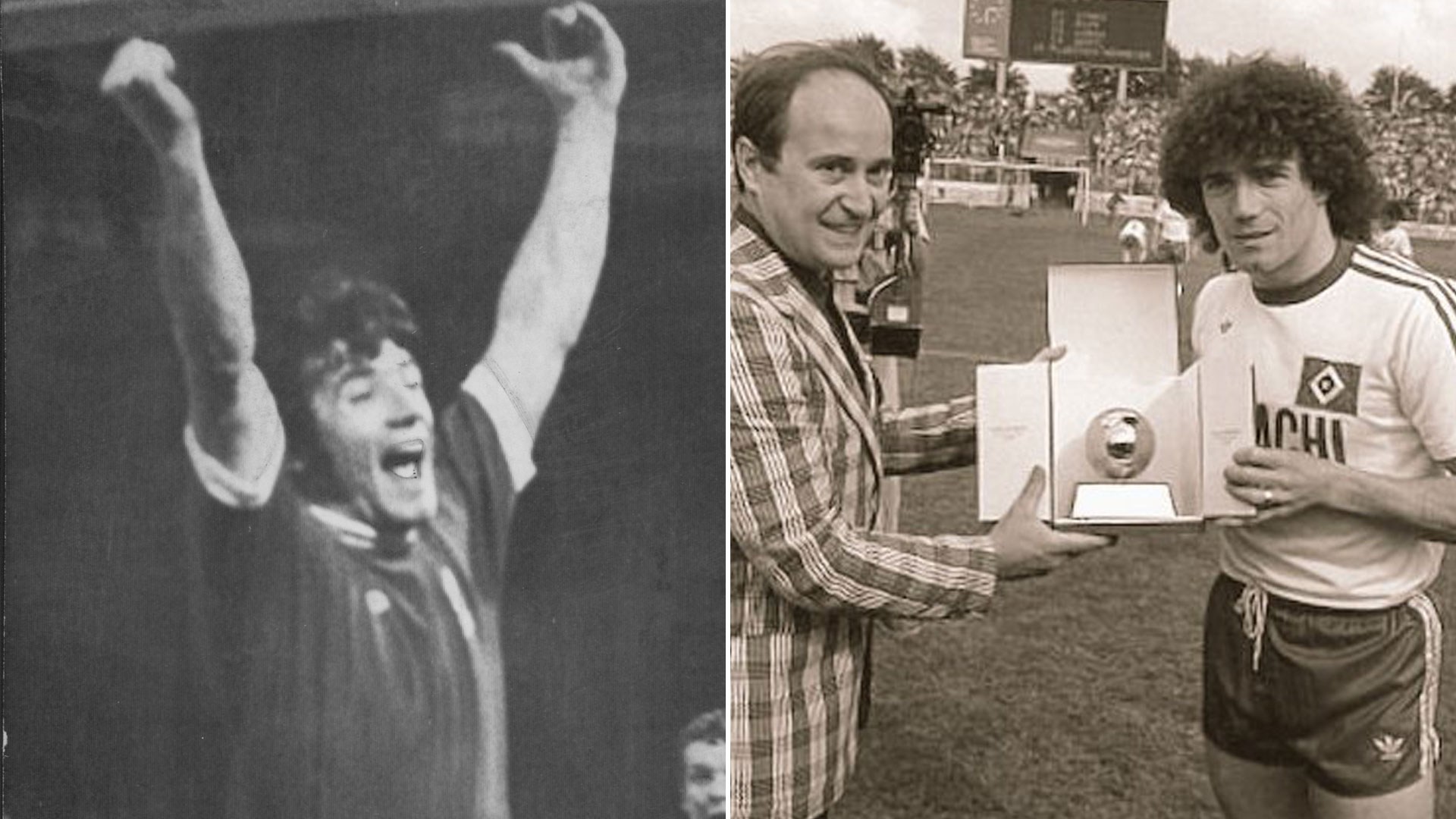
FOR a man of few inches, Kevin Keegan had an awful lot of nicknames.Mighty Mouse. Wor Kevin. King Kev. The miner’s son who dug out silverware for a living. Kevin Keegan was a serial winner who got bums off seats thanks to his messianic fervour Credit: News Group Newspapers Ltd The two-time Ballon d’Or winner was one of the greatest players in the world in his heyday Credit: Unknown He was just as iconic and memorable as a manager and rarely took any prisoners Credit: PA:Press Association A huge hole has been left in the lives of supporters after his tragic death aged 75 Credit: Jon Bond – The Sun A serial winner as a player and a manager who got bums OFF seats, fans flocking to his messianic fervour. A fearless “Superstar”, with a splash of Brut and a trend-setting perm, who had the courage of his own convictions but bridled at any who questioned him. Sign up for the Football newsletter Thank you! Whose infamous post-match melt-down at Leeds would have launched a thousand memes in the modern era. And whose later managerial career included ignominiously quitting the England job in the Wembley toilets. Yet with his death at the age of 75, a huge hole has been left in the lives of generations of supporters on Merseyside, the South Coast, North East and northern Germany. Unlike so many of today’s pampered millionaires, Keegan was an authentic working class hero. Proud of his North East roots, even though he grew up among the collieries of South Yorkshire and made his fledgling professional steps in Lincolnshire, with Scunthorpe. It was the school of hard knocks, Keegan among the players who shared driving duties to away games in the club minibus and was carpeted for crashing the club groundsman’s vintage tractor. Most read in Sport Keegan started his career with Scunthorpe United in 1968 Credit: PA Keegan was a superstar at Liverpool with his trademark perm as he won the European Cup in 1977 Credit: PA Standing just 5ft 7in – when he wanted a trial at Doncaster he was informed he should try to be a jockey instead – Keegan made up for his lack of stature with constant commitment, in his initial role as a bustling attacking midfielder. And one who was never scared to stand up for himself. When Bill Shankly and Liverpool came in for him in 1971, Keegan blithely insisted he was being paid £45 per week at Scunny, refusing to back down from his demands for a rise before agreeing what was a £33,000 move – a huge sum for a lower league player. It was to prove a major moment, for Keegan and his new club, as he immediately supplanted Alun Evans as John Toshack’s strike partner. That the pair had little in common off the pitch, it was a different story on it, an instinctive understanding that brought 189 goals between them in six seasons, with Keegan clocking up an exact century. His combative nature never abated, most famously shown in the 1974 Charity Shield where he was sent off, shirt slung over his shoulder, for an old-fashioned brawl with Leeds skipper Billy Bremner. It was an iconic image. While starring for Liverpool, where he won seven trophies including three championships, Keegan was among those tarred by England’s failures through the 70s. Keegan starred in the BBC’s Superstars cycling event in 1976 but crashed and injured himself Credit: Times Newspapers Ltd He later became an icon for Hamburg, where he won the first of his Ballon d’Or prizes Credit: AP There were moments of brilliance but also controversy, with Keegan brutally beaten by airport security guards in Belgrade when the Yugoslav FA had not prepared a welcome party and then walking out on Don Revie’s squad after being dropped for a British Championships game with Wales in 1975. Three days later, chastened into returning to Revie’s fold by Shankly’s Liverpool successor Bob Paisley, he ran Scotland ragged at Wembley as England won 5-1. He and Revie made up sufficiently for Keegan to be named captain the following after injury curtailed Gerry Francis’ international career at the age of just 24 but it was in Liverpool red that he truly thrived. Which made his decision to accept the BBC offer to take part in the popular Superstars show in 1976 even more remarkable. Can you imagine a Premier League striker being allowed to even ride a bike these days, let alone race one round a cinder track, resulting in a brutal fall that left skin scattered everywhere and an open graze? Keegan got back on his feet, demanded a re-race and finished second quickest. German fans went head over heels for Keegan as he inspired their 1979 title win and starred in a pop song Credit: PA The midfield star secured a return to England with Southampton in 1980 Credit: PA:Empics Sport The following summer, there was a greater shock. Days before the European Cup Final win over Borussia Monchengladbach, where he induced Berti Vogts into conceding the penalty that sealed the 3-1 win he had agreed a £500,000 move to Hamburg. It saw a six-fold increase in his £22,000 a year wages – and the start of Keegan’s ascent into the stratosphere, even if he could not prevent another World Cup qualification failure. Keegan was the inspiration of Hamburg’s unexpected Bundesliga triumph in 1979, when he won his second consecutive Ballon D’Or trophies – the only Englishman with multiple wins – and starred as they reached the European Cup Final against Nottingham Forest in 1980, won by a John Robertson strike. He even released a pop song that made the German top 10. They were Head Over Heels for him. That game in Madrid came three months after Southampton boss Lawrie McMenemy had announced Keegan was to return to England to play for Saints and it was in 1980 that ITV began screening his adverts for Brut, alongside Henry Cooper. Another famous partnership. Two seasons at The Dell brought 43 goals in the build-up to the 1982 World Cup, where injury deprived Bobby Robson of both Keegan and Trevor Brooking until the final minutes of the goalless draw with Spain that saw them eliminated unbeaten. But a fall-out with McMenemy saw him make a £100,000 move to second division Newcastle, where he became an instant legend, the key man as promotion was clinched in 1984 before he retired. Keegan dazzled for England too but his time with the Three Lions wasn’t without controversy Credit: Getty It was Newcastle where Keegan became a cult club figure after joining them in 1982 Credit: News Group Newspapers Ltd For eight years, Keegan was out of the game although he appeared on TV screens as an ITV pundit. But in 1992, he was back – and back at Newcastle, too, replacing the sacked Ossie Ardiles as the Toon faced potential relegation to the third tier. Once again, he was to prove an inspiration and the leader of a captivating movement, producing a swashbuckling, all or nothing style of football that brought a new generation of Tyneside disciples. Promotion was followed by consolidation and in 1996, a team that seemed set to win the title – before his maverick approach over-gilded the lily, the signing of Faustino Asprilla disturbing the balance of the team. Newcastle, 10 points clear of Manchester United at Christmas, had seen that lead whittled away to four when the Red Devils came to the North East on March 4, with 11 games left. Keegan’s side dominated but could not find a way past Peter Schmeichel and Eric Cantona crashed home the only goal. When Keegan slumped over the pitchside advertising hoarding after Stan Collymore’s stoppage-time strike clinched an astonishing 4-3 roller-coaster at Anfield a month later, he summed up the despair. But Newcastle came again, only for Keegan’s anger at Fergie’s drip-drip of barbs bursting over when his side beat Leeds at Elland Road to stay in the contest with two games to go. He later managed Newcastle and thrilled fans with his iconic line: ‘I will love it if we beat them’ while fighting Man United for the title Credit: PA:Press Association He responded to losing the title by signing Alan Shearer for a world record of £15m in 1996 Credit: PA:Press Association Pushed to the end of his tether, Keegan, gesticulated wildly as he went after the Scot, who had “gone down in my estimation”, infamously declaring: “You can tell him now, if you’re watching it, we’re still fighting for this title. “He’s got to go to Middlesbrough and get something, and… and… I’ll tell you, honestly, I will love it if we beat them, love it!” Fergie did, too, telling his players Keegan had lost control. United won their last two games, Newcastle drew theirs and finished four points adrift. Keegan’s response was to spend a world record £15m to bring Alan Shearer back to his home town but the spark was ebbing. He attempted to quit three times before it was accepted in January 1997. The response was as if there had been a death in the Newcastle family. By September he was at Fulham, initially as chief operating officer before replacing the axed Ray Wilkins at the helm but Glenn Hoddle’s England sacking – for comments about the disabled – brought a call for King Kev to bring the fun back. He agreed, initially on a caretaker basis, Paul Scholes scoring a hat-trick in a Euro 2000 qualifier against Poland, but swiftly as permanent boss. England scraped into the play-offs, Scholes scoring twice against Scotland at Hampden but then losing 1-0 at home in the second leg. He subsequently admitted he would have quit if the Scots had gone through. Euro 2000 was a debacle, a them and us squad, suggestions of a card school culture and a group stage elimination despite Shearer scoring England’s first competitive winner against Germany since 1966, Keegan increasingly angry at the negative media scrutiny. Four months later, in what was the final game at the original Wembley, Keegan was jeered off after Didi Hamann scored the only goal, resigning in the dressing room toilets and explaining: “I don’t want to outstay my welcome. The fans put me in the job but they feel it’s time for me to go.” There was still four seasons at Manchester City – the highlight a 4-3 FA Cup win at Spurs from three down at half-time with Joey Barton sent off walking to the dressing room at the interval – and a short-lived final return to Newcastle in 2008. It was never going to last with Mike Ashley. After that, Keegan went back to the TV studio but it was the start of him fading from public sight. Yet for so many, those who watched him play, or watched his Newcastle side in their pomp, there can only ever be smiles. Comment now
Kevin Keegan was the miner’s son who became a superstar on and off pitch with two Ballons d’Or and his trademark perm
Full Article
Original Source
Read the full article at Thesun →KhanList aggregates and links to publicly available news content. We do not host full articles from third-party sources. Always verify important information with original sources.