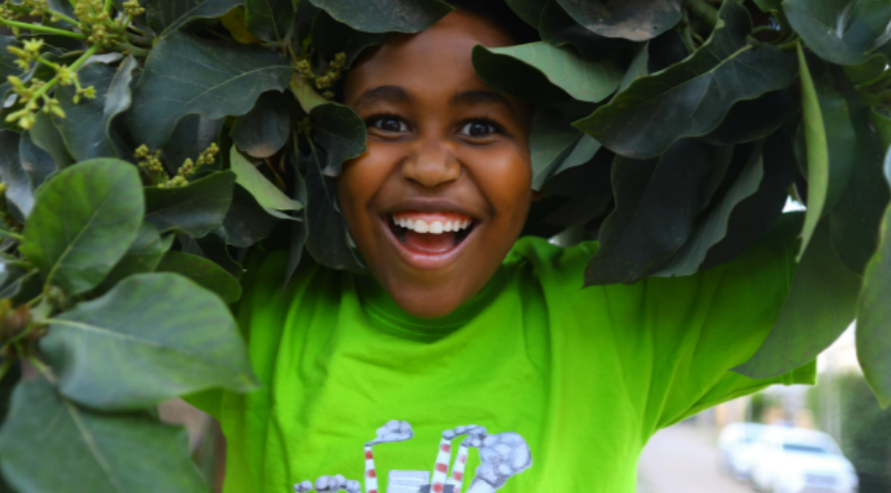
Kenyan teenager Baraka Moruri has planted more than 7,600 trees over the last four years with the help of his family, friends and private organizations.He says he wants children to be better engaged in climate action and policy, arguing that they have ideas and energy to contribute.Climate finance experts say less than 1% of international climate finance gets to youth- and children-led projects, despite climate change affecting their health, education and food security. Baraka Moruri has been passionate about the environment since he was 6. Now 13, the Kenyan climate champion says he has planted more than 7,600 trees with the help of family, friends and private organizations. “My goal is unlimited. I want to plant over 1 million trees before I turn 18,” he says. On March 20 this year, Baraka and his family launched Go Green with Baraka, a book calling for young people in Africa to lead in protecting the environment. Baraka is Little Mister Environment Kenya, and the ambassador of Plant Your Age, an initiative started by the Green Africa Foundation following the death in 2011 of Nobel Peace laureate Wangari Maathai at the age of 71. Her work inspired him to become involved in climate action. “Once, as I was doing my agriculture class assignment that involved researching about Prof Wangari Maathai, I watched a video in which she was being denied her rights. She later won a global award because of her love for the environment,” Baraka says. Baraka Moruri with his younger sister, as he holds ‘Go Green With Baraka’, a book he authored. Photo by Lawrine Moruri. Baraka’s father Arnold Warinda (left), his mother Lawrine Moruri and a friend during the launch of ‘Go Green With Baraka’ in Nairobi in January 2026. Photo by Lawrine Moruri. The impacts of climate change fall especially hard on children in countries like Kenya. The newly released “Children’s Climate Risk Report” by UNICEF describes how children in East and Southern Africa are exposed to overlapping climate shocks. “Over 65 million children, close to one in four, are already exposed to three or more overlapping climate hazards, from droughts and fires to floods and tropical storms,” it says. These climate shocks, the report says, are increasingly affecting the essential services that children rely on for survival, health and learning, including critical water and sanitation systems. “During floods or heat waves we cannot concentrate in school or get involved in extracurricular activities,” Baraka says. Participants in a walk organized by Baraka Moruri and his family and friends in Nairobi in 2025. Photo by Lawrine Moruri. Events like the March 2026 floods that killed 110 people and displaced 34,700 in Kenya spurred Baraka’s concern for the impact of climate change on his country. “We could not see our friends. It killed many people. It basically made me to realize that Kenya needs to take climate change more seriously because floods are caused by something that can be mitigated,” he says. Baraka started planting trees four years ago, at the age of 9. He involves friends, family and fellow students in tree-planting activities. They’ve planted fruit and other trees in schools, wellness sanctuaries, and a national forest in Nairobi, as well in rural areas around the city. Baraka has also influenced his grandmother, who has set land aside for planting trees. “She is basically fighting climate change because I took my time to tell her about the science behind it. Basically, everyone in my family, and friends who have been coming to my events knows about climate change,” he says. Participants in a tree planting initiative organized by Baraka in 2025. Photo by Lawrine Moruri. In November 2023, Baraka was joined by at least 700 of these fellow enthusiasts for a climate change walk, after which they planted more than 2,000 trees. Baraka has been told he’s too young to understand climate change. But Baraka, whose name means “blessing” in Swahili, says he can see the impacts with his own eyes. “In the [usual] dry season it rains, and what used to be wet seasons now are prolonged dry weather. Farmers don’t know when to plant. This is detrimental to food security,” he tells Mongabay. According to the “Africa Climate Awareness Report 2023,” people in African countries are largely aware of climate change. But there’s a gap for younger generations. “Older respondents were generally more aware of the impact of climate change than young people,” the report authors wrote. Baraka says he wants more children to be actively involved in climate action. “Leaders should not leave us behind. We also have ideas and energy on how to combat climate change,” he said. Baraka Moruri during the interview with Mongabay at their home in Nairobi. Photo by Lynet Otieno, Mongabay. He says he wants to attend the COP31 U.N. climate summit, taking place this November in Türkiye, to deliver the same message to world leaders at the annual talks. “I am not the only child championing climate action. If we work consistently, more children will have hope,” he adds. A 2025 study by Douglas Nyathi, Joram Ndlovu and Thembelihle Nyathi, titled “Youth participation in climate action in sub-Saharan Africa: Challenges, gaps and prospects,” finds that youths have a hard time obtaining the kind of political and financial support they need to engage in climate action. “I fund almost everything Baraka does,” says Lawrine Moruri, Baraka’s mother. “Initially I lacked climate change awareness and only supported him to enjoy his passion. But now I am beginning to see where this is going, and the costs it comes with. I am grateful for the few friends and institutions that donate trees, and help in several other ways sometimes. But we need more support.” The institutions she refers to are Plant Your Age, Green Africa Movement, Safaricom, Equity Bank, Safaricom Subcontractors, Lolo Cleaning Services, Fastlink Movers, and the White Star school. According to Collins Otieno, director of the Africa Youth Climate Fund, less than 1% of international climate funding goes to youth- and children-led projects. Baraka Moruri and his sister during the interview with Mongabay at their home in Nairobi. Photo by Lynet Otieno, Mongabay. “We have a system that is designed to ignore youth and children, right from the household to the larger society,” he says. Otieno says he believes children and youth have the right to shape the conversation about climate finance, given that the burdens will fall on them. “Now Africa is negotiating different instruments for climate finance” — at the SB64 U.N. climate meeting in Germany — “but who will pay these debts? Children will pay in the form of taxation,” he says. When Baraka visits schools in Nairobi, he simplifies climate change by talking about it in a fun way. Planting trees isn’t the only way to help; he tells his peers. “I talk to them about other options of addressing climate change, including switching to electric cars, switching off lights and taps when they are not in use. There are also house plants that can help combat climate change,” he says. Juma Ignatius, senior policy adviser (global) at the Christian charity World Vision International, says children’s participation in climate action should include the ability to influence policy. Collins Otieno, the Africa Youth Climate Fund Director. Photo by Collins Otieno. “Children will live longer than the older generation. We cannot do anything without them. This problem is not unique to Kenya,” he tells Mongabay. Internationally, he says, some platforms, like mini-COPs, and linking children to policymaker’s work. “I met a child in Brazil from Solomon Islands, who was articulate at one of the mini-COPs. There was another one from Tanzania. But such initiatives are led by CSOs, rather than governments,” Ignatius says. He recommends a standing policy that when coming up with positions for COPs or the Africa Ministerial Conference on Environment, children’s perspectives must be included. Baraka’s work is a drop in the ocean in Kenya’s efforts to plant 15 billion trees by 2030. Before he disappears to play, he tells Mongabay that he doesn’t want children to be seen merely as vulnerable to climate change effects, but rather as great stakeholders in effective climate action locally and abroad. Citation: Nyathi, D., Ndlovu, J., & Nyathi, T. (2025). Youth participation in climate action in Sub-Saharan Africa: Challenges, gaps and prospects. E-Journal of Humanities, Arts and Social Sciences, 6(14), 4008-4022. doi:10.38159/ehass.202561445 Credits Topics
Kenyan teen leads charge on tree planting and climate awareness
Full Article
Original Source
Read the full article at News →KhanList aggregates and links to publicly available news content. We do not host full articles from third-party sources. Always verify important information with original sources.