
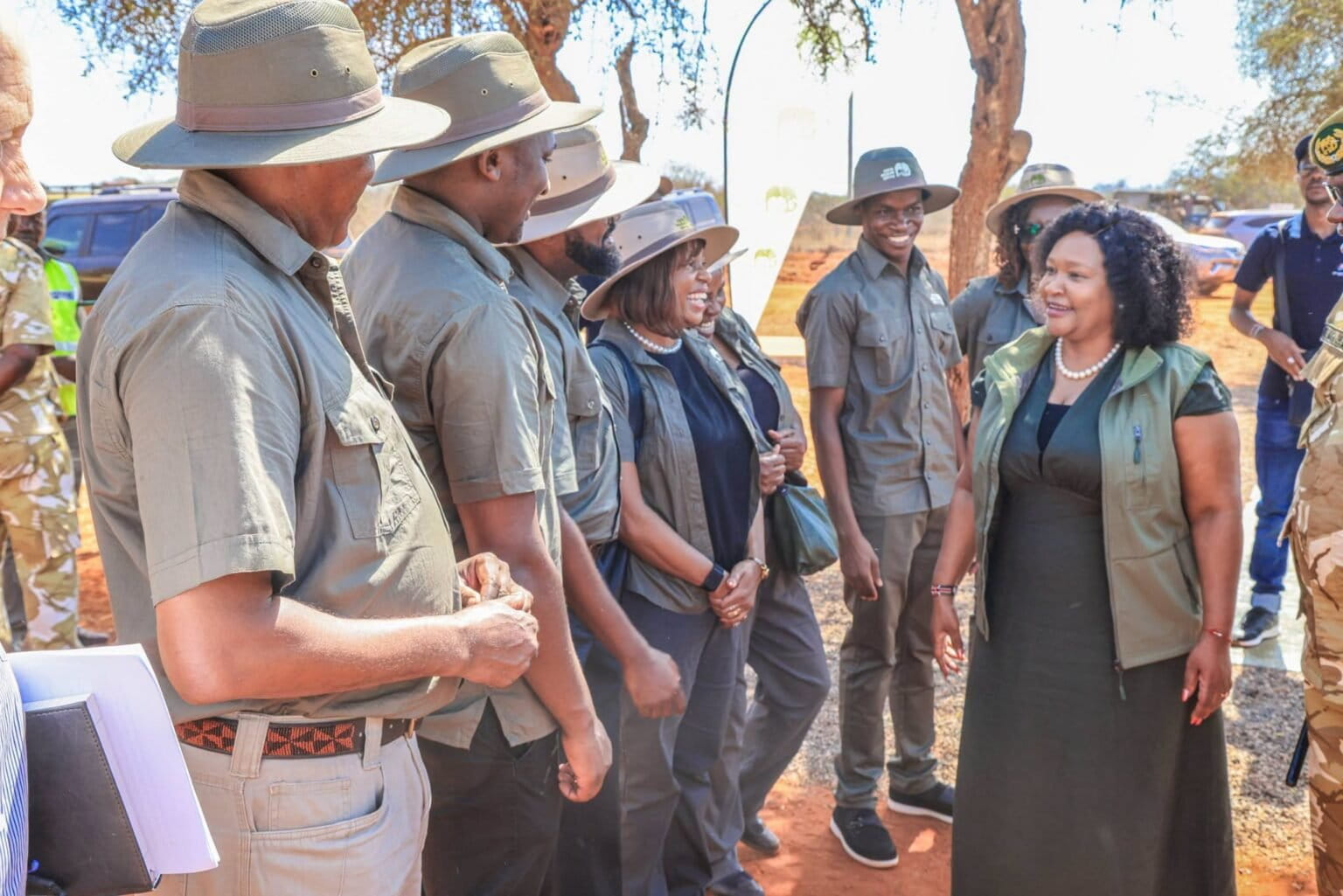
The 10-year initiative brings together the Kenyan government, the Kenya Wildlife Service (KWS), NGO The Nature Conservancy (TNC), Enduring Earth and other conservation partners.Areas identified under the program cover 31 of Kenya’s 47 counties, and partners say it is a step towards achieving Kenya’s goal of bringing at least 30% of its lands, inland waters and near-shore ecosystems under effective conservation and management.According to the Protected Planet database, around 13% of Kenya’s terrestrial area and less than 1% of its marine and coastal areas currently enjoy protections.Investments under the new initiative are expected to support approximately 7,800 direct jobs and 15,000 indirect jobs by creating opportunities in ecotourism, carbon initiatives, sustainable grazing and other nature-based enterprises. The government of Kenya has launched a 10-year, $160 million conservation program that will target 17.3 million hectares (43 million acres) of existing conservation areas and community-managed land across 31 counties. The government projects that the initiative, which also aims to establish 2.7 million hectares of new conserved areas, will benefit 1.6 million people and create nearly 22,800 jobs. Dubbed Thamani Asili (which means “value of nature” in Swahili) the program, announced on Oct. 21, aims to secure long-term financing for protecting biodiversity while improving livelihoods, water security and climate resilience through an $80 million contribution from the government, which philanthropic partners are expected to match. Tourism and Wildlife Cabinet Secretary Rebecca Miano presided over the launch of the program at the Tsavo West National Park, southern Kenya, on behalf of Kenya’s President William Ruto. The 10-year initiative brings together the Kenyan government, the Kenya Wildlife Service (KWS), NGO The Nature Conservancy (TNC), conservation initiative Enduring Earth and other conservation partners. “Using the Project Finance for Permanence (PFP) model, Thamani Asili establishes a long-term financing framework designed to move conservation beyond short-term funding cycles towards predictable investment, institutional accountability and measurable results,” a KWS press release about the initiative says. Kenya’s Cabinet Secretary for Environment and Tourism, Rebecca Miano, met with officials from the Kenya Wildlife Service (KWS) and other conservation partners ahead of presiding over the launch of a $160 million conservation-focused fund, Image courtesy of Kenya Wildlife Service (KWS). There are four initial priority landscapes for this project: Tsavo and the country’s coast, northern Kenya, the Rift Valley and western Kenya, and southern parts of the country. “These landscapes are critical to biodiversity, wildlife movement, water security, climate resilience and the livelihoods of millions of Kenyans,” the statement from KWS and the Nature Conservancy said. Areas identified under the program cover 31 of Kenya’s 47 counties. The initiative was described as being “part of Kenya’s ambition to bring at least 30 per cent of its lands, inland waters and near-shore ecosystems under effective conservation and management,” in the press release. “This includes establishing approximately 2.7 million hectares of conserved areas, improving the management of 11 million hectares of existing conservation areas, and enabling communities to better manage a further 6 million hectares,” the statement by KWS and The Nature Conservancy read. According to the Protected Planet database, around 13% of Kenya’s terrestrial area and less than 1% of its marine and coastal areas are currently protected. Investments under the new initiative are expected to support approximately 7,800 direct jobs and 15,000 indirect jobs, with opportunities created in ecotourism, sustainable grazing, carbon initiatives and other nature-based enterprises, according to the launch statement. “Across the other landscapes, interventions will support rangeland management, wildlife corridors, endangered species conservation, land-use planning and community-led natural resource governance,” the KWS said. Some residents of Taita Taveta and other local communities living alongside wildlife attend the launch of the $160 million ‘Thamani Asili’ fund. Image courtesy of Kenya Wildlife Service (KWS). “In Tsavo, conservation is not just about protecting wildlife; it is about protecting a way of life, honoring the cultures and heritage of our communities, and securing a future where people and wildlife thrive together,” KWS director general Erustus Kanga said in a prepared statement. “When elephants and livestock drink from the same water points, we are reminded that we share one landscape and one responsibility. “Our communities are not separate from conservation; they are its heart. Together, we must ensure that the people who live alongside wildlife are not only its custodians but also beneficiaries of its value. Because when communities thrive, wildlife thrives, and our natural heritage lives on for generations to come.” Ademola Ajagbe, regional managing director for Africa at The Nature Conservancy, said in a statement that Thamani Asili represents a fundamental shift towards predictable, long-term conservation financing, with community leadership and tangible benefits at the center of its implementation. “Thamani Asili is a shift from short-term, project-based conservation to a long-term, sustainably financed model that secures Kenya’s natural heritage for future generations. By aligning government, communities, conservation partners, and the private sector under a shared framework, the initiative will create lasting benefits for nature, livelihoods, and climate resilience at a national scale,” Ajagbe said. He said the program’s success is not about “the size of the fund” but would ultimately be measured by the difference it makes in people’s lives and the opportunities it creates for communities to benefit from conservation. Director General of the Kenya Wildlife Service (KWS), Erustus Kanga, during the launch of the ‘Thamani Asili’ fund at Tsavo West National Park. Image courtesy of Kenya Wildlife Service (KWS). “It will be the life of a herder made more secure by healthier rangelands; the young person who finds dignified work in the green economy; the woman who grows a conservation enterprise; the farmer whose soil holds more water; and the family that can prosper alongside wildlife,” Ajagbe said. “That is why community leadership is not an addition to this initiative. It is its center of gravity.” The program will be administered through the newly established Thamani Asili Fund for Kenya, an independent conservation trust fund responsible for managing and disbursing program financing and tracking progress against agreed conservation targets. Thamani Asili is also expected to contribute to the avoidance of approximately 7.5 million tons of future carbon emissions by 2035, reinforcing the link between nature conservation, climate action and economic resilience, according to the statement shared with Mongabay by KWS Communications Director Duncan Wanyama. Banner image:Kenya’s Cabinet Secretary for Environment and Tourism, Rebecca Miano, met with officials from the Kenya Wildlife Service (KWS) and other conservation partners ahead of presiding over the launch of a $160 million conservation-focused fund, Image courtesy of Kenya Wildlife Service (KWS). From ‘community-based’ to ‘community-led conservation’ in Kenya: Interview with Dickson Kaelo Feedback: Use this form to send a message to the author of this post. If you want to post a public comment, you can do that at the bottom of the page. Cite this articleLynet Otieno (2026). Kenya launches $160 million conservation initiative to support communities and biodiversity. Mongabay Conservation news. DOI: https://doi.org/10.66709/news-335064 Credits Topics
Kenya launches $160 million conservation initiative to support communities and biodiversity
Full Article
Original Source
Read the full article at News →KhanList aggregates and links to publicly available news content. We do not host full articles from third-party sources. Always verify important information with original sources.