Republican tax policy used to have the simple goal of lowering rates, eliminating loopholes, broadening the base, and letting people decide how to spend their own money as much as possible.President Donald Trump’s 2017 Tax Cuts and Jobs Act was largely built on that principle. It lowered individual income tax rates, nearly doubled the standard deduction, cut the corporate tax rate from 35% to 21%, and paid for some of those reductions by eliminating or limiting deductions and other tax preferences. The economy responded quickly. Business fixed investment jumped more than 5%, as companies took advantage of lower rates and stronger incentives to invest in new equipment, facilities, and expansion. This was not a tax cut built around political favors, but tax reform to make productive activity more rewarding. That is what tax reform is supposed to do. Government should tax economic activity as neutrally and simply as possible, not use the tax code to manipulate people into buying whatever politicians happen to favor.Unfortunately, Republicans began abandoning that principle with Trump’s 2025 One Big Beautiful Bill Act.The law was, on balance, still a good tax bill. Most importantly, it prevented the expiration of the 2017 individual tax cuts and preserved important pro-investment provisions. The Tax Foundation estimates the final law will raise long-run GDP, even after revising its original estimate downward.But Republicans also littered it with gimmicks tailored to campaign speeches rather than sound economic policy. It included special deductions for tips, overtime pay, car loan interest, and senior citizens, as well as a much larger state and local tax deduction.All these can be defended politically, but together they make the tax code less neutral, less simple, and less efficient. Why should a restaurant waiter pay a different tax rate than a cashier earning the same amount? Why should someone financing a new American-made car receive a tax break unavailable to someone who prudently bought a used one?Now, Texas Republican Senate candidate Ken Paxton wants to take this approach much further.He proposes a $50,000 deduction for buying a home, a $25,000 deduction for out-of-pocket medical costs, an additional $25,000 medical deduction for dependents, a $5,000 “healthy living” deduction that could cover gym memberships and weight-loss drugs, a doubling of the child tax credit to $4,400, and making Trump Accounts permanent.In proposing all this, Paxton has diagnosed a real problem. It is true that housing, healthcare, and children are expensive. But tax subsidies do not magically make scarce goods cheaper. Subsidizing demand for houses when the supply is constrained can simply increase home prices. Subsidizing healthcare spending can similarly increase demand without doing anything about the underlying cost of medical care. As Tax Foundation Vice President Will McBride observed of Paxton’s proposal, much healthcare spending is already subsidized through the tax code. Paxton would therefore be layering new subsidies on existing ones.These deductions would also make an already bewildering tax code harder to navigate. Worse, specialized deductions and tax-advantaged accounts often deliver their largest benefits to higher-income households that have the income, savings, and financial sophistication needed to take advantage of them. Existing savings incentives already display this problem.Republicans should resist the temptation to turn the tax code into a catalog of favors for politically attractive constituencies.WEAPONS OF MASS MIGRATIONThe party’s goal should be the same as it was in 2017: broaden the base, eliminate distortions, lower rates, encourage investment, and let economic growth raise living standards.Republicans should be the party of sound, fundamental fiscal policy, not short-term populist slop that rewards the wealthy, complicates the tax code, distorts economic decisions, and leaves the economy worse off.
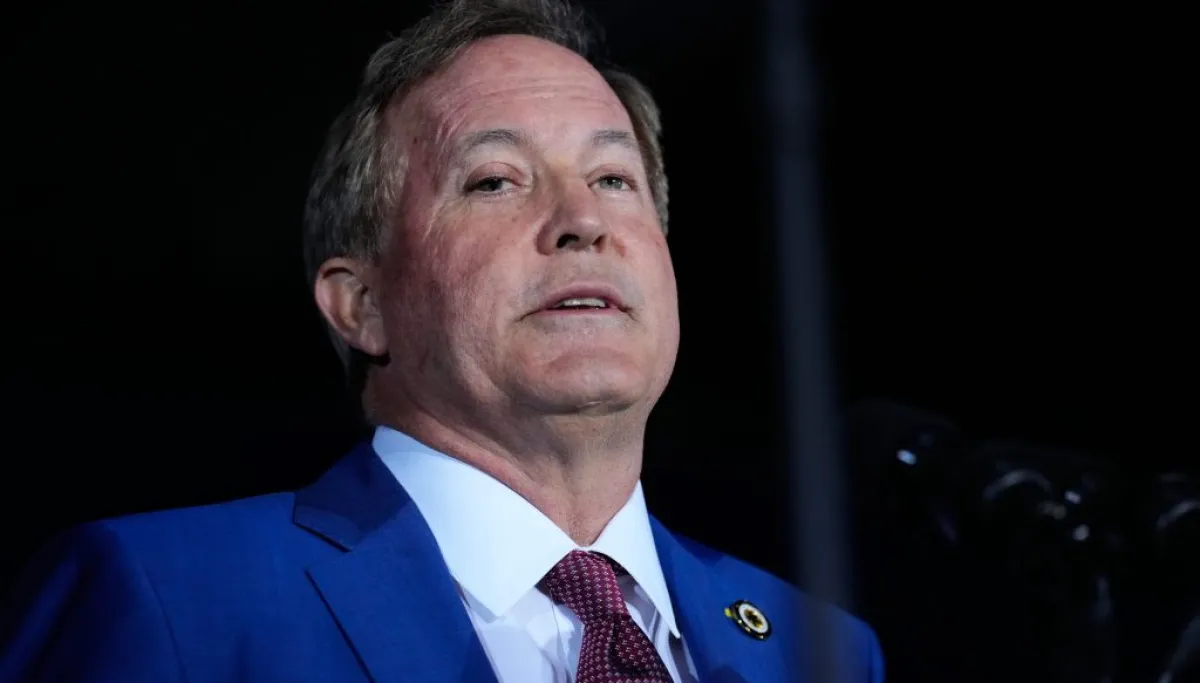
Ken Paxton’s tax plan would take Republicans in the wrong direction
Full Article
Original Source
Read the full article at Washingtonexaminer →KhanList aggregates and links to publicly available news content. We do not host full articles from third-party sources. Always verify important information with original sources.