
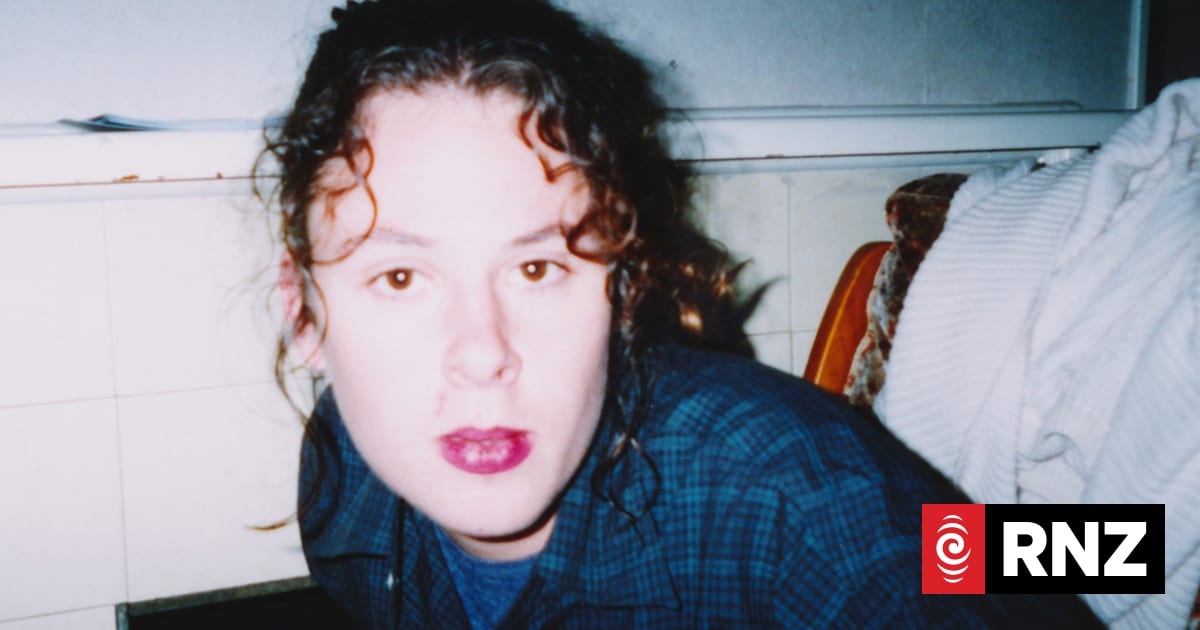
Police are investigating a potential breakthrough in relation to the 21-year-old cold case killing of Auckland woman Katrina Jefferies, RNZ can reveal. A never-before-seen police report into her death reveals that about a decade ago police recommended a suspect be charged with murder, but the Crown later found there was "insufficient evidence" to support the charge. National Crime Correspondent Sam Sherwood reports.For 21 years, Katrina Jefferies' family has waited.They have waited for answers, for an arrest, and for the person responsible for killing the 22-year-old mother to be held accountable.Twice police have offered rewards. Two years after her killing they offered $50,000 and then in 2019 police announced a $100,000 reward.In 2018, Detective Inspector Paul Borrell completed a review of the case.His report - obtained by RNZ - reveals police recommended a murder charge in 2015 and that a woman later made "completely fabricated and false" claims that she helped dispose of Jefferies' body.The report says most homicides are "quickly solved with early breakthroughs"."Regrettably [Jefferies' death] is not in this category and has involved a hard grind over the years to this point with a reality now being that it may well never be solved."This is a reality that needs to be seriously and realistically considered before there is any embarking on any further reviews or elements of work."RNZ can now reveal police are investigating a new potential breakthrough in the case.Detective Inspector Scott Beard says the investigation is open and being worked on "as a result of information only recently received by police".All exhibits are also in the process of being reassessed, and it will be determined what if any further examination can be undertaken.A photo of the scene where Katrina Jefferies was found, released by police.suppliedOperation WaikowhaiKatrina Jefferies was last seen by her mother Nicola as she left her Mt Roskill home alone about 8pm on 10 July 2005.Two days later her body was found by a man walking his dog along Waikowhai Road in Hillsborough, near Waikowhai Park Reserve.Her body was lying several metres down a steep downhill bank, off the side of the road.Borrell's report said she was naked from the waist down, apart from wearing socks.A number of items were found with her body that appeared "foreign to the scene", including a red tarpaulin, a yellow PVC raincoat and a black plastic bag which were all partially covering her body.Police also found a wooden framed print and a piece of plywood board."Early reconstructions were that the body had been dumped at this location with the associated items at a time after her death and that this area was not therefore the actual murder scene."The investigation - then dubbed Operation Waikowhai - was initially led by Detective Senior Sergeant Gerry Whitley. Borrell said someone, whose name was redacted, was nominated as a "principal suspect" early in the investigation."[Redacted] was a local drug dealer living in the same vicinity as the victim, had history of violence toward women and was profiled as being sexually predatory."Evidence would strongly infer that the victim was known to [redacted] even though he adamantly denied knowing her."The yellow raincoat that was found with Katrina Jefferies' body.suppliedOperation LyraThe initial investigation continued until 2006.In 2014, police reopened the case under the name Operation Lyra.Borrell said the investigation had a "strong focus" on one suspect whose name was redacted.Borrell's review revealed that in August 2015 a 135-page report detailing the case was submitted to the Crown solicitor."It proposed that evidential sufficiency had been met and made recommendation that a charge of murder be preferred against [redacted]."The Crown responded with a report to police in September 2016, advising there was insufficient evidence to support a murder charge.In 2019 police announced a $100,000 reward in relation to the case.suppliedIn 2017, the report was reviewed by another police officer, Detective Inspector Aaron Pascoe.Pascoe said the report was "at times selective" in relation to information provided when compared to other accounts from either the same or other witnesses.Borrell acknowledged "considerable time and effort" went into preparing the report for the Crown."On first read, the report is comprehensive and compelling. I have however, also formed a view that the evidential sufficiency of many strongly stated aspects that supported a murder charge are diluted upon closer analysis."The 'witness'Borrell's report revealed that in 2016 a "potentially critical witness" was identified and interviewed by the Operation Lyra team, after the report had been sent to the Crown recommending the murder charge.The woman, whose name was redacted, made three statements to police over an 18-month period."She provided accounts of [redacted] making direct admissions of murder to her also describing being asked to dispose of the body and using her own vehicle to assist," Borrell said.Borrell said "on the face of it" the woman's accounts were "potentially critical and powerful evidence well worth pursuing"."It relayed an account of an eyewitness that could support existing circumstantial evidence gathered that implicated [redacted] and potentially connected the whole case together."However, her statements contained a number of significant inconsistencies.Katrina Jefferies.suppliedThis included that she said she took her son to school on the morning of 12 July 2005 after she claimed she helped dispose of Jefferies' body in the early hours of that morning. Further inquiries established it was actually school holidays at the time.The woman also gave "specific detail" about timings in the early hours of July 12 of being driven to Waikowhai Reserve in her car.However, CCTV footage recovered by police revealed no car passed by the camera in the times she indicated. There were two vehicles, one entering the reserve about 3.30am and another leaving at 12.40am captured. However, neither vehicle resembled the make and model of her car.The report noted that the CCTV "may not be conclusive due to the heavy rain that night also captured on CCTV".Borrell also questioned why the woman had not mentioned the rain in her first two statements."Subjectively, it would seem very likely that a person involved in the disposal of a murdered body in the very early hours of the morning and in darkness in the company of an alleged murderer would remember that they had been drenched by heavy rain," Borrell said.Borrell said Pascoe identified a number of examples where corroboration should exist, which would have added weight to her claims."Despite active and thorough investigation, no such corroborative evidence ever emerged."In May 2017 the woman was interviewed again to clarify the "inconsistencies and ambiguities that had emerged".Within 22 minutes of the interview, the woman asked for a break during which she recanted all her prior statements.The woman said she had put together information by "listening to the gossip and from there, being able to inject her own information so as to construct a believable account", Borrell said."I knew that I may end up in prison for the story I told but I was just gonna end up telling the truth eventually because I had to," the woman said."I knew that you would eventually figure it out. I couldn't keep up the lie forever especially when I don't know certain points and especially if I had to go to court. I would be a blubbering mess because I don't know certain stuff."Borrell said he was satisfied the woman had recanted because she realised she had been caught lying, rather than because she was being compelled to withdraw a true account.Red tarpaulin found at the scene.SuppliedThe forensicsA post-mortem revealed Jefferies had a blood alcohol level of 210mg per 100ml of blood (the current legal driving limit is 50 mg per 100ml of blood).Borrell said vaginal and cervical swabs were taken from what was thought to be semen staining appearing on both.He said "considerable and extensive" forensic analysis had occurred from 2005 through to the review dates with "no matches to any persons of interests"."A cervical swab sample has been held back from testing and secured in the hope that DNA technology will advance in the future to a point where DNA profiles may be able to be raised from very low amounts of DNA material possibly present."Borrell's report contained a subheading 'DNA D8 17 Allele'. The beginning of the section is redacted; however, it included an explanation from senior Environmental Science and Research (ESR) scientist Fiona Matheson.She said D8 was one of the DNA sites used in forensic profiling, and that 17 referred to the number of times a particular DNA sequence was repeated at that site.Matheson said ESR had generated a dataset which held over 20,000 profiles of people in New Zealand."For the case of the D8 17, the 17 allele in the dataset is at the large allele end of the spectrum for this locus and has been observed, relatively few times. This means that the expectation of finding a DNA profile with this allele present would be low in that very few individuals would have this component present as part of their DNA profile."Borrell said this aspect of the investigation provided some avenues of inquiry involving profiling the 5600 people who appeared on the DNA database as having the D8 17 Allele in their DNA."Such a phase would involve geographic and behavioural profiling of each of the 5600 which theoretically would be able to reduce this number significantly after considerable work and time. The assumption with this approach is that the donor is actually on the DNA database."He said an "integrated approach" of comparing the Mitochondrial DNA attained from the two hair samples against high scoring individuals identified through the D8 17 Allele profiling "may identify an individual who matches both these DNA samples"."Such an outcome may add significant weight to the proposition that that person was involved in the death and/or disposal of Katrina Jefferies body."My view is that such a phase would be costly both in time and resource with any likelihood of success less probable than probable."Detective Inspector Paul Borrell, pictured in 2016.RNZ / Tracy Neal'Complex and challenging' investigationBorrell said the investigations into Jefferies' killing had been "particularly complex and challenging enquiries"."The sheer volume of information gathered, collated and effectively considered required effective and robust systems and processes to ensure correct priorities were set and that information relevant to take the enquiry forward was properly identified and prioritised, or rejected."He said the first days of any homicide were "critical", and that it was key for "evidence sources to be quickly identified and prioritised at the earliest"."Another critical discipline is that the direction of the enquiry must be driven by fact, and not assumptions or conjecture and that enquires are wrung out to their very natural end."An important aspect of this theme is toward corroboration and alibi (alibi the alibi), where suspects raised need to be properly worked through to a point where they are, or are unable to be properly and completely eliminated."He also said that lines of inquiry followed at any particular time needed to be kept to a minimum to avoid an investigation becoming "overly complicated and confused"."Effective tracking system to list, interpret and identify key findings are required and indicators are that they were not present."Borrell said while the position of Jefferies' body suggested a sexual assault this was not supported by either the post-mortem findings or ESR's forensic analyses "which does not seem to infer that the motivation for the killing was sexual".The investigation into her death was the fourth in quick succession in Auckland and "likely suffered from shortage of resource, experience and support", Borrell said.He said the main focus of Op Lyra was on a suspect whose name was redacted, as well as the statement provided by the woman."I am completely satisfied that her account was completely fabricated and false. My view is that this current state as it stand at this point, further detracts from [redacted] being the offender than what had previously existed prior to [redacted] involvement in this inquiry."New hopeIn response to a series of questions from RNZ, Beard said the investigation into Jefferies' death was currently open and being worked on "as a result of information only recently received by Police"."In 2021, police reassessed and reinvestigated the file. This has led to a recent review of all the exhibits, which is near completion."There is also new information recently received that police are currently working on."The retained cervical swab had since been tested using newer technology without success.Beard confirmed all exhibits including the hair samples were in the process of being reassessed."We are working with PHF Science as to what exhibits can be further tested. There is no guarantee an offender will be identified."In relation to the D8-17 allele, Beard said significant amount of work had been conducted regarding forensic testing of exhibits."The D8-17 allele has identified numerous names due to the fact it is not a specific DNA sample. While it will be of assistance, it is yet to identify any potential suspects."In relation to the criticisms of the 2015 report recommending the murder charge, Beard said it was accepted that a higher ranked investigator should review complex reports completed by investigators "to ensure a level of objectivity".Beard was also asked about Borrell's comments that the case "may well never be solved"."The word 'may' is used in terms of the homicide likely being solved. The comment is correct."As with any cold case homicide all it takes is one piece of vital information that could in fact see a case resolved."
Katrina Jefferies cold case: Police investigating potential breakthrough
Full Article
Original Source
Read the full article at Rnz →KhanList aggregates and links to publicly available news content. We do not host full articles from third-party sources. Always verify important information with original sources.