
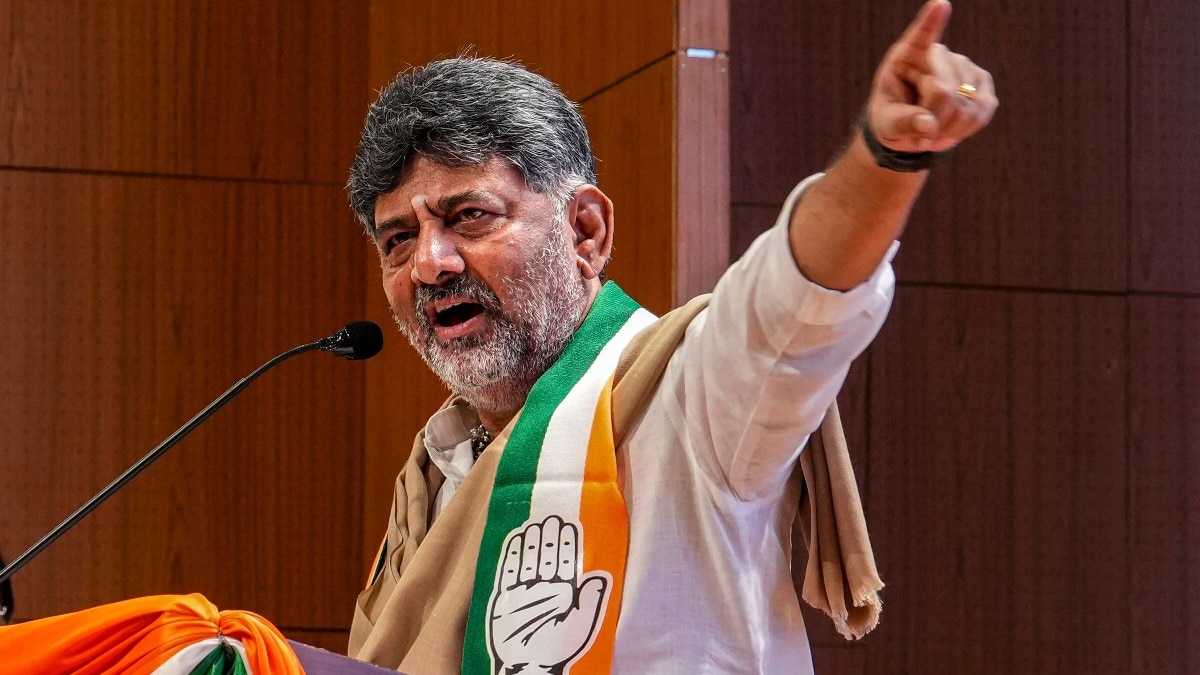
Karnataka Chief Minister DK Shivakumar on Wednesday stressed the need to strengthen government schools in rural areas, asserting that every child in villages must have access to quality education and the ability to compete at the global level.Urging corporate organisations to extend support through Corporate Social Responsibility (CSR) initiatives, he said that reaching at least 1,000 schools over the next two to three years would help Karnataka create a national benchmark in school development."Children in rural areas must develop. Every child in rural regions should be capable of competing at a global level," he said.Shivakumar was speaking at the 'Nanna Shaale, Nanna Javabdari' (My School, My Responsibility) CSR and Individual Contributors Programme held at the Banquet Hall of Vidhana Soudha. He reiterated the government's commitment to improving government school infrastructure and called upon companies to direct their CSR contributions towards educational development, particularly in rural regions.During the programme, 15 MoUs were signed for the development of 56 schools at an estimated cost of Rs 206.10 crore. Earlier in 2026, another 18 MoUs had been signed to upgrade 33 schools with an investment of Rs 85 crore.A further 12 agreements covering 23 schools, involving Rs 64 crore, are at an advanced stage of finalisation.The Chief Minister said quality education in villages could also help address migration to urban centres.Pointing out that families often move to cities in search of better employment opportunities and schooling for their children, he said strengthening primary education in rural areas could encourage people to remain in their native places."Every parent, including drivers and small farmers, considers good education for their children as their true asset," he said, adding that retaining families in villages for at least 15 years through better educational facilities could ease the growing pressure on cities.Shivakumar suggested developing rural schools through a cluster-based approach covering the state's 6,000 Gram Panchayats, with schools organised in a 1:3 Panchayat ratio.Raising concerns over the utilisation of CSR funds, he said Karnataka generates approximately Rs 8,000 crore through such contributions, but a substantial portion is either not being utilised effectively within the state or is being directed elsewhere.He alleged that some companies registered in Mumbai, Delhi and Gujarat route their CSR allocations to those locations.The Chief Minister said he had approached the Prime Minister and the Union Finance Minister seeking greater oversight of CSR fund allocation and utilisation.He also appealed to corporate houses not to concentrate their contributions in Bengaluru but to extend assistance to government schools across districts.Companies, he said, could support school construction, teacher salaries, drinking water facilities and infrastructure maintenance.District-level authorities, including Deputy Commissioners, Deputy Directors of Public Instruction and Zilla Panchayat CEOs, have also been authorised to enter into MoUs directly with corporate organisations.Emphasising that assistance must be extended within the legal framework, Shivakumar said the government would facilitate companies through land, incentives and necessary clearances.He maintained that profitable businesses operating in Karnataka should contribute towards improving educational opportunities for rural children.Concluding his appeal, Shivakumar invited corporate leaders and organisations to collaborate with the government in expanding the school development initiative.He said the administration was open to feedback and course correction, expressing confidence that sustained corporate participation could help transform government schools and ensure rural children receive education comparable to global standards.- Ends
Karnataka CM Shivakumar asks corporates to help upgrade 1,000 rural govt schools
Full Article
Original Source
Read the full article at Indiatoday →KhanList aggregates and links to publicly available news content. We do not host full articles from third-party sources. Always verify important information with original sources.