
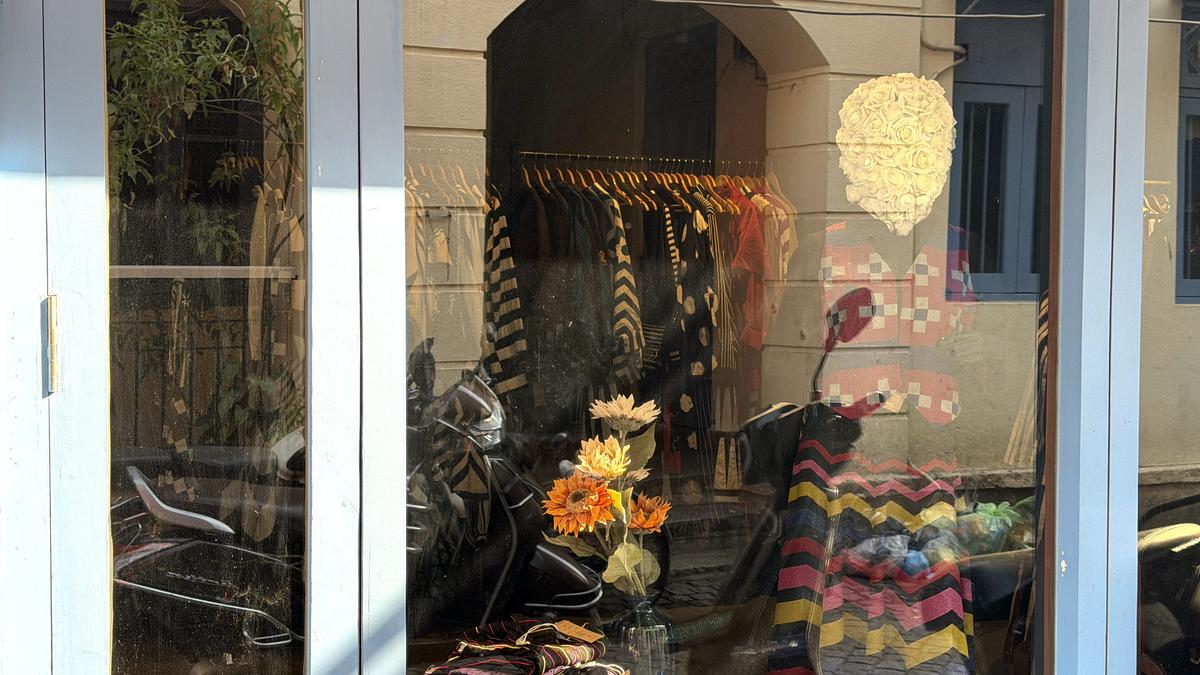
Fashion is often encountered at its most finished: a garment on a hanger, a carefully styled photograph, a price tag. The work that precedes it, the cutting, embroidery, hours of handwork and decisions about material can remain largely invisible. With TARA, Pune-based designer Karishma Shahani Khan wants visitors to look closer.TARA is currently on view at 47-A in Mumbai’s Khotachiwadi until November 8. The free, public-facing showcase brings together clothing, objects, experiments and interactive spaces that explain the philosophy behind her label, Ka-Sha, and its sister initiative, Heart to Haat. The latter takes production waste from Ka-Sha and transforms it into new products, from fabric flowers and home textiles to garments and footwear.For Karishma, the showcase is less about presenting a finished collection than allowing people to enter the world that produces it. Visitors can handle garments, turn them inside out, try them on, watch films documenting the studio’s processes and participate in hands-on activities. A designated maker space encourages them to work with their hands without the pressure of producing anything specific. Textile waste transformed into new garments | Photo Credit: Special Arrangement Karishma says, “People are so used to seeing fashion just as a finished product. There are so many steps behind it that people don’t realise.”Waste as resourceThe distinction between the two labels is important to understanding the exhibition. Ka-Sha works with Indian textiles and crafts, interpreting them through silhouettes and designs intended to be worn across geographies. Although the brand incorporates circular practices, including turning textile waste into paper, using waste in embellishments and practising zero-waste pattern cutting, it continues to work with new materials, including handwoven Chanderi and kala cotton sourced from Kutch.Heart to Haat, by contrast, is entirely upcycled. Its products are made using existing materials, with no new material introduced into the process. The two labels are therefore not competing approaches but connected parts of a larger system: the waste generated by one becomes the raw material for the other.Karishma describes TARA as the guiding philosophy behind this relationship. The aim is to make the connection visible, allowing visitors to understand not just what the brands produce but why and how they produce it.The exhibition includes information tracing products from raw material to finished garment, alongside films showing the work undertaken at the studio. Visitors can also interact with artisans and learn to make fabric flowers from old garments they bring with them. The invitation is to participate, ask questions and experience the labour behind the object. Karishma Shahani Khan | Photo Credit: Special Arrangement This emphasis on making is also a response to what Karishma sees as the casualness with which clothing is often consumed. Every product carries a tag identifying its maker and the number of hours spent making it. She hopes this information, alongside the opportunity to handle and wear the pieces, will encourage a more considered relationship between the consumer and the garment. At 47-A, visitors can interact with artisans and learn to make fabric flowers from old garments they bring with them. | Photo Credit: Special Arrangement The designer says, “I want people to touch the garment. Turn it inside out, try it out, immerse themselves in it.”Contemporary formsThe designs themselves draw on a long history of Indian textile traditions, repair and reuse. Karishma sees her work not as an attempt to invent entirely new practices but as a contemporary translation of existing knowledge. Patchwork, for instance, recalls the logic of godri quilts, while familiar Indian garments and silhouettes inform the labels’ skirts, overlays, dresses, and jackets.“We’re just trying to make it for today,” she says, describing the task of building on the country’s existing wealth of craft, textile and design knowledge.Her interest in these traditions is rooted in personal experience. Growing up, she saw women in her family wear handwoven saris and traditional jewellery, while her grandfather and great-grandfather’s involvement in the freedom struggle brought her into contact with khadi. These practices seemed ordinary until she studied fashion in the United Kingdom and began to understand their significance. Karishma’s creations are rooted in Indian craft. | Photo Credit: Special Arrangement Internships and travels in India deepened that engagement. Encounters with craftspeople, textiles and communities whose clothing reflects their histories and ways of life continue to inform her work. For Karishma, inspiration comes not from a single designer or aesthetic but from the many ways people use colour, embellishment, fabric and clothing to express themselves.Beyond sustainabilityYet she is wary of the language increasingly used to describe such work. The word “sustainability”, she argues, has become overused, often functioning as a selling point rather than a guiding principle.“The minute we start to use it as ‘buy my product because it’s sustainable’, that’s why we’re causing more of a problem. It needs to be ‘buy my product because it’s a nice product’. Sustainability is just a given,” believes Karishma.The challenge, then, is to make clothes that people want to keep, rather than products whose appeal depends on novelty. Karishma often returns to a sari passed down through her family: her mother received it from her own mother, and Karishma continues to wear it decades later. It is an example of the kind of longevity she hopes to build into her own work. Inside 47-A | Photo Credit: Special Arrangement She adds, “I’m not saying buy less. I’m saying buy wisely.” That philosophy also informs Ka-Sha’s willingness to repair garments, allowing customers to mend and continue wearing pieces rather than discard them when something goes wrong. The hope is that a garment might eventually be passed on, extending its life beyond its first owner.Designing clothes to outlast trendsAt TARA, this larger argument is conveyed through the act of looking more closely. Some garments are reversible, their character changing when worn; others reveal details that might be missed on a hanger. Karishma recalls a customer who noticed that the name of a garment’s maker was almost identical to her own and decided to buy the piece. Such encounters, she says, demonstrate how a small detail can create a more personal connection with an object.Set within Khotachiwadi’s 47-A, a space that supports art and design, the showcase extends this invitation beyond the clothing itself. Its aim is to make visitors curious about the materials they wear, the people who make them and the histories that continue to shape contemporary Indian fashion.Karishma’s work is built around the idea of carrying forward the craft and knowledge that already exist in India, recognising the hands that go into making a garment, and creating pieces that people will want to wear and hold on to for years.TARA is on view at 47-A in Mumbai’s Khotachiwadi till November 8.
Karishma Shahani Khan’s TARA showcase in Mumbai explores upcycled fashion and Indian crafts
Full Article
Original Source
Read the full article at Thehindu →KhanList aggregates and links to publicly available news content. We do not host full articles from third-party sources. Always verify important information with original sources.