
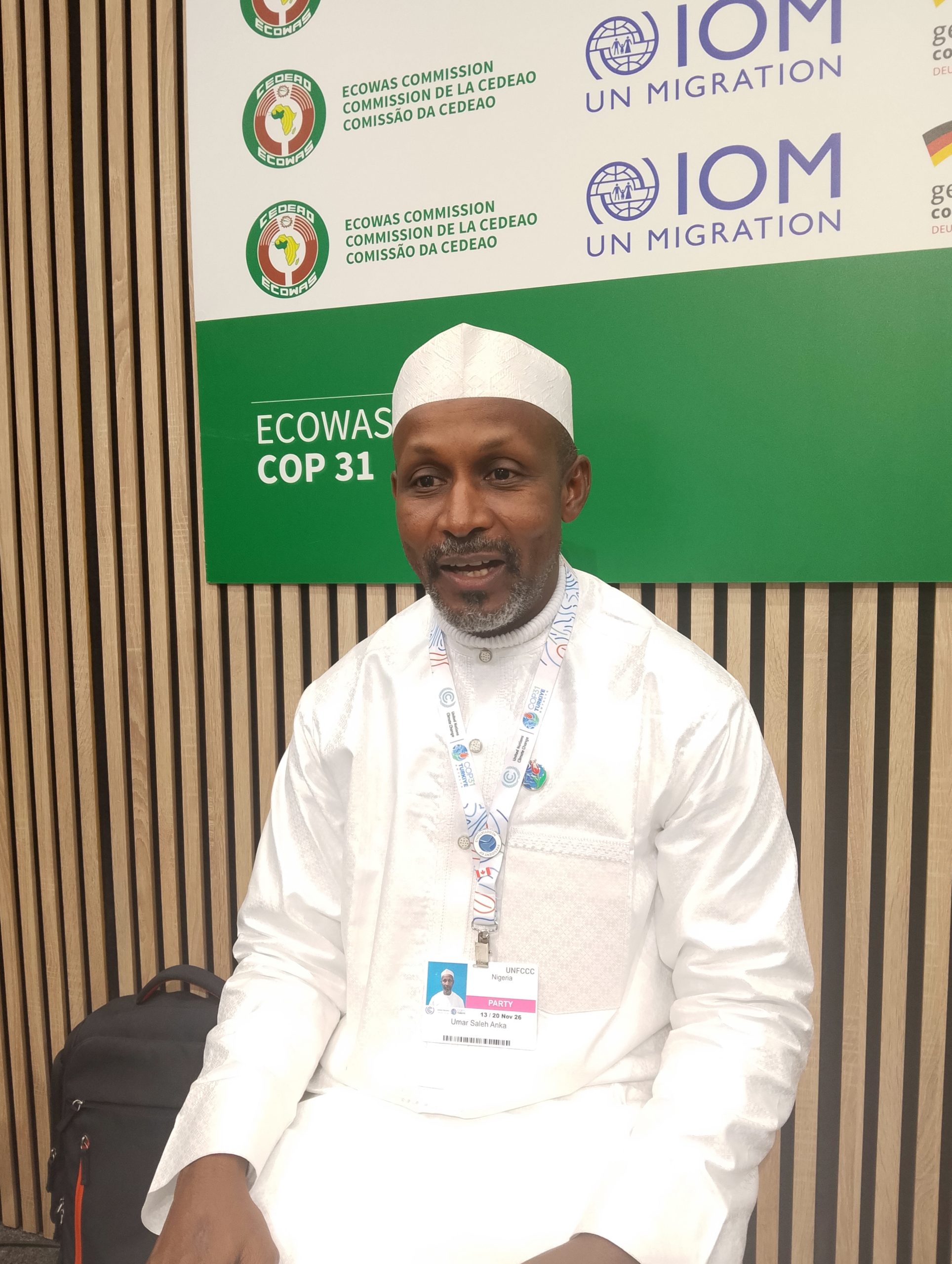
Chiemelie Eze in Antalya, Türkiye The Director of Climate Change, Kano State Ministry of Environment and Climate Change, Umar Saleh Anka, has called for direct access to international climate finance for sub-national governments, lamenting that despite repeated funding commitments by developed countries, Nigeria and other African nations are yet to adequately access the funds. Anka made the appeal at the ongoing 31st United Nations Climate Change Conference (COP31) in Antalya, Türkiye, where he highlighted the difficulties faced by sub-national governments in accessing climate finance to implement adaptation and mitigation projects. He said sub-national governments remained central to climate change implementation because policies and agreements reached at global and national levels were ultimately translated into practical action at the state and community levels. He, however, lamented that the gap between climate finance promises and actual disbursement continued to undermine implementation efforts across Africa. According to him, African countries were still burdened by unmet funding commitments, despite their continued engagement in global climate negotiations. He said, “Everybody is talking about climate finance and the promises, especially now that this year is about implementation. The African Group of Negotiators, where we belong as a country and, of course, as a sub-national, is complaining that we are going with a debt. “Meaning that there are a lot of promises which have not been met, and it is going back to Africa. So, the same complaint is coming back to the same group of African countries.” He said the states were particularly concerned about accessing adaptation funds, adding that Nigeria had applied for a funding opportunity worth $20 billion announced in June 2026 but was yet to receive the funds. Anka disclosed that he had engaged with the Green Climate Fund (GCF) on the need for a funding arrangement that would allow states to access grants and other concessional financing directly, with appropriate safeguards and accountability mechanisms. He explained that although the GCF recognised National Designated Authorities, represented in Nigeria by the National Council on Climate Change, sub-national governments needed a direct funding window to implement climate projects. “We are advocating to have a sub-window where sub-national governments, as states, can seek grants or any concessions that will come directly to the state and reduce the protocols, while they guarantee us and look at what we are doing as a state or at the federal level. “We want to go home with the assurance that we can get funding directly without much protocol because, up till now, countries like Nigeria are not accessing these funds,” he said. On the reasons for the difficulties in accessing climate finance, Anka identified stringent requirements, inadequate technical capacity and the high cost of preparing bankable projects as major obstacles. He cited carbon credit projects as an example, explaining that countries and sub-national governments needed a Monitoring, Reporting and Verification (MRV) platform, as well as independent verification, before they could access the market. He said Kano State was therefore seeking project preparation grants and technical support to develop the necessary systems and strengthen its capacity to prepare viable projects. “There are things that you cannot do because you don’t even have the technical capacity to make sure that you have those things in place. “So part of what we are advocating is to have grants that can help us prepare our projects and, of course, technical capacity on how to develop bankable projects. I think that is one of the challenges, and this is what we want to go home with as a solution,” he added. Speaking on the specific initiatives Kano State was pursuing at COP31, Anka said the state was engaging relevant climate finance organisations and development partners on opportunities in the circular economy and land restoration. He said the state had also presented its case at a panel discussion and was hopeful that the engagements would produce concrete outcomes before the next climate conference. According to him, Kano, Lagos and Abuja had been selected as pioneer locations for the development of an MRV framework, a development he described as important to strengthening their capacity to access climate finance. On the climate challenges confronting Kano State, Anka said its large population, geographical location and the pressures arising from insecurity in northern Nigeria had increased its vulnerability. He explained that Kano, one of Nigeria’s most populous states, also receives people displaced by insurgency and banditry from other northern states, further stretching its limited resources. Located within the Sudan and Sahelian ecological zones, he said the state faced multiple climate-related threats, including extreme heat, flooding and desertification. He added that the combination of these environmental pressures and insecurity had made it increasingly difficult for the state to adequately respond to the effects of climate change. “We are the sole example of the impact of climate change, the negative impact of climate change. So, as far as whatever is due for the states, Kano should have the first. That should be the first to have this,” he said.
Kano Climate Change Director Seeks Direct Access to International Climate Finance for Sub-nationals
Full Article
Original Source
Read the full article at Thisdaylive →KhanList aggregates and links to publicly available news content. We do not host full articles from third-party sources. Always verify important information with original sources.