
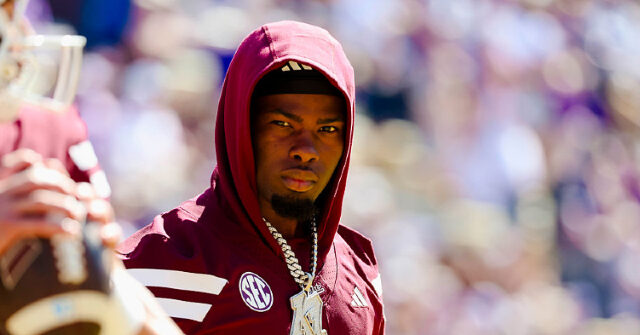
Many are shocked by the $9 million deal quarterback Kamario Taylor is set to rake in at Mississippi State, which would make him one of the highest-paid players in college football. The deal is reportedly set at a sure $7.5 million for the QB to stay at Mississippi State, but he also has the opportunity to pump that up to $9 million with the incentive clauses. One fan was so shocked by the deal that he noted that the $9 million is “more than the GDP of Mississippi,” College Sports Network reported. That is a bit of an overstatement, of course. The real GDP of Mississippi is more than $162 billion. Still, the X commenter does have a point about how outsized Taylor’s bank is in this deal. Another user quipped that all the road improvement projects in Mississippi will have to be put on hold to pay Taylor’s deal. One user thought Mississippi had said that such a deal was impossible because the school didn’t have that kind of money. Another user blasted the school for wasting all its resources on just one player. Another feared that college football is on a path to destroying itself with these high-dollar deals. Taylor lost most of this season due to surgery for turf toe. But the school reported in October that the surgery was successful and Taylor will be back at full strength next season. Regardless, Taylor is promising big things at Mississippi. “When I got to Mississippi State, I knew we could build something special. These last few weeks have only made me want it more,” Taylor said in a statement. “I promise you this — big things are ahead for this program. Believe that.” Follow Warner Todd Huston Facebook at: Facebook.com/Warner.Todd.Huston, Truth Social @WarnerToddHuston, or at X/Twitter @WTHuston
Kamario Taylor Reportedly Raking in $9M in Shocking NIL Deal: 'More Than the GDP of Mississippi'
Full Article
Original Source
Read the full article at Breitbart →KhanList aggregates and links to publicly available news content. We do not host full articles from third-party sources. Always verify important information with original sources.