
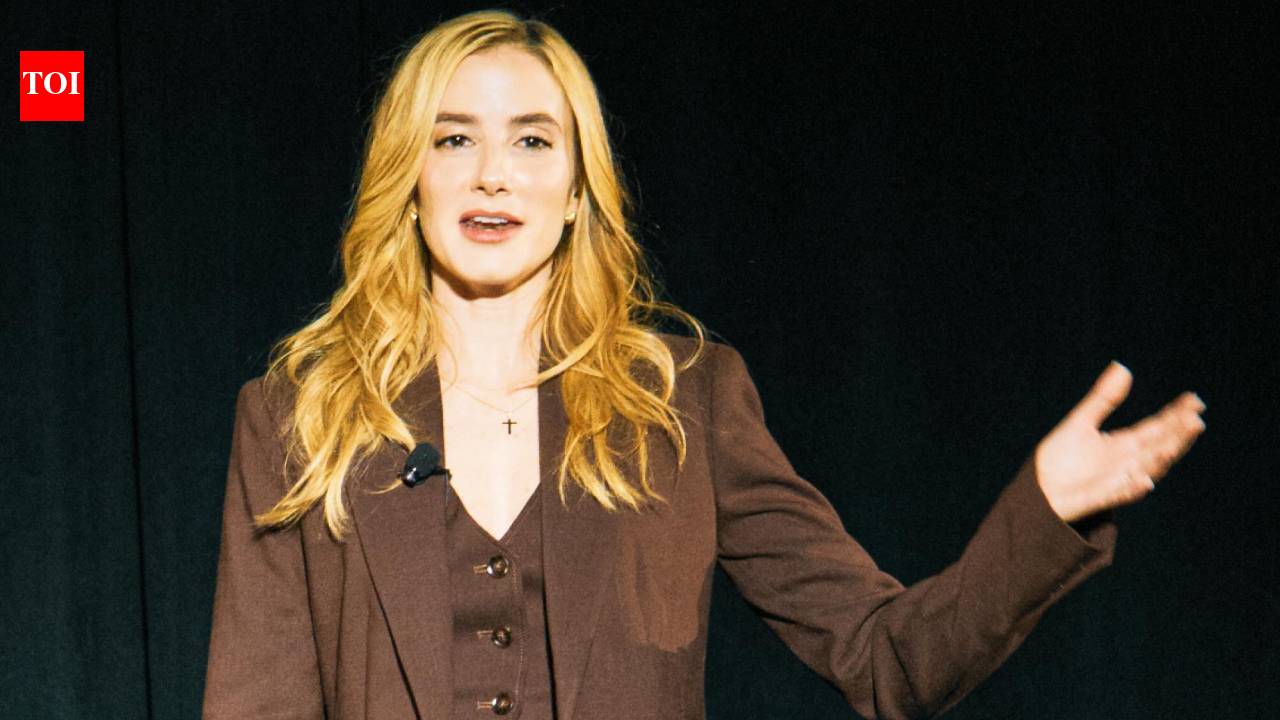
Luana Lopes Lara became the world's youngest self-made female billionaire at 30. (Photo: Instagram)At 30, Luana Lopes Lara has achieved what many entrepreneurs spend a lifetime working towards. The co-founder of prediction market platform Kalshi has become the world's youngest self-made female billionaire, and she says her success is the result of relentless ambition, hard work and an unusual appetite for challenges.Lara launched Kalshi in 2021 with her co-founder Tarek Mansour. The US-based platform allows users to trade contracts based on the outcomes of real-world events, including politics, sports, the economy and other developments. What started as an ambitious business idea has grown into a major player in the prediction market industry.According to reports, Kalshi's valuation rose from $11 billion in December 2025 to $40 billion by October 2026. Speaking to The Sunday Times, Lara opened up about her approach to work, the sacrifices behind her success and the mindset that helped her build the company."I really take a lot of pride in doing the absolute best that I can. I want to see how far I can go, how much I can do, how big I can be," she said.Luana Lopes Lara's demanding daily routine and approach to successKalshi is facing legal challenges over its prediction markets and US gambling regulations. (Photo: Instagram)Lara's work ethic is central to how she approaches entrepreneurship. She reportedly wakes up at 5.30 am and spends between 14 and 16 hours at the office, working six days a week. She describes herself as someone who handles several responsibilities simultaneously and remains optimistic even when things become difficult."At work I am doing a hundred things at the same time at every point in time," she told the publication. Describing her attitude towards challenges, she added, "I'm the very optimistic, positive one. I'm very much, like, 'The odds are in our favour, let's go, we're ripe.' I have to be fine no matter what's happening."For Lara, difficult circumstances are not necessarily a reason to step back. In fact, she says she finds a certain satisfaction in taking on challenges that others might consider too difficult."I'm a little weird because when there are more sacrifices, somehow in my brain that is a good thing," she said, recalling the years she and Mansour spent trying to get regulatory approval for Kalshi."When it was four years of hell to get regulated, there was a part of both Tarek and I that liked how hard it was - because it was like we were doing an important thing."From mathematics Olympiads to intense ballet trainingLara's competitive streak developed long before she entered the world of business. As a child, she participated in mathematics and astronomy Olympiads and was accustomed to setting exceptionally high standards for herself.She recalled how even a near-perfect score was not enough to satisfy her."For me, I need to get 100 [in tests]. If I got 99.99 it is terrible, it is the end of the world," she said.She also described herself as stubborn, someone who enjoys arguing and debating. However, one of the biggest influences on her determination was her years of rigorous ballet training.Lara recalled the intense and sometimes disturbing environment in which she trained, describing how instructors would resort to extreme measures to push performers."[The instructors] would break glass and put it in other girls' shoes," she said. She also recalled instances in which dancers had parts of their costumes taken away, making it difficult for them to return to the stage.Reflecting on how those experiences shaped her, Lara said, "I've always had a somewhat easier time doing things that look very unlikely and are very painful in nature."How Lara and Tarek Mansour fought to get Kalshi approved in the USLuana Lopes Lara and Tarek Mansour co-founded Kalshi in 2021, turning their ambitious idea into a $40 billion prediction market company. (Photo: Instagram)Building Kalshi was not straightforward. When Lara and Mansour first developed their business idea, the company faced regulatory restrictions that prevented it from operating in the way they envisioned in the United States.In November 2020, Kalshi received approval from the Commodity Futures Trading Commission (CFTC), becoming the first federally regulated prediction market of its kind in the country. However, the approval came with restrictions on certain categories, including terrorism, assassination, war, gambling and illegal activities.Politics and sports were initially excluded from its offerings. When Kalshi launched in July 2021, it had around 30 markets, largely focused on subjects such as the economy, weather and Covid.Lara, however, believed that politics and sports would eventually become important parts of the business. Betting on political outcomes had faced longstanding legal restrictions in the US, but she was determined to challenge them.According to The Sunday Times, she found a lawyer willing to take up the fight when most others were reluctant. The company reportedly held more than 30 meetings with the CFTC, repeatedly facing rejection before eventually securing a breakthrough.In 2024, Kalshi won its legal battle over political event contracts, opening the door for users to trade on election outcomes. The platform subsequently became a significant part of political coverage in the US.Kalshi expands into sports and faces regulatory scrutinyFollowing the legal victory, Kalshi expanded its presence in sports markets, including contracts linked to the Super Bowl. The company also increased its visibility through sports sponsorships and advertising, including its association with the US Open.Its rapid growth has also brought political attention. Donald Trump Jr reportedly joined Kalshi as an adviser and received shares in the company. However, the company later announced that his advisory role had ended following a significant investment by his firm in a competitor.A Kalshi spokesperson said the two sides had mutually agreed to end the arrangement, adding that the company appreciated his contribution in helping introduce the platform to more customers.Kalshi has also attracted criticism over the nature of its business. Several US states have challenged the platform, arguing that its event-based contracts resemble gambling and should be subject to the same regulations as betting companies. More than 20 states are reportedly involved in litigation concerning prediction markets.The company has rejected the comparison. Lara has maintained that Kalshi is not a gambling platform, despite criticism over the risks users face. According to the company's own data cited in the report, around 74 per cent of its users lose money.The platform has also faced questions about insider trading and market integrity. One prominent case involved former US congressman George Santos, who was banned from the platform after allegedly making more than $17,000 betting on whether he would attend the State of the Union address. Santos denied wrongdoing.More recently, Kalshi has faced further regulatory scrutiny over markets linked to political figures and their statements, while lawmakers have called for stronger oversight of prediction markets.Luana Lopes Lara says building Kalshi is her dream come trueThe Kalshi co-founder spent up to 16 hours a day building her $40 billion company. (Photo: Instagram)Despite the controversies, regulatory battles and intense demands of running a rapidly expanding company, Lara remains committed to the business she helped create.Her journey from a competitive student and ballet trainee to the co-founder of a multibillion-dollar company reflects an approach built around ambition, persistence and an appetite for difficult challenges."This is my dream come true and I am not going to complain about it," she said. "I am going to do everything I can for it to work."For Lara, the long working hours and sacrifices are part of the journey rather than the price of success. And with Kalshi's growing reach, she appears determined to see just how far she and her company can go.
Kalshi's 30-year-old founder built $40bn giant; now faces US gambling law battle
Full Article
Original Source
Read the full article at Timesofindia →KhanList aggregates and links to publicly available news content. We do not host full articles from third-party sources. Always verify important information with original sources.