
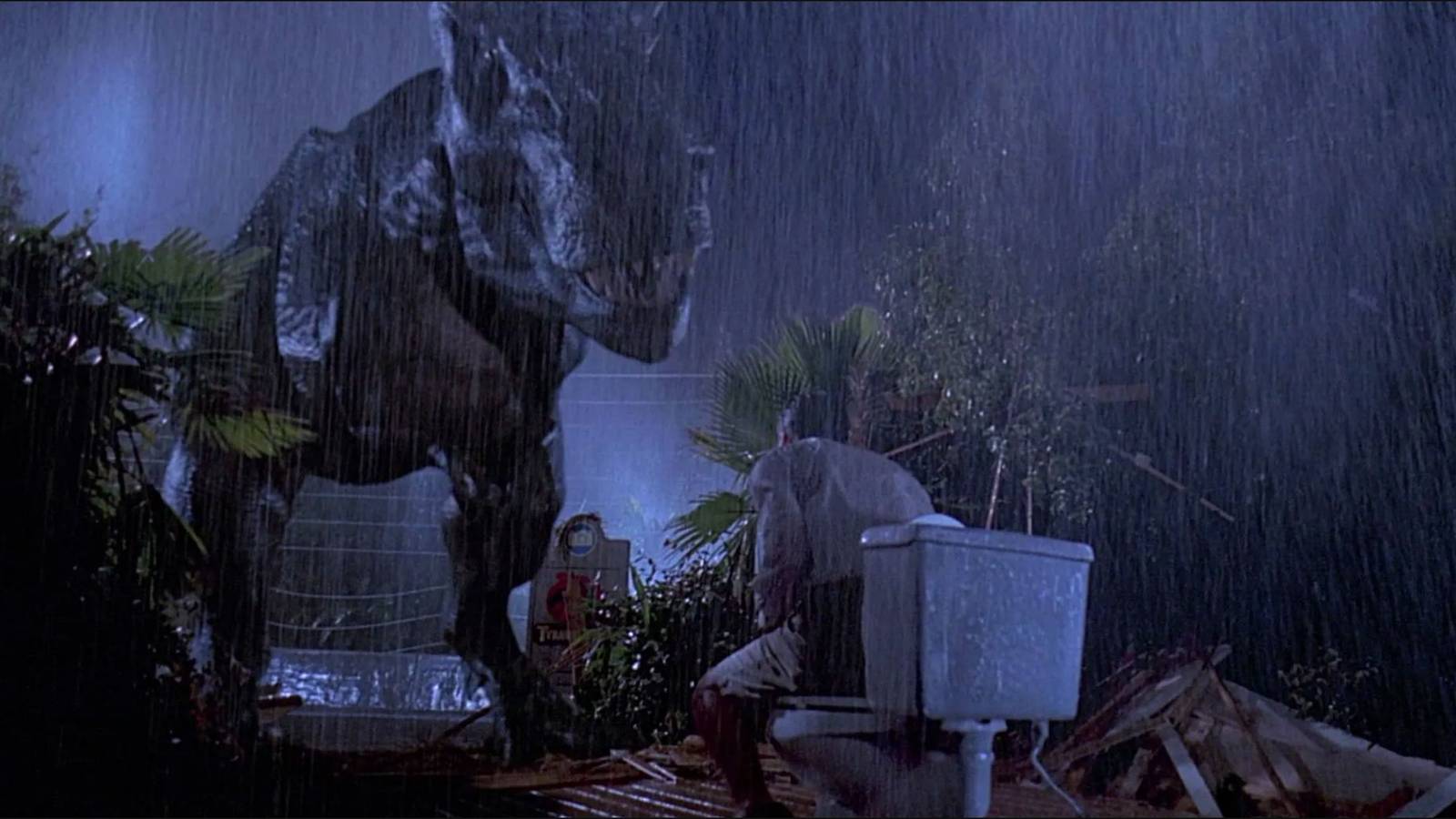
Published Sep 26, 2026, 2:16 PM EDT Nicholas Becher is a gaming journalist with an MFA in Creative Writing from FAU. With extensive experience playing video games, he covers all forms of gaming content at Screen Rant, from breaking news to the latest fan theories. Most-played games range from Clair Obscur to Civ to Elden Ring to Halo 2 and beyond. No dinosaur movie has had anything close to the cultural impact of 1993's Jurassic Park. Steven Spielberg's adaptation of Michael Crichton's novel transformed dinosaurs into convincing living creatures on screen, combining groundbreaking visual effects with memorable characters, suspense, and a sense of wonder that has influenced nearly every dinosaur blockbuster since. However, becoming a streamlined Hollywood adventure also meant making substantial changes to Crichton's original story. Characters were rewritten, events were rearranged or removed, and several of the novel's darker ideas were softened for the film, some to an almost comical degree. Many of those choices arguably helped Jurassic Park become the classic audiences know today, but not every character benefited from these reinterpretations. One particularly dramatic example involves Donald Gennaro, whose most famous scene in the movie turned him into a punchline before delivering one of the franchise's most memorable dinosaur kills. Compared with Crichton's novel, however, the moment completely undersells who Gennaro was supposed to be. Crichton's Donald Gennaro Was Wasted In Jurrasic Park Donald Gennaro is one of the clearest examples of how Jurassic Park sometimes oversimplified its characters when adapting Michael Crichton's novel. In Steven Spielberg's movie, Gennaro is largely portrayed as a nervous, self-interested lawyer whose defining moment comes when he abandons the children during the Tyrannosaurus rex attack. He hides in a bathroom, only to become one of the film's most memorable casualties when the T. Rex finds and eats him. The moment has been immortalized over the years as one of the most iconic scenes in the movie, even getting diorama and toy action figure models designed around the poor guy sitting on the toilet defenseless. Admittedly, it is an entertaining scene, but it reduces Gennaro to little more than comic relief and an easy target. Crichton's version of Gennaro is considerably more capable and sympathetic. Although he still represents the investors behind Jurassic Park and initially approaches the island from a business perspective, he quickly recognizes just how dangerous Hammond's project has become. More importantly, he actually helps when the situation falls apart. Gennaro works alongside Muldoon, takes part in efforts to restore control, and shows genuine courage rather than immediately fleeing from danger. He's just as heroic as some of the other leads, and he even ends up surviving the entire ordeal and escaping the island. The novel actually gives Gennaro a unique character arc that most Jurassic Park lovers who haven't read the book probably would never expect. He begins as someone concerned with liability and investment, but ultimately proves willing to put himself at risk. The movie's version may be more memorable, but the book gives him far more depth. Spielberg Made Several Big Changes To Crichton's Jurassic Park Steven Spielberg's Jurassic Park is remarkably faithful to the basic premise of Michael Crichton's novel, but things change dramatically once the characters actually arrive on Isla Nublar. Some of the biggest differences involve the characters themselves. Aside from Gennaro, John Hammond is far more sympathetic in the movie, transformed from Crichton's stubborn, profit-driven businessman into an idealistic showman who gradually recognizes the consequences of what he has created. His fate changes as well, since the novel ultimately kills Hammond while the film allows him to escape the island. Alan Grant is also softened, with Crichton's Grant already comfortable around children, whereas Spielberg initially makes him awkward and impatient with them, giving the movie a clearer emotional arc as he becomes protective of Tim and Lex. The children themselves were altered too, with their ages and various personality traits effectively redistributed between them. The film also condenses or removes large sections of the novel's science, the corporate intrigue happening in the background, and lengthy discussions about chaos theory that obviously weren't ideal for the big screen. Its climax is considerably different as well, most famously introducing the T. Rex to unexpectedly save Grant and the others from the Velociraptors. Most of these decisions are understandable. Spielberg was adapting a dense techno-thriller into a two-hour blockbuster, and simplifying characters and subplots helped create a cleaner, more emotional adventure. Given Jurassic Park's enduring impact, many of those choices clearly worked. Still, characters like Donald Gennaro demonstrate that streamlining Crichton's story occasionally came at the expense of some of its most interesting material. Movie(s) Jurassic Park, The Lost World: Jurassic Park, Jurassic Park III, Jurassic World, Jurassic World Fallen Kingdom, Jurassic World Dominion, Jurassic World Rebirth TV Show(s) Jurassic World Camp Cretaceous, Jurassic World: Chaos Theory Video Game(s) Jurassic Park (1993), Jurassic Park: Rampage Edition, The Lost World: Jurassic Park, Jurassic Park: Operation Genesis (2003), Jurassic Park: The Game, Jurassic World: The Game (2015), LEGO Jurassic World, Jurassic World Evolution, Jurassic World Evolution 2 First Film Jurassic Park
Jurassic Park Did Donald Gennaro Dirty Compared To Michael Crichton’s Book
Full Article
Original Source
Read the full article at Screenrant →KhanList aggregates and links to publicly available news content. We do not host full articles from third-party sources. Always verify important information with original sources.