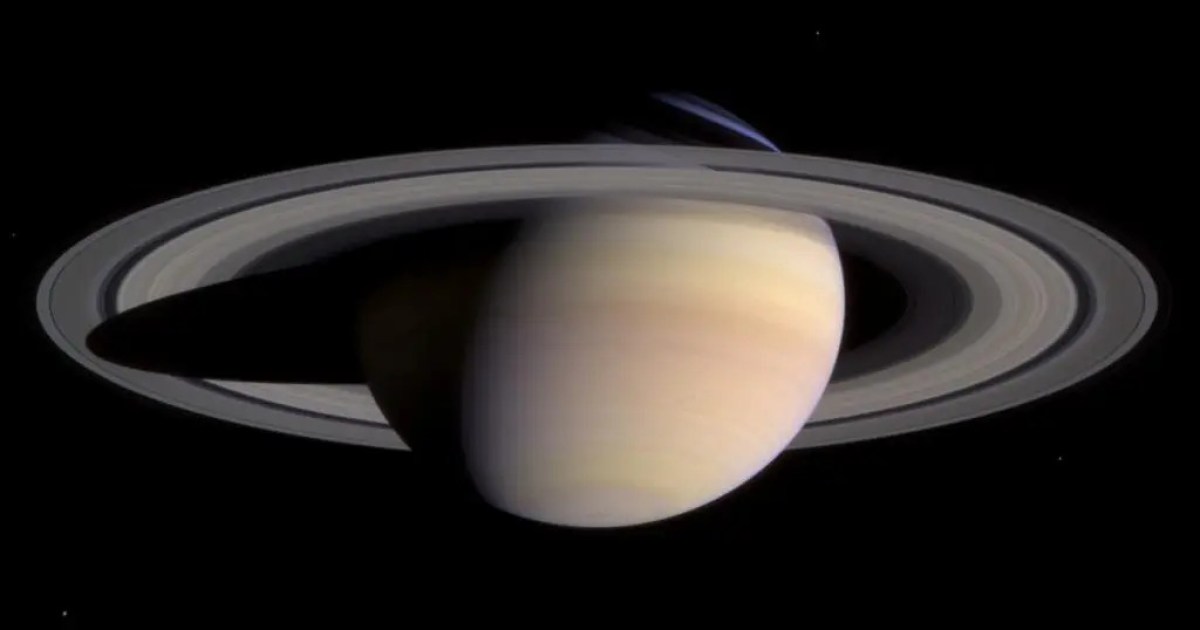
Today in the history of astronomy, Galileo is confused by his observations of Saturn. | Published: July 30, 2026 Were they moons? Ears? Handles? Galileo couldn't parse the rings of Saturn (seen in this Cassini-Huygens image from 2004). Credt: NASA/JPL/Space Science Institute In 1610, Galileo Galilei became the first person to observe Saturn with a telescope. However, he was puzzled by what he saw: At first, he thought the planet had two moons, like lobes on either side of it, almost making it look like Saturn had ears. Two years later, when he observed the planet again, he was surprised to find that those “ears” had disappeared. By 1616, Galileo found that the “moons” had returned. He concluded that the planet had some sort of handles or arms. In reality, Galileo was seeing Saturn’s rings; when they “disappeared,” they were edge-on from Earth because of their tilt with Saturn’s axis. In 1655, Christian Huygens – working with a much-improved telescope – was able to deduce that Galileo’s “handles,” “moons,” and “ears” were in fact rings. Elisa Neckar is senior production editor of Astronomy magazine, and the editor of the Today in the History of Astronomy feature on Astronomy.com.
July 30, 1610: Galileo sees Saturn’s rings
Full Article
Original Source
Read the full article at Astronomy →KhanList aggregates and links to publicly available news content. We do not host full articles from third-party sources. Always verify important information with original sources.