
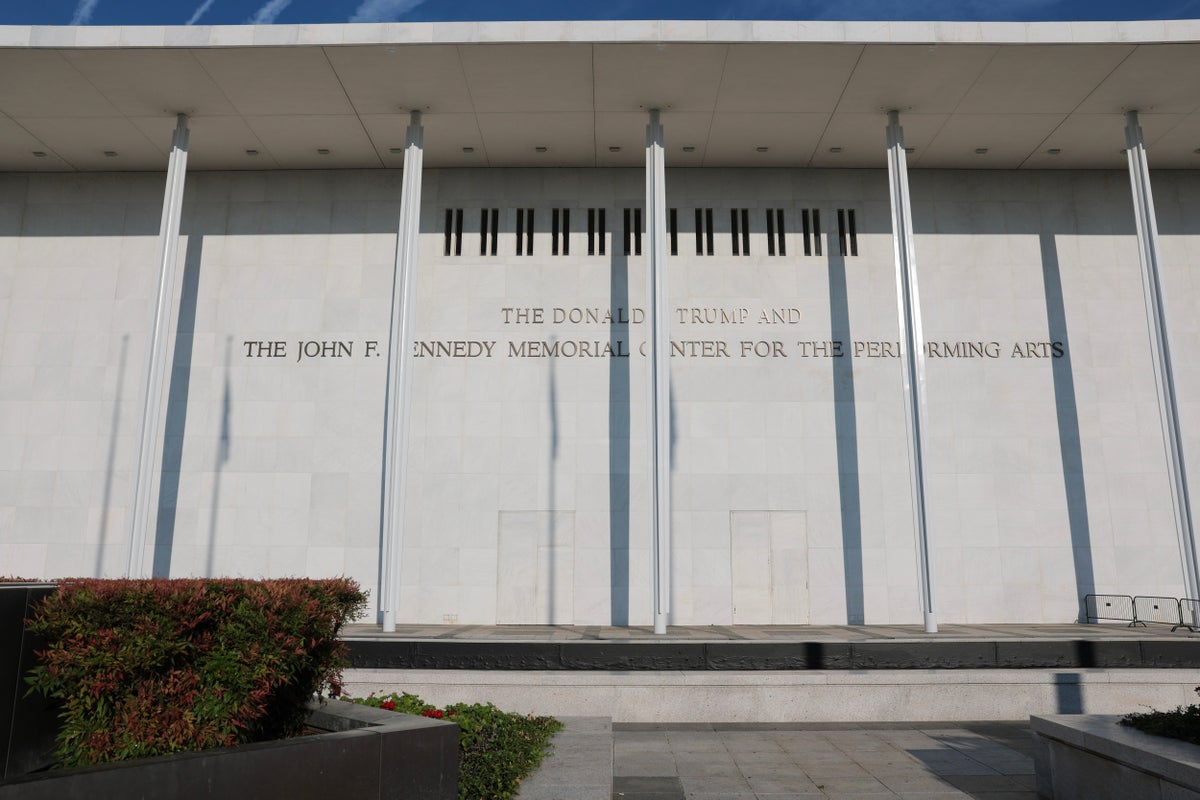
A federal judge ordered the Kennedy Center to turn over more financial records as part of the ongoing lawsuit involving President Donald Trump role in the operations - but has yet to decide on an ‘executive privilege” claim. On Friday, a judge told the center to turn over some records but gave the Department of Justice more time to respond to its executive privilege claims, according to the Washington Post.The DOJ invoked executive privilege to keep Trump’s role in the operations of the John F. Kennedy Memorial Center for the Performing Arts secret.Trump, who was elected chairman of the Kennedy Center board after installing loyalists to oversee the D.C. arts institution, has tried to remake the landmark in his image by attempting to slap his name on the building's facade and close it for repairs. Representative Joyce Beatty, an Ohio Democrat, has sued the center in her capacity as an ex officio board member to stop the renaming of the center and its planned two-year closure. While Beatty was successful in getting a federal judge to order Trump’s name to be removed from the building, she’s hit a snag in her fight to keep the Kennedy Center open. The Department of Justice has invoked executive privilege to keep Donald Trump’s role in the operations of the John F Kennedy Memorial Center for the Performing Arts a secret (Getty Images)On Monday, Beatty’s lawyers objected to the DOJ’s attempt to use executive privilege to limit what evidence the Kennedy Center has to turn over as part of her case, The New York Times reported, citing court records. During depositions this week, DOJ lawyers instructed Kennedy Center’s executive director, Matt Floca, to not answer questions about his conversations with Trump and his advisers, according to court records reviewed by The Washington Post.When asked by one of Beatty’s lawyers about what Commerce Secretary Howard Lutnick said when he first contacted Floca about helping the Kennedy Center, a DOJ lawyer told Floca, “Executive privilege on that. Don’t answer that,” a transcript of the deposition showed. Executive privilege typically allows presidents to keep certain conversations related to their official responsibilities private, so that they can speak candidly with aides. The DOJ has attempted to use executive privilege to limit what evidence the Kennedy Center has to turn over in a congresswoman’s case challenging Trump’s attempt to close the arts institution for repairs (AFP via Getty Images)But the DOJ’s use of executive privilege in this case is unusual, given that Trump has two jobs — president and Kennedy Center chairman.Jonathan Shaub, a University of Kentucky law professor who previously worked in the DOJ, told the Post, “If the president is not acting in his capacity as president, it doesn’t apply.”“Donald Trump is the chair of a nonprofit corporation’s board, and his decisions and directions lie at the heart of that board’s actions which, in turn, are the subject matter of this case,” Beatty’s lawyers wrote in Monday’s filing. The lawyers argued that using executive privilege in this context would “obstruct the search for the truth.”
Judge orders to Kennedy Center to turn over financial records as DOJ fights to keep Trump’s role secret
Full Article
Original Source
Read the full article at Independent →KhanList aggregates and links to publicly available news content. We do not host full articles from third-party sources. Always verify important information with original sources.