
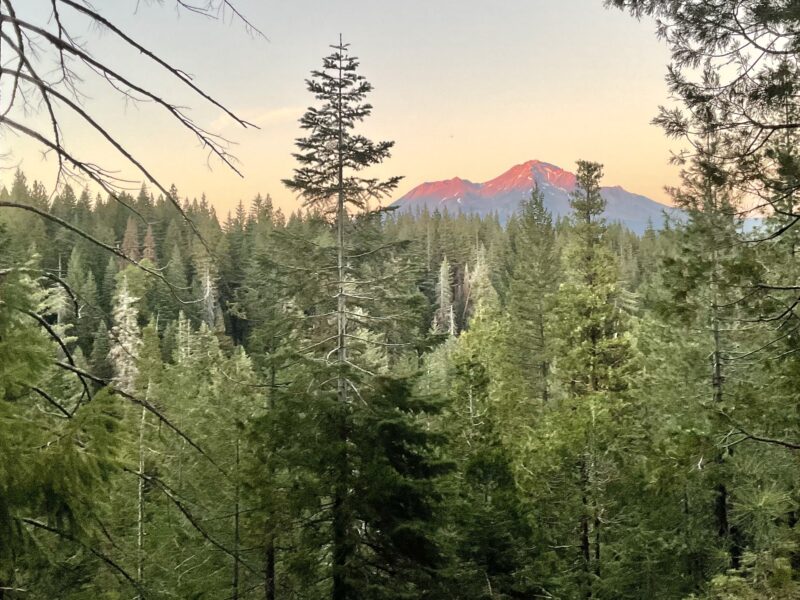
The U.S. Fish & Wildlife Service failed to justify its claim that a Mount Shasta-area logging project wouldn't harm threatened northern spotted owls, according to a federal judge.(CN) — A federal judge ruled in favor of environmental groups in California seeking to protect northern spotted owl habitat near Mount Shasta, California, after finding the government failed to back up its claims that a proposed project would not have a significant impact on the threatened birds.U.S. District Judge Dena Coggins granted the plaintiffs summary judgment against the government Wednesday, ruling the U.S. Fish & Wildlife Service illegally decided to move forward with a logging project in two key Northern California habitats of the northern spotted owl.The case stems from the U.S. Forest Service’s proposed South Fork Sacramento Public Safety and Forest Restoration Project, which is aimed at wildfire mitigation and public recreation improvements. However, the project also includes logging in two designated recovery units for the northern spotted owl: the California Cascades and the California Klamath.In a 2023 biological opinion, the Fish & Wildlife Service concluded the owl species would be in “no jeopardy” as a result of the project. The agency insisted the project would only remove 12 owls from the region.The plaintiffs filed a lawsuit against the two agencies in 2024, claiming violations of the Endangered Species Act and the Administrative Procedure Act.Kimberly Baker, executive director for the Klamath Forest Alliance, said the ruling was a huge win for the owls.“The Forest Service knew the project would harm these critical source populations and pushed the project through anyway,” Baker said in a statement. “This ruling gives these owls a better chance to survive across Northern California and their entire range, and that matters more than we can say.”Although the Fish & Wildlife Service does not have a scientifically validated number for the species’ population, it estimates there are less than 3,000 individual birds across the entire range, and that number is declining, the plaintiffs say in their complaint. The northern spotted owl was included in the Endangered Species Act in 1990.The California Cascades and the California Klamath habitats, also known as recovery units, include a 2.5-million-acre area that includes two reproductively successful pairs of birds that could be lost as a result, the plaintiffs say. These regions also include two territories, known as Scott and Soapstone, among the longest occupied areas in the species’ range since they were listed under the Endangered Species Act.While the owl range extends from Northern California to British Columbia, Baker said the populations in Washington and Oregon are functionally extinct, making the breeding pairs in California critical to the species’ survival. The project would remove and degrade a total of about 10,000 acres of habitat, she said.The area in question also serves as a major wildlife corridor in California, including for fishers and martens, she added.“The best available science shows that many owl populations are in an ‘extinction vortex’ and cannot withstand the combined and interrelated effects from climate change, barred owl competition, and additional logging projects that remove key habitat in their home ranges,” said Crag Law Center attorney Oliver Stiefel, representing the plaintiffs. “While more work needs to be done to cement this legal victory, we’re pleased that the judge found the agencies’ conduct to be unlawful.”In her ruling Wednesday, Coggins found the Fish & Wildlife Service’s biological opinion on the logging activity’s impact on the owls came up short.The agency’s determination that the Scott and Soapstone territories do not represent the only source population to the recovery units is not supported by evidence in the record, the Joe Biden appointee wrote. Further, the judge pointed to the agency’s lack of analysis for alternative source populations in its decision as proof the agency had not articulated a connection between the facts and its conclusion.“The BiOp does not contain any discussion of what the other source populations are, or their capacity to compensate for the adverse impacts from the South Fork Sacramento Project on approximately 21% of the estimated affected northern spotted owl population in the California Cascades and California Klamath recovery units,” she wrote. “Accordingly, the court finds that defendant FWS’s ’no jeopardy’ conclusion for northern spotted owls based on its analysis at the recovery unit scale was arbitrary and capricious under the Administrative Procedures Act.”However, Coggins did not vacate the government’s ruling entirely. The parties are ordered to meet Sept. 1 to negotiate a remedy.“It’s hard to say what will come from this, but at least it’s highlighting the plight of these owls,” Baker said.The plaintiffs also include Conservation Congress, Environmental Protection Information Center and the Mount Shasta Bioregional Ecology Center.The U.S. Forest Service and Fish & Wildlife Service did not respond to requests for comment.Subscribe to our free newslettersOur weekly newsletter Closing Arguments offers the latest about ongoing trials, major litigation and rulings in courthouses around the U.S. and the world, while the monthly Under the Lights dishes the legal dirt from Hollywood, sports, Big Tech and the arts.Additional Reads
Judge offers lifeline to spotted owls near planned logging project
Full Article
Original Source
Read the full article at Courthousenews →KhanList aggregates and links to publicly available news content. We do not host full articles from third-party sources. Always verify important information with original sources.