
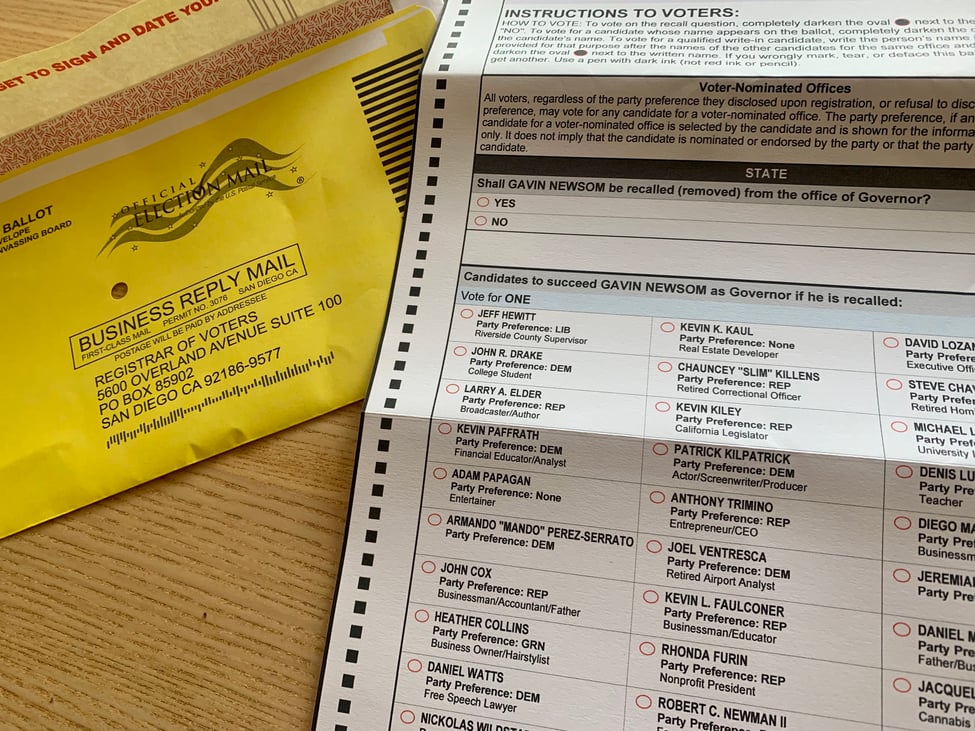
California candidates are listed as "Party Preference: None" unless they belong to six recognized parties. Critics say that means printing false information on ballots.SAN FRANCISCO (CN) — A lawsuit by the American Solidarity Party will survive for now after a federal judge on Friday declined to dismiss a challenge by the Christian democratic party over how small-party candidates are listed on California ballots.In a ruling from the bench, Senior U.S. District Judge Maxine M. Chesney said that listing “Party Preference: None” next to a candidate’s name when they do have a clear party preference could mislead voters.“Why no preference? Why couldn’t they say something else?" the Bill Clinton appointee said. “The idea of making an incorrect statement on the ballot is what concerns me.”In California, candidates are listed on the ballot as “Party Preference: None” unless they’re affiliated with one of six recognized political parties: Democratic, Republican, American Independent, Green, Libertarian and Peace and Freedom.California also uses a top-two or “jungle” primary system, where all candidates regardless of political party run in the same primary election.Voters can choose any candidate, and the two with the most votes move on to the general election ballot even if they are from the same party. Write-in votes are not permitted.In 2024, several minor parties sued over this system. They argued it was unconstitutional because it denied third parties a meaningful chance to appear on the general ballot.Chesney upheld the system this April, dismissing all of plaintiff’s claims. But she did give them leave to amend on a couple issues, including rules over how party affiliations are listed on the ballot.Representing the third parties bringing the suit, attorney David Schoen told Chesney that the American Solidarity Party simply wanted to have its candidates listed as belonging to the party.“All I am asking for in this case is to have this party have their label on it,” he said.Gabrielle Boutin of the California Attorney General’s Office said the state has to have some control over what constitutes a political party and that case-by-case determinations would be inconsistent and not cost-effective. Chesney acknowledged she could be right but said the government hadn’t yet presented enough evidence to toss the claim.“It’s not that I’m finding plaintiffs are winning their case," Chesney explained. “There might be really good reasons why it wouldn’t work. But they have not been spelled out in the opposition enough for a motion to dismiss.”In a statement to Courthouse News, Schoen said the judge’s ruling is “a step in the right direction for smaller parties.”Parties like American Solidarity have a national presence, Schoen said, and it’s false to list them as “Party Preference: None.”“They do have a party preference, and it’s this party,” he said. “To have something that’s false on the ballot is a very serious problem.”While the party preference claim survived, Chesney opted to toss another claim over the timing of primary elections in California.A representative for the Secretary of State’s office did not immediately respond to a request for comment.Subscribe to our free newslettersOur weekly newsletter Closing Arguments offers the latest about ongoing trials, major litigation and rulings in courthouses around the U.S. and the world, while the monthly Under the Lights dishes the legal dirt from Hollywood, sports, Big Tech and the arts.Additional Reads
Judge advances claims over party labels on California ballots
Full Article
Original Source
Read the full article at Courthousenews →KhanList aggregates and links to publicly available news content. We do not host full articles from third-party sources. Always verify important information with original sources.