
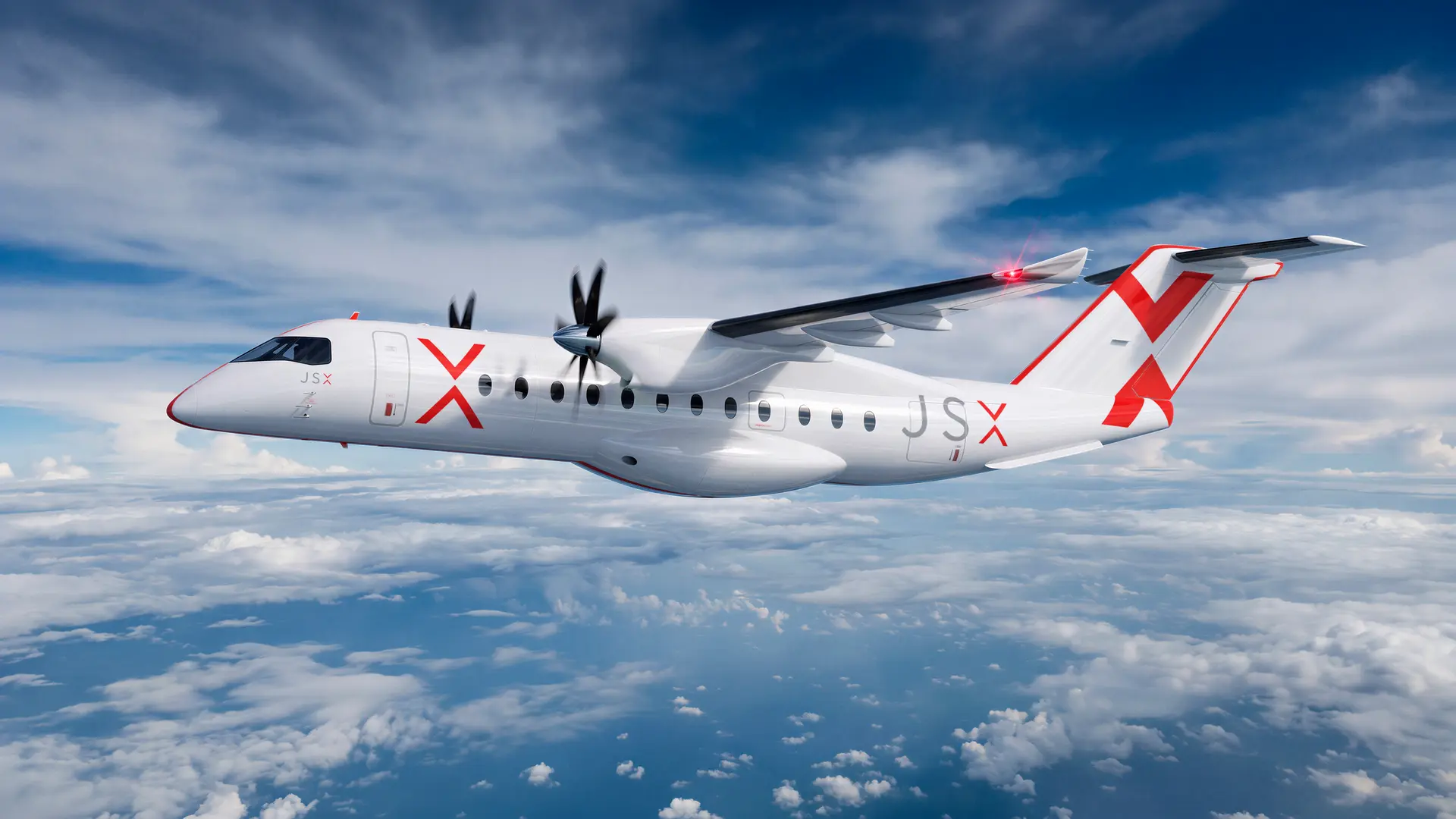
JSX has signed a deposit-backed agreement for 50 Heart Aerospace ES-36 hybrid-electric aircraft, with purchase rights for another 50. These planes could eventually make short flights cheaper and bring service to more small airports. They aren’t certified yet and Heart’s target for carrying passengers is 2031. I’m encouraged by continued development of the aircraft but remain skeptical we’ll see 50+ aircraft starting to show up in 2031. Nonetheless, there’s value in publicity for Heart and JSX, a customer helping develop the aircraft, and another argument against letting American Airlines, Southwest and the big pilots union regulate JSX’s business model out of existence. And that’s an argument that could become especially useful after the 2028 presidential election, if the party in power changes hands and puts a higher priority on reducing aviation’s fossil fuel use. Credit: Heart Aerospace Heart’s 2031 Target Introduction Of This New Aircraft Heart has been through the ES-19 and ES-30 concepts and is now introducing the ES-36. The latest design promises: Capacity for 36 passengers, up from 30. 125 miles on batteries alone, or 745 miles using its hybrid system, plus reserves. Two propellers instead of four, with electric motors driving them and fuel-burning generators supplying electricity on longer flights. A first flight of the pre-production aircraft in the second half of 2028. Heart’s X1 demonstrator first flew on August 12. It spent 27 minutes airborne under an experimental airworthiness certificate. They are targeting aircraft operating costs at least 40% below older regional aircraft. The deposit makes today’s announcement more substantial than simply signing a letter of intent, though we don’ tknow the amount, whether it’s refundable, or what would allow JSX to walk away. I’m also confused by JSX ordering a 36-seat aircraft. The current rules for this kind of Part 135 public charter operation limit passenger seating to 30 and payload capacity to 7,500 pounds. JSX would need an approved configuration within those limits to use its existing model. The announcement says the companies will work on the cabin configuration. Presumably an all first class cabin will fit within the 30 seat limit (which would also force them out of private terminals). JSX Has Been Making These Bets For Years This replaces JSX’s 2023 letter of intent for 50 ES-30s and options for 50 more. It isn’t another 100 aircraft on top of that announcement. JSX and its earlier corporate family have a longer history here: Announced Aircraft Commitment 2018 Zunum hybrid-electric aircraft JetSuite announced up to 100, with deliveries then expected in 2022. The release discussed both JetSuite and JetSuiteX, today’s JSX. 2021 Craft Aerospace, now Odys Aviation JSX letter of intent for 200 aircraft, plus 400 options. 2023 Electra, 9 seats 32 aircraft plus 50 options, up to 82. 2023 Aura Aero ERA, 19 seats 50 aircraft plus 100 options, up to 150. 2023 Heart ES-30, 30 seats 50 aircraft plus 50 options, up to 100. The last three were the 332-aircraft announcement I covered in December 2023. JSX called 132 of those orders firm, while also describing the agreements as letters of intent. Today’s Heart deal advances one of those commitments. These announcements aren’t an additive count of a current, deliverable fleet. When JSX announced plans for conventional ATR turboprops last year, I wondered whether that was a hedge against the electric aircraft not arriving. Zunum certainly hadn’t delivered the promised planes. Having aircraft you can fly while keeping an interest in ones that might become economical later makes sense. The ATRs allow flying now out of short runway airports like Santa Monica. Heart gets a customer it can point to when raising money, and an operator to help work through what these planes actually need to do. JSX gets a chance at a better airplane and early delivery positions if it works. I’d take their repeated interest seriously without assuming that every aircraft, quantity or delivery date in these announcements survives. Regulating Away The Customers Would Hurt Aircraft Development I explained two years ago that if American and Southwest (and the big pilots union) successfully got federal rules changed to get rid of JSX there would be far-reaching effects on future aircraft development. These manufacturers need customers that can make money flying small planes on short routes. A 19-seat aircraft that works economically with 12 or 15 passengers can serve a market that doesn’t support a conventional regional jet. Lower energy and maintenance costs could bring more of those routes within reach. The operating rules help determine whether there’s a business there at all. Nine-seat, non-jet aircraft can provide scheduled commuter service under Part 135. At 19 seats, an operator can still fly without a required flight attendant. The public charter model allows larger aircraft, within the 30-seat and payload limits, to sell individual seats while operating under Part 135. These thresholds help explain the size aircraft that manufacturers have been developing. JSX combines Part 135 flying with the Transportation Department’s Part 380 public charter rules. Customers buy a seat instead of chartering the entire airplane. They can use convenient smaller airports and private terminals, saving enough time on the ground to make a short flight worthwhile. You need both pieces: economical aircraft and carriers that can sell and operate the service economically. A cheaper plane doesn’t fix a business model burdened with costs it can’t spread across enough passengers. And the early customer doesn’t have to look like the eventual mass market. Tesla’s Roadster and Model S helped pave the way for the Model 3. Today’s premium JSX customer can help support development of aircraft that other carriers eventually use to serve smaller communities at lower prices. United and Air Canada also back Heart (United has been an investor in JSX), so Part 135 operators aren’t the only possible customers for this particular plane. But major-airline investments don’t replace the market for small aircraft operated from small airports with a low enough cost structure to fill only a handful of seats. American, Southwest and the Air Line Pilots Association have pushed to make these public charters follow the operating rules used by major scheduled airlines. The FAA publicly backed that effort in 2024 while saying it would explore a new authority for scheduled service using 10-to-30-seat aircraft. The current administration backed off that effort. The existing public charter model remains permitted. Former American Airlines CEO Doug Parker was still attacking it this month. I’ve covered American’s complaints about a small competitor operating under different rules (though they charter planes from private facilities without TSA themselves), as well as Parker’s account of enlisting Southwest’s Andrew Watterson to lobby the TSA. CEO Robert Isom has made their commercial interest in making JSX less competitive clear. Back in 2023, JSX’s electric-aircraft announcement explicitly invoked the Biden administration’s call for lower emissions and good-paying American jobs. I wrote then that “The quickest value is political.” The Biden administration nevertheless pursued changes to the public charter rules, so green credentials aren’t automatic protection against airline and union lobbying. I still think continuing to back these aircraft is good politics. If Democrats win the presidency in November 2028 and take office in January 2029, JSX would have another argument for preserving its business: it’s a crucial customer for the lower-emission aircraft that administration may want developed. This needn’t be the reason for the purchase agreement to be a benefit of it. Topics on this page
JSX Orders Up To 100 Hybrid-Electric Planes—They’re Years Away, But The Political Payoff Could Come First
Full Article
Original Source
Read the full article at Viewfromthewing →KhanList aggregates and links to publicly available news content. We do not host full articles from third-party sources. Always verify important information with original sources.