
Morgan Chittum here. Private equity firms have spent years waiting for a better time to sell. By the second half of 2027, some may have to stop waiting. That’s the view of Charlie Bouckaert, JPMorgan’s global head of M&A. He expects sponsors to start moving towards liquidity—not because he sees a dealmaking boom ahead, but because they’re running out of reasons to put it off. Their holdings are getting older, refinancing deadlines are approaching, and investors want their money back. “Ultimately, the private equity business model is reliant on exiting and returning capital to LPs,” Bouckaert told me. “And so that’s going to have to happen.” After all, backlogs are massive and growing. Private equity inventory of unsold investments hit 33,853 as of Sept. 30, 2026, up from 33,575 at the end of June, according to PitchBook figures reported by the Wall Street Journal. At the current pace of exits, PitchBook estimates it would take more than eight years to clear that inventory. This is, in part, a byproduct of private equity’s natural boom-and-bust cycle. A record-setting 2021 made way for sharp slowdown as aggressive interest rate hikes in 2022 ended the cheap-debt era. The recovery ever since then has been uneven. Although deal and exit values rebounded in 2025, the industry entered 2026 with roughly 32,000 unsold companies. Buyout holding periods have stretched to around seven years, compared with five to six years between 2010 and 2021, according to Bain. “You have a number of assets that have been held for a long period of time,” Bouckaert said. Some of those companies could also need to refinance in 2028 or 2029. As those deadlines get closer, private equity firms will have to decide whether to sell or keep holding—and how to finance those businesses if they do. “The more imminent nature of that is going to force a more definitive evaluation of what to do next,” he added. Still, Bouckaert’s private equity forecast isn’t a call for a broader M&A surge. After what he described as a “very, very robust environment in 2026,” particularly during the first two-thirds of the year, dealmaking hit a lull. Activity remains relatively healthy, but Bouckaert expects 2027 to look more like the recent stretch than those earlier highs. “We expect the composition of [the market] to continue to skew towards larger deals the way that it has, but there to be slightly fewer of those,” he said, pointing to AI-related mergers and acquisitions. And for private equity firms, returning money to investors won’t always mean selling a company outright. “The exact format in which it happens may change,” Bouckaert said. “Maybe it’s a continuation fund. Maybe it’s the structure of a secondary deal.” Continuation funds let sponsors move investments into a new vehicle they also manage, giving existing investors a chance to cash out. Investors can also sell their stakes to new buyers through the secondary market. “But one way or another, we do expect to see greater deal flow materialize there,” he said. See you next week, Morgan ChittumX: @morgan_chittumEmail: morgan.chittum@fortune.com Submit a deal for the Term Sheet newsletter here. Morgan Chittum curated the deals section of today’s newsletter. VENTURE CAPITAL- Harbinger, a Los Angeles-based automotive and industrial manufacturer, raised $240 million in Series D funding. The round was led by Tiger Global, Capricorn’s Technology Impact Fund, and Ridgeline. - Humble Robotics, a developer of autonomous electric freight vehicles, secured $51 million in Series A funding led by Obvious Ventures. Eclipse, Energy, and Impact Partners were backers as well. The round brings the company’s total funding to $75 million. - T-Therapeutics, a biotech company developing treatments for cancer and autoimmune diseases, raised $133 million in Series B funding. Advent Life Sciences and the British Business Bank co-led the round, joined by new investors JJDC, Samsara BioCapital, M-Ventures, and Eli Lilly. - Ocient, a Chicago-based provider of AI and analytics software, announced $100 million in Series C funding. The round was led by BOKA Capital and OCA Ventures. Other participation included Greycroft, In-Q-Tel, Blue Bear Capital, Buoyant Ventures, PSP Growth, and Pritzker Group Venture Capital. OTHERS- Dropbox announced plans to acquire cloud technology company Tigris Data for $350 million. - Dialpad, a business communications platform, agreed to combine with Ada, a Toronto-based developer of AI customer service agents. Financial terms were not disclosed. - Higher Logic, an Arlington, Va.-based software development firm, acquired Mission Fuel AI, an education services company. Financial terms were not disclosed. IPOs- Wonder, a food delivery operator, confidentially filed for an IPO. The company has not disclosed the offering’s size or proposed price range. Wonder last raised more than $650 million in July at a valuation of roughly $9 billion. Existing investors include Accel, GV, AllianceBernstein, and ARK Invest. PEOPLE- Cloudflare named Christian Smith president of revenue, succeeding Mark Anderson, who will retire at the end of the year. Smith previously led go-to-market operations at Splunk.
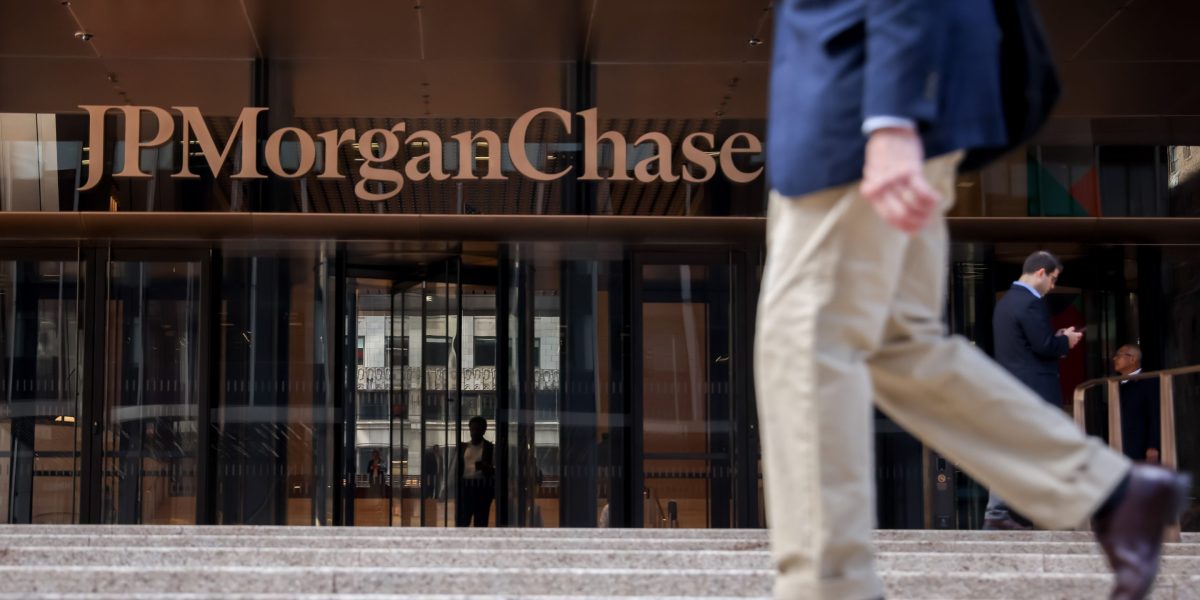
JPMorgan’s M&A chief sees softer 2027–but a potential upside surprise in private equity exits
Full Article
Original Source
Read the full article at Fortune →KhanList aggregates and links to publicly available news content. We do not host full articles from third-party sources. Always verify important information with original sources.