
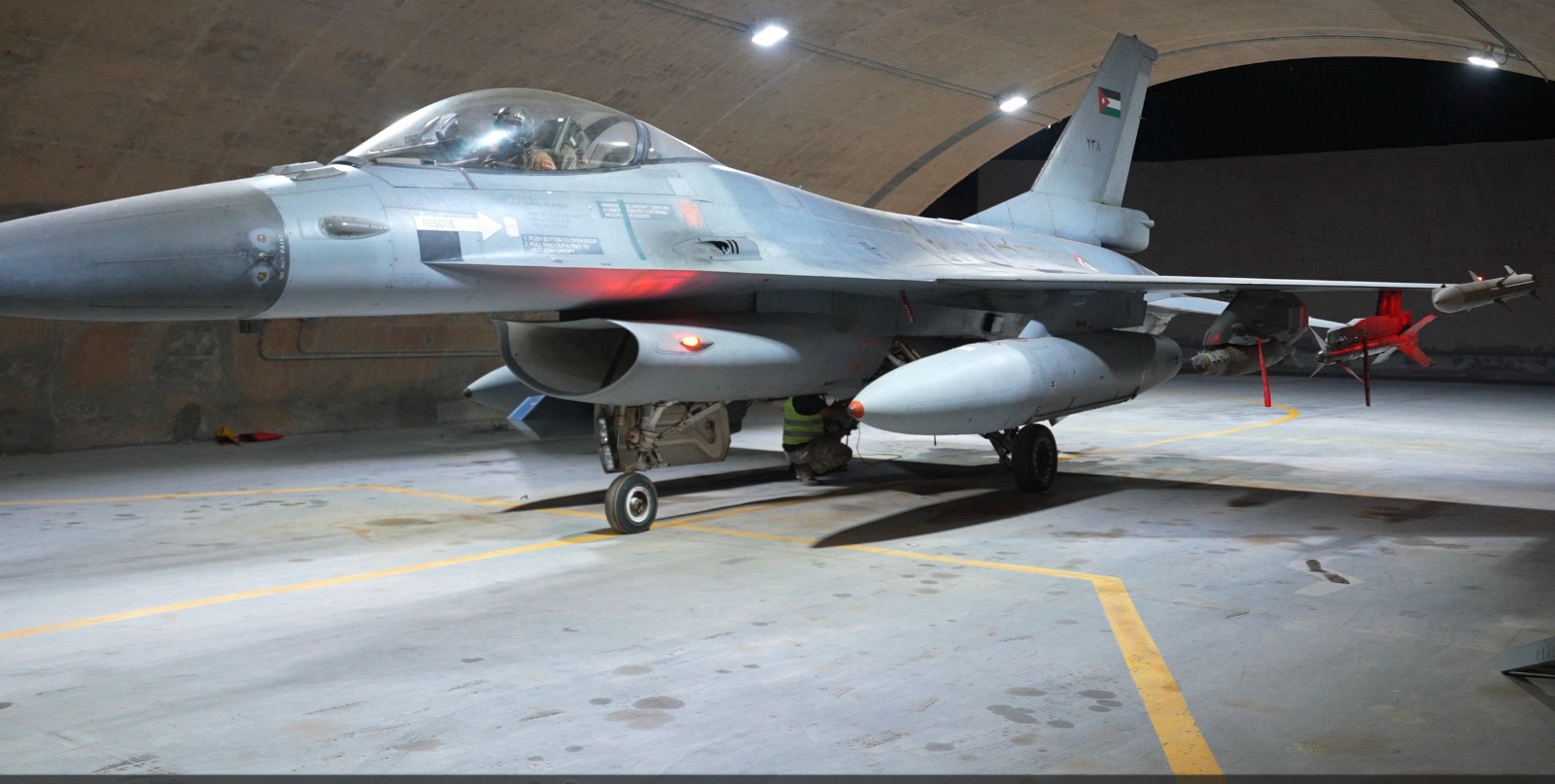
The Royal Jordanian Air Force launched multiple airstrikes on October 26, targeting what it called terrorist organizations in southern Syria that were linked to the perpetrators of Friday’s attack on St. George’s Greek Orthodox Church, in Karak Governorate. The terrorist attack on the church killed nine people and wounded 34 others. The Jordanian Armed Forces named the October 26 operation “Jordanian Deterrence-Hamoud,” announcing that it had destroyed several positions and vehicles belonging to the terrorist organizations and killed or wounded a number of their members. The following day, Jordanian Government Communications Minister Mohammad al Momani announced that preliminary estimates indicated that more than 20 Islamic State members had been killed and a large weapons depot destroyed. The strikes came hours after Jordanian security forces arrested three suspects accused of carrying out the church attack, following a three-day search. The airstrikes triggered a dispute between Amman and Damascus after the Jordanian Armed Forces claimed that the operation had been conducted in coordination with the Syrian government. Syrian authorities denied any prior coordination, and Syria’s Health Ministry claimed that seven civilians, including three children, a woman, and three men, were killed in strikes targeting locations in the Daraa countryside in southern Syria. The Syrian Foreign Ministry rejected military operations conducted on Syrian territory without prior coordination, describing them as a violation of sovereignty. Meanwhile, Momani expressed Jordan’s regret over civilian casualties, maintaining that the country’s forces had avoided striking locations where intelligence indicated the presence of civilians. Earlier on Monday, Jordanian authorities had announced the arrest of three suspects in the October 26 church attack after locating them inside an abandoned house in the village of Al Judayda in Karak Governorate, approximately 4 kilometers from the site of the attack. The suspects refused to surrender and triggered an armed confrontation that ended with all three of them wounded and arrested. According to authorities, the alleged perpetrators were members of the same family and belonged to the Thenibat tribe from Karak. They were identified as Hazzah Zaidan Mohammad Thenibat, whom authorities described as the attack’s planner; his brother, Mishal Zedian Mohammad Thenibat; and their relative by marriage, Ahmad Sami Hussein Thenibat. During the attack on October 23, three armed men arrived in a blue vehicle at St. George’s Church in the village of Hamoud as residents gathered for a woman’s funeral. Based on a review of footage, the gunmen exited the vehicle, with one carrying a semi-automatic rifle and the other two armed with handguns, before opening fire on mourners near the church’s entrance and courtyard. Media reports indicated that the attackers reloaded their weapons during the assault and that some fired at wounded victims at close range before fleeing the scene. The October 23 shooting was an exceptionally rare and deadly attack targeting Jordan’s Christian community. Major terrorist attacks have also been uncommon in the country in recent years, but Karak Governorate was also the site of one of the most notable incidents of the past decade. In December 2016, Islamic State-linked militants carried out attacks against security personnel and civilians in and around Karak Castle, killing several people, including a Canadian tourist, and wounding others. Ahmad Sharawi is a senior research analyst at the Foundation for Defense of Democracies focused on Iranian intervention in Arab affairs and the Levant. Issues:
Jordanian Air Force strikes Syria in retaliation for deadly church attack
Full Article
Original Source
Read the full article at Fdd →KhanList aggregates and links to publicly available news content. We do not host full articles from third-party sources. Always verify important information with original sources.