
It’s a bad week to be a celebrity sex pest, and a slightly less bad week to be Jonathan Ross.The broadcaster’s former friendships with convicted rapist Russell Brand, and David Walliams who has been accused of (and denies) grooming and sexual harassment, have put him at the uncomfortable epicentre of a reckoning on the noughties and its famous men, which has left him no choice but to speak. It appears Noel Fielding, Matt Lucas, Jimmy Carr, and Simon Cowell need longer to formulate a condemnation. Wossy is as horrified as the rest of the nation about the crimes of one and “revelations” about the other. He was “genuinely unaware of their conduct” and, well, I should think so too – the alternative would be unconscionable. But I’m not sure that this cursory attempt to distance himself – which he has had several years to strategise, given the “open secret” of the claims – will be anywhere near enough to avoid the contagion of these men and their downfalls. The thing about all these shocking exposés is that much of our emotion and revulsion comes not just from the details about what Brand did and what Walliams is alleged to have done, but the culture that allowed it. We cannot denounce their behaviour or the ways famous men abuse their power without casting our minds back to the mid-noughties and remembering exactly who gave them it. Brand and Walliams rose to positions of such ubiquity and influence that they were regarded as untouchable. How? Because they were variously funny, charming, intriguing, intimidating, and lucrative. Everybody back then was laughing along, and so their shticks – Brand’s crass, Walliams’s cruel – became acceptable, and would come to define that seedy, sexist, intelligent-lads’ era we like to think is long behind us.Unfortunately for Jonathan Ross, no matter that he did not commit crimes and no matter how many years have passed and no matter how much he tries to compensate for it, he was still a prominent part of that culture. When we look back at old panel show clips and interviews and ask ourselves how Russell Brand managed to hide in plain sight for so long when he was so obviously a sleazy, dirty, nasty piece of work, far too often Jonathan Ross was sitting a few feet away from him, making his sexual proclivities the butt of the joke. Russell Brand and David Walliams at the 2006 Comedy Awards (Photo: Dave Benett Library/Getty Images) On 2007’s Big Fat Quiz of the Year, Ross swapped seats to protect a 22-year-old Lily Allen, “the only sexually attractive young lady”, from Brand and Noel Fielding (who remains silent on the fall from grace of his old friend, and can now be found prancing around the Bake Off tent), who were making jokes about rape and Jack the Ripper. “Now Lily might go home with her dress still on,” Ross said, sitting down in his new chair. It has, of course, gone viral.Wossy’s career was already upended 18 years ago when he sniggered along to Brand’s preposterously ill-judged Andrew Sachs voicemail, and it was beamed out to millions on Radio 2, and we know how that turned out. His reputation has never fully recovered – even The Celebrity Traitors last year still felt a little sheepish. It is yet more spectacularly bad luck that he should find himself in the role of regrettable bystander once again, with the unearthing of a 2004 gag, which he now says was tasteless and shocking and which he would not dream of making today and would never have back then, had he known of the allegations. “The comedy awards is 15 years old – 15 years old! And like most 15-year-olds, it’s drunk, it’s unpredictable and it’s probably going home with David Walliams.” It’s not actually bad luck, though, is it? It wasn’t wrong place, wrong time. It was everywhere. This kind of language and punch line, and the tacit understanding that men were allowed to regard women as sex objects and openly tell them so and they were supposed to laugh along, was acceptable and unavoidable on TV any night of the week (which made it acceptable and unavoidable in real life, too). Wossy was the most famous and powerful TV presenter, the most well-connected celebrity, the epitome of British showbusiness during an era an increasing number of us would like to forget.That his badly-aged jokes reflected the overwhelming culture of the time is not a defence – it is what makes it all so much worse. He didn’t know, he wasn’t to blame, he didn’t prey upon women – true. But you still don’t want people to mention your name when they talk about the men who did. When the reckoning comes, the last person you want to be is always the victim. The second last person you want to be is a perpetrator. The third last person you want to be is the person sitting next to him laughing, and it will take more contrition and a lot more candour than this short rebuke to save Jonathan Ross from becoming Brand and Walliams’s collateral damage.
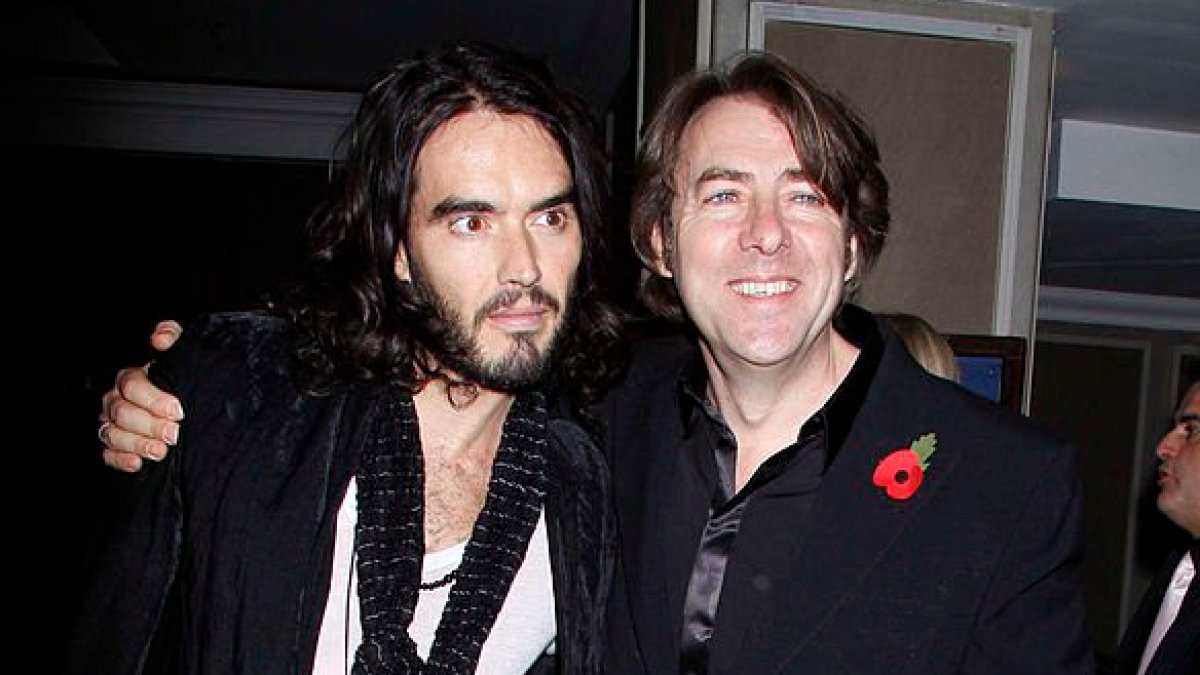
Jonathan Ross is at the epicentre of a noughties reckoning
Full Article
Original Source
Read the full article at Inews →KhanList aggregates and links to publicly available news content. We do not host full articles from third-party sources. Always verify important information with original sources.