
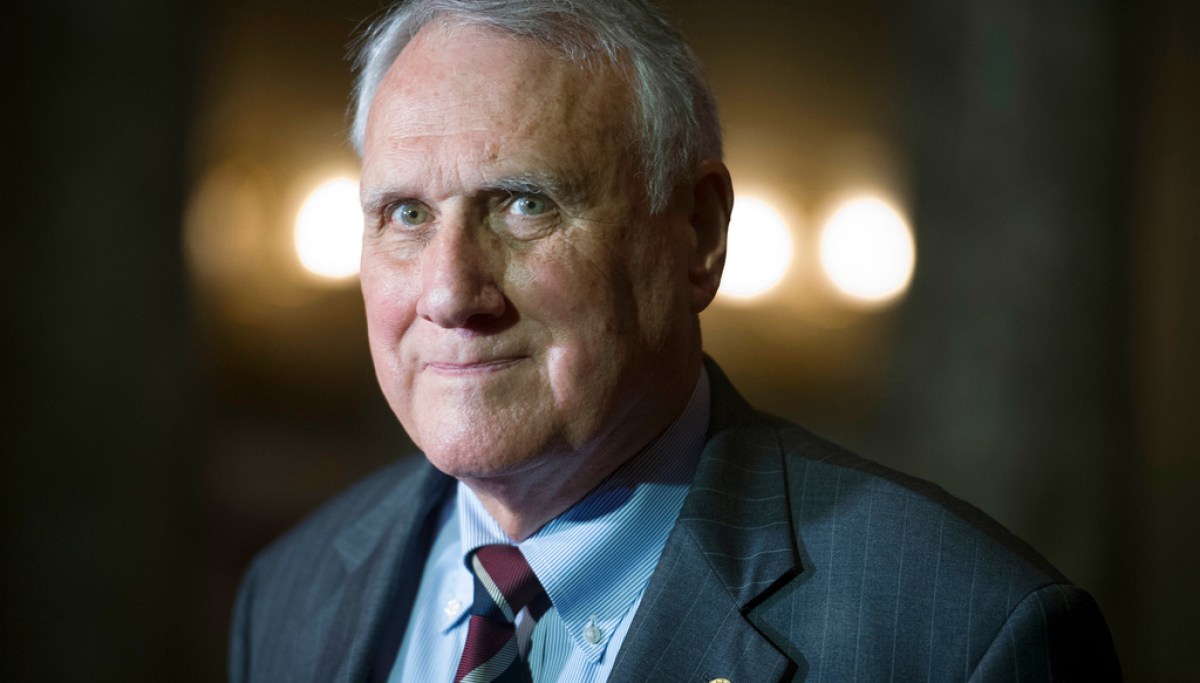
Washington has never lacked for senators who enjoy the cameras. It has always been shorter on those who prefer the cloakroom, the committee markup, and the late-night negotiation that never makes the evening news. Jon Kyl, the former Arizona senator who died Sept. 17 at the age of 84, belonged to the second group by temperament and by choice. Time magazine nicknamed him “the Operator.” Colleagues called him a workhorse. In a body that runs on spectacle and substance, he specialized in the latter.Kyl was born on April 25, 1942, in Oakland, Nebraska, the son of John Henry Kyl, a schoolteacher and TV journalist who later served as a Republican congressman from Iowa. At 18 he headed to the University of Arizona, where he would earn a bachelor’s degree and a law degree. He spent two decades at the Phoenix firm Jennings, Strouss & Salmon, focusing on water law in a state where the resource is scarce and contested.That expertise would serve him well when he embarked upon a career in politics. As an attorney he helped shape Arizona’s 1980 groundwater code, a pioneering framework for a drought-prone state. He chaired the Phoenix Metropolitan Chamber of Commerce, won a House seat in 1986, and served four terms. He captured an open Senate seat in 1994 and held it for three terms until 2013, winning reelection by comfortable margins. Sen. Jon Kyl, R-Ariz., waits to be sworn-in by Vice President Mike Pence during his ceremonial swearing-in at the Old Senate Chamber on Capitol Hill, in Washington, Sept. 5, 2018. (AP Photo/Cliff Owen) For most of those years, he was Arizona’s junior senator alongside John McCain. While McCain was becoming a nationally recognizable figure and running for president, Kyl was handling the less headline-grabbing but arguably more critical work: tax policy, judicial nominations, national security, and Western water. He rose through Republican leadership as Policy Committee chairman and conference chairman before colleagues elected him minority whip in 2007. He held the post until he left the chamber. In 2000, Dick Cheney interviewed him as a possible running mate for George W. Bush.Time magazine named him one of America’s 10 best senators in 2006 and one of the world’s 100 most influential people in 2010. Mitch McConnell, in that Time 100 tribute, praised Kyl’s “encyclopedic knowledge of domestic and foreign policy, and his hard work and leadership.” The 2006 profile also noted that legislation often lived or died by Kyl’s hand, even when that hand stayed invisible. His proudest achievements, he later said, were the tribal water settlements he spent years assembling. The Arizona Water Settlements Act of 2004 resolved decades of claims by the Gila River Indian Community and the Tohono O’odham Nation — then the largest such deal in state history. McConnell called Kyl’s work ethic on the bill “legendary,” noting that he had labored behind the scenes for 15 years. “It was one of the hardest things I’ve ever done, but I was in a position to be the catalyst,” Kyl told the Phoenix New Times. “There wasn’t anybody else who could do that water deal. And it had to be done.” McCain once remarked that there was “no smarter man in America on water issues than Senator Jon Kyl.” Arizona State University later established the Kyl Center for Water Policy in his name.On the judiciary, he voted to confirm John Roberts and Samuel Alito. After leaving the Senate, he joined Covington & Burling. In 2018, following McCain’s death, Gov. Doug Ducey appointed him to fill the vacancy. Kyl served four months, voted to confirm Brett Kavanaugh —whose nomination he had been shepherding as an informal “sherpa” — but then resigned. “There is more to life than being in the United States Senate,” he said when asked about his resignation. “Some people stay too long, and there are other things to do in life.”Kyl was a consistent conservative on taxes, missile defense, and immigration, yet he worked across the aisle when the subject demanded it. Colleagues from both parties described him as serious, prepared, and willing to negotiate in good faith. Ducey called him a workhorse among Washington’s showhorses. Jeff Flake, who succeeded him, called him one of the most diligent public servants Arizona had produced.BARRY MELROSE, 1956-2026 He hiked Camelback Mountain when he could and knew the status of water projects from Phoenix to Page. The state he adopted as a teenager became the one he represented for nearly three decades and whose most intractable resource fights he tried to settle. Like the coach who says that the best plays are the ones that you don’t make (i.e., the fumbles, the interceptions, etc.), Kyl believed that many of his better federal achievements consisted of preventing bad things from happening rather than forcing good ones through.That was the Operator’s way. He never needed the spotlight to leave a mark that would outlast the 24-hour news cycle. As he once said, “You can accomplish a lot if you’re not necessarily out in front on everything.”Daniel Ross Goodman (@DanRossGoodman) is a Washington Examiner contributing writer and teaches theology and religious studies at St. John’s University. His next book, Dante’s Guide to Life: How The Divine Comedy Can Change Our Fortunes, Our World, and Ourselves, will be published this fall by Angelico Press.
Jon Kyl, 1942-2026
Full Article
Original Source
Read the full article at Washingtonexaminer →KhanList aggregates and links to publicly available news content. We do not host full articles from third-party sources. Always verify important information with original sources.