
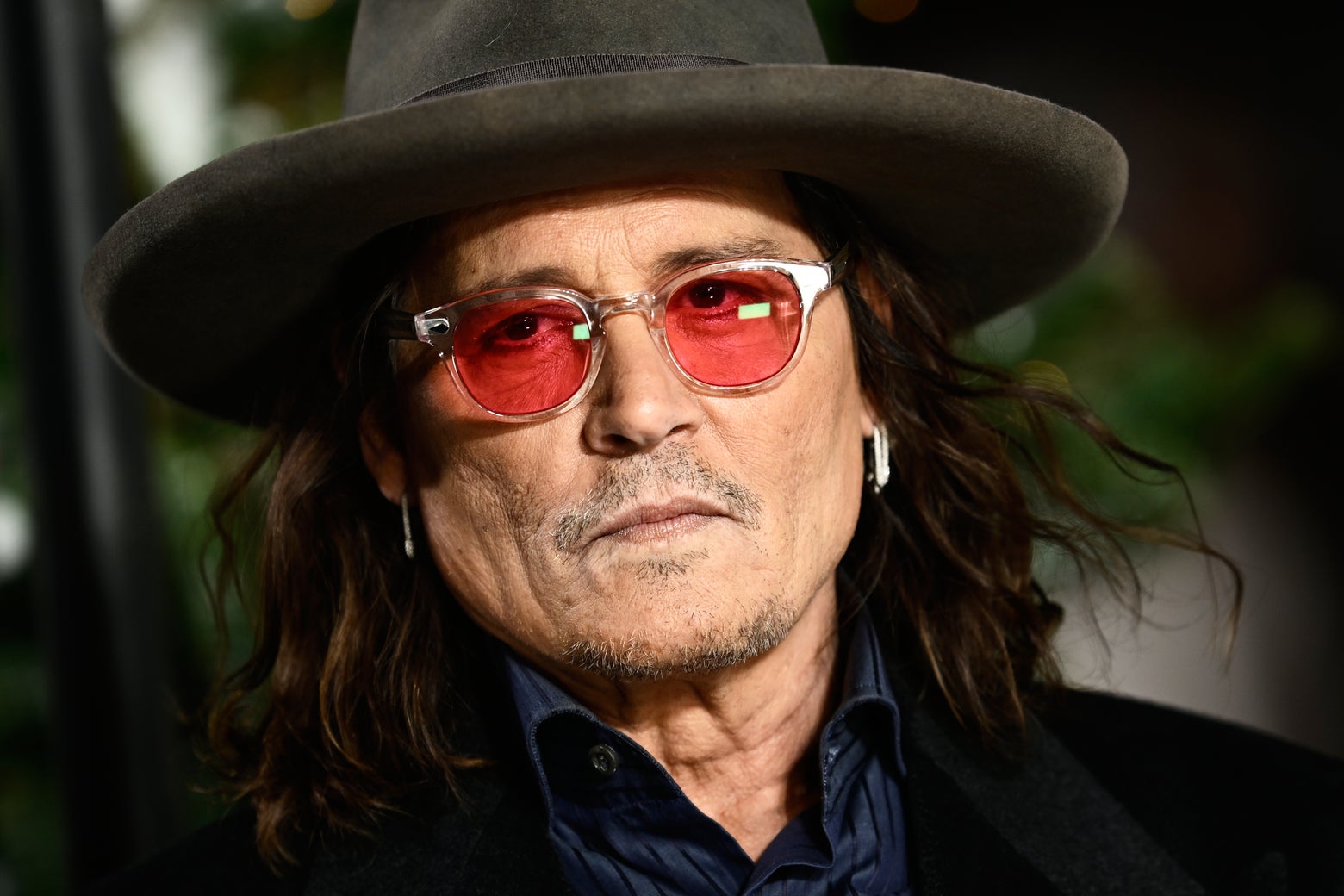
Fame The Ghost of Box Offices Past Is Back to Haunt Us As Ebenezer and a new Johnny Depp biography make clear, Depp might not want this any more than we do. By Enter your email to receive alerts for this author. Sign in or create an account to better manage your email preferences. Unsubscribe from email alerts Are you sure you want to unsubscribe from email alerts for Scaachi Koul? Nov 24, 20261:44 PM Gareth Cattermole/Getty Images Sign up for the Slatest to get the most insightful analysis, criticism, and advice out there, delivered to your inbox daily. Ebenezer isn’t necessarily a good movie. It is, however, the exact kind of movie that someone like Johnny Depp would make to get back in the good graces of viewers and movie executives alike. This retelling of A Christmas Carol is largely faithful to the version people know best: A grumpy, cheap old man is visited by ghosts on Christmas Eve, gets scared straight, and throws himself into the Christmas spirit (pun intended). Its November opening weekend was a clear success, if a predictable one—a kid-friendly movie released when nothing else is out, known IP starring a very famous actor with the kind of name recognition that’ll get people going to a Christmas movie before Thanksgiving. Depp has been charting a strangely trepidatious return to public life since the myriad of lawsuits that have upended his life over the past decade, from suits he filed against his former management team (which led to a bombastic countersuit) to his divorce from Amber Heard, who alleged that he abused her. (He denied it, claiming that she abused him, leading to a spiral of litigation around the world.) Now a new, unauthorized biography about Depp tries to make sense of his 40-year career, one that, the author argues, the actor has never been fully comfortable with. In The Many Faces of Johnny Depp, released this week, journalist and Vanity Fair contributing editor Mark Seal makes an attempt to understand the actor so often described as elusive without actually having ever been elusive. Seal didn’t get access to Depp himself, so it relies on decades of other Depp interviews, tabloid coverage, news clips, and conversations with hundreds of people who knew and know him. Depp has been hugely famous since the late ’80s; there’s no shortage of archival material to mine for this 400-page book. Like any good biography about a man whose hagiography has already been dissected for decades, The Many Faces of Johnny Depp tracks his beginnings as John Christopher Depp II, born to a waitress and engineer in Kentucky in the ’60s, then raised in Florida by his mother, who he says abused him and his siblings, and his stepfather. He grew up poor but driven, first hoping to become a musician before tumbling into acting in his 20s, with roles in A Nightmare on Elm Street, 21 Jump Street, and Cry-Baby, eventually becoming a highly profitable A-list actor and grown-up heartthrob. Seal devotes only the last quarter of the book to tracking Depp’s remarkable fall. He reports on how Depp squandered his millions of dollars on absurd purchases, like an entire unoccupied island in the Bahamas, and his tabloid-catnip divorce from Heard. Tales of Depp’s exorbitant spending were made public in his lawsuit against his former management team—people who had been with him since nearly the beginning of his career—but it was his legal matters with Heard that dealt the greatest blows to his reputation. In 2020 Depp sued the Sun, in the U.K., after the publication referred to him as a “wife-beater.” Depp lost that trial, but he won his case against Heard in the U.S. after she wrote a 2018 Washington Post op-ed—without mentioning Depp by name—about being a victim of domestic abuse. It wasn’t just a divorce; it was years of public spectacle about what it means to be a victim or a perpetrator. Seal’s biography and Depp’s Ebenezer performance have one thing in common: Both are stories about men who act as if they don’t want to be in the very society they keep participating in. Throughout his long and very profitable career, Depp has always maintained derision about the entertainment industry. As a young man, he was performing in rock bands and hated the squeaky-clean image of his 21 Jump Street character, but without that fame and money, how else would he have bought the Viper Room, the L.A. club he owned for a decade? He was too cool for everything he worked on in his 20s, which of course made him that much cooler. “That was the key: truly not giving a shit,” Seal writes about Depp’s early days as an actor, “an irresistible quality to the young agents who sifted through all of the desperate actors vying for attention.” This is a running theme throughout Seal’s book. Depp was always focused on being a countercultural talent, even though so many of his successes were obviously mainstream. He may have played the lead in a John Waters movie about a 1950s teen rebel who hangs out with a girl named Hatchet-Face, but Cry-Baby came right after Waters’ greatest success: Hairspray. Depp got $1 million for that movie, a pretty obscene amount in 1990 for a still-fresh talent working with a director who had previously directed a movie where a drag queen eats dog shit. When Depp was young, he wanted to be in a band. And he was! He’s actually been in several bands, including the still-touring Hollywood Vampires, alongside Alice Cooper, Joe Perry, and Tommy Henriksen. But what Depp really wanted was to be famous for being in a band. He didn’t necessarily want to hide in other characters onscreen; he wanted to be famous for being his bad self. He wanted to break shit and act like an asshole—as an actor, he could certainly be tempestuous, but what he wanted was to thrive in rejection from a mainstream club. Instead, they loved him. As he got older, he became more vocal about how much he resented the very industry that made him so wealthy in the first place. In 2001 he bought a farm in France surrounded by a vineyard, featuring apple and peach groves, and inhabited by wild boar. “I’m used to wild pigs,” Depp said. “I’ve worked in Hollywood.” Seal brings in more context about how much those wild pigs were paying Depp at the peak of his career. His work as Captain Jack Sparrow in the Pirates of the Caribbean franchise—movies he asked to do because “I’d love to do a movie that my kiddies can see”—made him an estimated $300 million. “Johnny had always promised himself not to let money affect his creative choices, not to fall prey to doing a blockbuster for the bucks,” Seal writes. But then he wanted an island. And he needed a yacht for the island. And then, back in Hollywood, he bought all the houses around his home to make himself an art studio, a few guesthouses, and a recording studio. “Thus began the marathon to make enough movies to afford his rapidly escalating cost of living.” By 2007, Seal reports, Depp needed to earn $60 million per year “to stay in the green.” Seal’s book reminds us that Depp was temperamental not just with money; he was also a moody boyfriend, falling in and out of love over and over again. His 20s are littered with divorces and broken engagements, including to Kate Moss and Jennifer Grey before he married Vanessa Paradis in the late ’90s, splitting up in 2012. His three-year engagement to Winona Ryder was seemingly intense for both of them: “ ‘I’d die for her,’ Johnny told the media. ‘He’s part of me,’ Winona added.” When he met Moss in New York in the ’90s, “they left together, and they never left each other’s side for the next few years, whilst trashing hotel rooms across the globe.” Seal quotes from a police report detailing how much damage Depp did to a hotel room in New York in September 1994: “two seventeenth-century picture frames and prints, a lamp stand, a Chinese pot, a shattered glass tabletop, broken coffee table legs, broken wooden shelves, a shattered vase, cigarette burns on the carpet and a split red desk chair.” He broke the mirror in the elevator. “I was mixed up or angry and didn’t know where to turn or what to do,” he told Interview magazine in 1995. “You’re loaded with anger and resentments and it’s very close to the surface. And if somebody pushes the wrong button, then the demons come out.” (This, from the same guy who read Hunter S. Thompson’s Fear and Loathing in Las Vegas and said, according to Seal’s book, “Fuck, those guys were heroes, man. I mean, they had to be, out there, living that.”) The book seems to make the argument that Heard, the fourth or fifth woman Depp would end up engaged to in his life, knew the exact buttons that could set him off and pushed them purposefully. Their relationship sounds volatile from the beginning, both verbally and physically. The two met when she auditioned for The Rum Diary, and Depp became obsessed. “When she rose to leave, Johnny noticed that ‘her perfect ass,’ as he would describe it, ‘left a perfect imprint’ on his couch,” Seal writes, “so perfect that he wouldn’t let anyone sit there for the rest of the day.” After six months together, he renamed “Vanessa’s Beach” on his private island to “Amber’s Cove.” It’s tougher to believe Depp’s version of events around his marriage to Heard—that everything was all her fault—based on Seal’s retelling of Depp’s long romantic history. This isn’t to say the other women in Depp’s life have accused him of assault; in some cases, as with Moss, his exes have defended him publicly. But Seal describes a man who seems to get flooded by feelings for a woman, overwhelmed by them, then move on quickly and urgently. There are repeated allegations of him breaking objects around these women. His alcoholism rears its head throughout his life, as does his drug use. There are only a couple of passing mentions of his two children, whom he apparently helped raise at some point. Seal spends the biography trying to understand which face of Johnny Depp is the real one, as if his performance as an actor might be split off from his performance as a human being. “He had become an actor sheerly ‘by accident,’ to pay the bills so he could play his guitar,” Seal writes near the end of the biography. “Instead, acting took over his life and imprisoned him in an all-encompassing, inescapable level of fame.” Depp has been playing this narrative arc his entire career: the poor kid from Florida who wasn’t supposed to be a movie star. But that feels like a cop-out. As if he didn’t ask for jobs, audition for gigs, call up then–Disney Chairman Dick Cook and ask to play a pirate in a Jerry Bruckheimer movie. His heroes were Marlon Brando and Hunter S. Thompson, hardly creative men who sought anonymity and professional solitude; they may have been rebels, but they’re some of history’s most recognizable and beloved ones. It’s harder to admit, maybe, that Depp got the career he always wanted, only to fall so far from grace that he’s making a $38 million Christmas movie based on IP from the 1800s for a paltry $5 million salary. Ebenezer has been Depp’s greatest success since the eruptions of his many lawsuits. It was his first movie to open at No. 1 in eight years, making $19 million over its debut weekend. In his return to the public and to the movie industry—an industry he has continued to deride, through his wins and flops—Depp isn’t following the Brad Pitt handbook of appearing in a flashy blockbuster and doing a glossy magazine interview intended to preserve his mythology. Instead, he is appearing in character as Scrooge at Comic-Con and has done just a few choice junket interviews with the rest of the cast. Depp seems now to want reentry to the club he once so vocally eschewed. Being a part of the Hollywood machine isn’t very gonzo, is it? But once you get a taste of the good life inside those walls, it’s hard not to beg for more. Celebrities Movies Sexual Assault
Johnny Depp Is Trying to Worm His Way Back Into Our Lives. A New Biography Makes It Clear Why.
Full Article
Original Source
Read the full article at Slate →KhanList aggregates and links to publicly available news content. We do not host full articles from third-party sources. Always verify important information with original sources.