
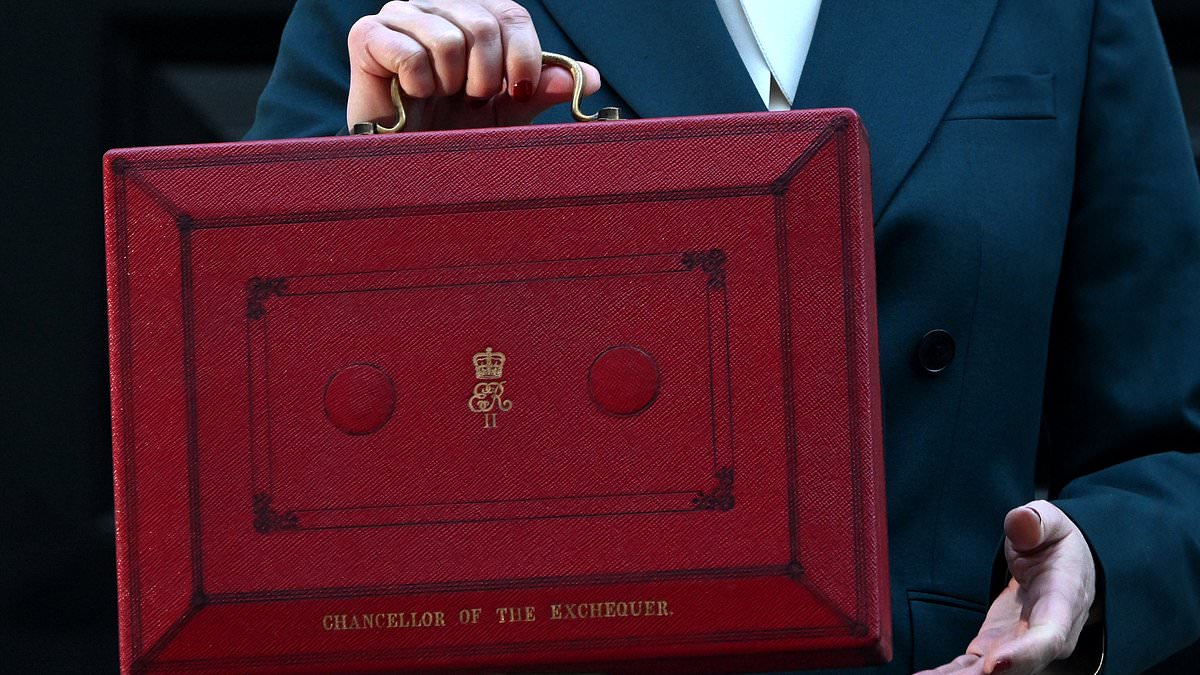
John Healey will deliver his first Budget as Chancellor in a few days.Since his appointment in July, the Middle East conflict has shown no signs of abating, with the benchmark oil price sitting comfortably above $100 a barrel.Healey's major challenge will be setting out plans to keep in line with the fiscal rules and Labour's broader ambitions for public services.The Treasury is under pressure to protect households from rising inflation and the prospect of interest rates staying higher for longer.At the same time, Healey's headroom has been slashed since the start of the conflict as borrowing costs have soared.He has ruled out any further borrowing to fund giveaways, suggesting he will either hike taxes or cut spending.Given the Prime Minister's reluctance to cut the welfare bill, tax rises are on the cards despite warnings it could hit growth.The Institute for Fiscal Studies (IFS) has warned that in what is already the biggest tax-raising parliament on record, some tax rises would do more damage than others.Unlike his predecessor Rachel Reeves, Healey has managed to keep his 'steady as she goes' Budget largely under wraps, but there have been some signals of who and what he might target.We examine which taxes are likely to rise, which have been ruled out and whether Healey might reverse some of Labour's most unpopular policies. Precarious: The public finances are on shaky ground as Healey prepares his first BudgetWhat spending commitments has the Government already made?Despite the challenging backdrop, the Prime Minister has already announced a raft of new policy measures, or at least hinted at support, that he will need to fund. The Chancellor is expected to provide further details on Your First Home, a scheme to help people get on the property ladder which was announced in September.It is a replacement for the popular Help to Buy scheme, which ended in 2023, and will allow first-time buyers to get on the property ladder in a new-build home with a 2.5 per cent deposit.They will also be offered an equity loan of up to 20 per cent of the property price, reducing the cost of their mortgage.The key details to look out for will be who will be eligible, any property price caps, and for how long the government loan will be interest-free.Help to Buy was subject to a blanket cap of £600,000 from 2013 to 2021. Later, regional price caps were introduced with a minimum of £186,100 in the North East and a maximum of £600,000 in London. The loan was interest-free for five years.It's possible that the new iteration could be less generous. If that £600,000 cap was increased with inflation, it would be £878,000 today.Healey will be hoping that Your First Home will provide a shot in the arm to the housebuilding industry by encouraging developers to build more homes. As it stands, Labour is set to fall far short of its key manifesto pledge of 1.5million homes by 2029.Burnham has also signalled energy bill support for low-income families this winter, and this week proposed to remove standing charges from gas bills.He is also looking to reverse some of the pain inflicted by the previous two Labour Budgets by cutting business rates for retail and hospitality firms.Alongside these giveaways, Labour needs to pay for a ballooning welfare bill, thanks to inflation-linked benefits, and defence spending.What tax rises are on the cards?Healey has ruled out any further borrowing to fund giveaways, suggesting he will either hike taxes or cut spending.Given the Prime Minister's reluctance to cut the welfare bill and promises on energy and housing, tax rises are on the cards despite warnings it could hit growth.The IFS has warned that in what is already the biggest tax-raising parliament on record, some tax rises would do more damage than others.Tax on banks Labour has limited options if it's to keep its election pledge not to put up income tax, corporation tax or VAT.Healey hopes the silver bullet will be a tax hike for banks, raising the surcharge levied on profits to 8 per cent, after former Chancellor Jeremy Hunt cut it to 3 per cent in 2023.It has been widely touted by Labour MPs and unions as a way to fund energy bill support after the top four lenders booked £29billion profit in the first six months of the year thanks to rising interest rates.It has already drawn ire from industry figures who claim it will hit investment and the economy, making the UK even more uncompetitive.There are also fears that higher bank taxes could be passed on to borrowers through higher mortgage rates and other loans, and tighter lending criteria. Meanwhile, savers will also be punished as banks are likely to cut rates to try to recoup the lost revenue.Despite lobbying, a change to how bank profits are taxed seems likely but it is expected to rise just £2billion, leaving the door open to further tax rises. The financial sector has warned the Government against a windfall tax on banks Tax on online retailersAnother lever Healey is set to pull is a tax crackdown on online marketplaces, such as Amazon and Ebay.He is expected to announce that overseas businesses will be made responsible for collecting tax owed by all retailers selling on their platforms with an annual turnover of more than £90,000.A loophole has meant that some foreign firms have posed as British retailers to avoid paying the correct amount of tax. It is expected to generate up to £1billion for the Treasury and fund cuts to business rates for high street shops.Gambling taxesThe Chancellor is considering doubling machine games duty (MGD) – the tax levied on slot machines – to 40 per cent in the Budget on October 28.It comes after Andy Burnham lumped betting shops in with vape shops and 'dodgy businesses linked to organised crime' as he outlined plans to save Britain's 'hollowed out' high streets.The target of his crackdown is thought to be so-called adult gaming centres (AGCs) – slot machine venues that are often open 24 hours a day and would be hammered by an increase in tax.But industry bosses warn that venues from bingo halls and casinos to bookmakers will also be hit – putting 16,000 jobs and 1,500 betting shops at risk.Rachel Reeves increased remote gaming duty from 21 per cent to 40 per cent and the levy on online sports betting from 15 per cent to 25 per cent. Healey is unlikely to reverse policies introduced by his predecessor Rachel Reeves Triple lock changesPrime Minister Andy Burnham has announced plans to ditch the state pension triple lock in favour of a double lock linked to inflation, but that won't take effect until April 2030.He said after that the state pension would increase every year according to the highest of price rises or 2.5 per cent.This would knock out the third part of the triple lock, average wage growth – although Mr Burnham said the state pension would still hold its value relative to earnings over time, so pensioners continued to share in economic growth.The Treasury estimates that this change could raise nearly £20billion by 2040, but that has already been earmarked for a new National Care Service.What's Healey ruled out?Capital gains tax Further changes to CGT in next week's Budget were widely expected, even after Healey ruled out aligning rates with income taxes.CGT is levied on profits from assets ranging from shares to second homes, buy-to-let properties and personal possessions. The rates were hiked in the 2024 Budget from 10 per cent to 18 per cent for basic rate taxpayers and from 20 to 24 per cent for those paying higher rates of tax.Healey has since ruled out any changes to CGT amid fears it would send entrepreneurs abroad.Changes to stamp duty and council tax Andy Burnham has talked in the past about replacing the council tax paid by most households in England, as well as the stamp duty buyers pay on purchasing a home, with a single annual property tax.This would be charged at a flat rate around the country, ending inequalities where those in modest homes in poorer areas pay more than wealthy homeowners in affluent ones. It would also eliminate council tax for renters, as their landlord would now pay.It could also encourage more people to move home and revitalise the housing market, as they wouldn't need to stump up thousands in stamp duty at the point of purchase. Instead, they'd pay it over many years.Under a proposed system by campaign group Fairer Share, which Burnham previously supported, 77 per cent of people would pay less council tax than they do now. Someone in a home worth £250,000 would pay £1,200 per year – about half what a typical Band D property pays today. To compensate, wealthier homeowners would be hit with bigger bills.However, in the summer Burnham was said to have ruled out any changes to stamp duty in the Budget, kicking this particular can down the road.Valuing homes for the purposes of the tax would present a huge challenge. At the moment, the property values that council tax is based on date from 1991. Re-valuing every home would be a huge undertaking, but a piecemeal approach could be considered unfair.Mansion tax for more homesUnder plans announced by Reeves in last year's Budget, homes worth £2million or more will be subject to an additional annual tax bill of between £2,500 and £7,500 per year from 2028.Her successor was said to be mulling plans to extend the entry threshold down to £1.5million, which would bring in 145,000 more properties and more than double the number of households paying the tax. It would also double the revenue from about £400million to £800million, according to Tax Policy Associates.However, these plans are understood to have been abandoned.Could there be more u-turns?Households and businesses have urged Healey to reverse some of the changes announced in his predecessor's two Budgets.Chief among them have been repeated calls to restore employer National Insurance contributions to their original 13.8 per cent level and the lower earnings threshold back to £9,100.However, Healey is likely to resist those calls in the hope that changes to business rates will appease smaller firms.An increase to income tax rates is very unlikely, although not impossible after Reeves floated the idea last autumn. Labour's favourite think-tank, The Resolution Foundation, has floated the idea of raising income tax by 2p, offsetting it with a 2p cut to employee National Insurance contributions, which would affect pensioners and landlords.What is more likely is another freeze in income tax thresholds, which will result in more people being dragged into paying tax at higher rates.SAVE MONEY, MAKE MONEYUp to £300 cashbackUp to £300 cashback£25-£300 cashback on at least £3004.87% cash Isa4.87% cash IsaTrading 212: 1.27% fixed 12-month bonus£2,500 cashback£2,500 cashback£250-£2,500 cashback when opening SippUp to £150 cashbackUp to £150 cashbackOpen a savings account with at least £5,000Welcome bonusWelcome bonusGet up to £200 when you invest £100Affiliate links: If you take out a product This is Money may earn a commission. These deals are chosen by our editorial team, as we think they are worth highlighting. This does not affect our editorial independence. Terms and conditions apply on all offers.
John Healey to deliver his first Budget on Wednesday: What do we know and what tax rises are on the cards?
Full Article
Original Source
Read the full article at Dailymail →KhanList aggregates and links to publicly available news content. We do not host full articles from third-party sources. Always verify important information with original sources.