
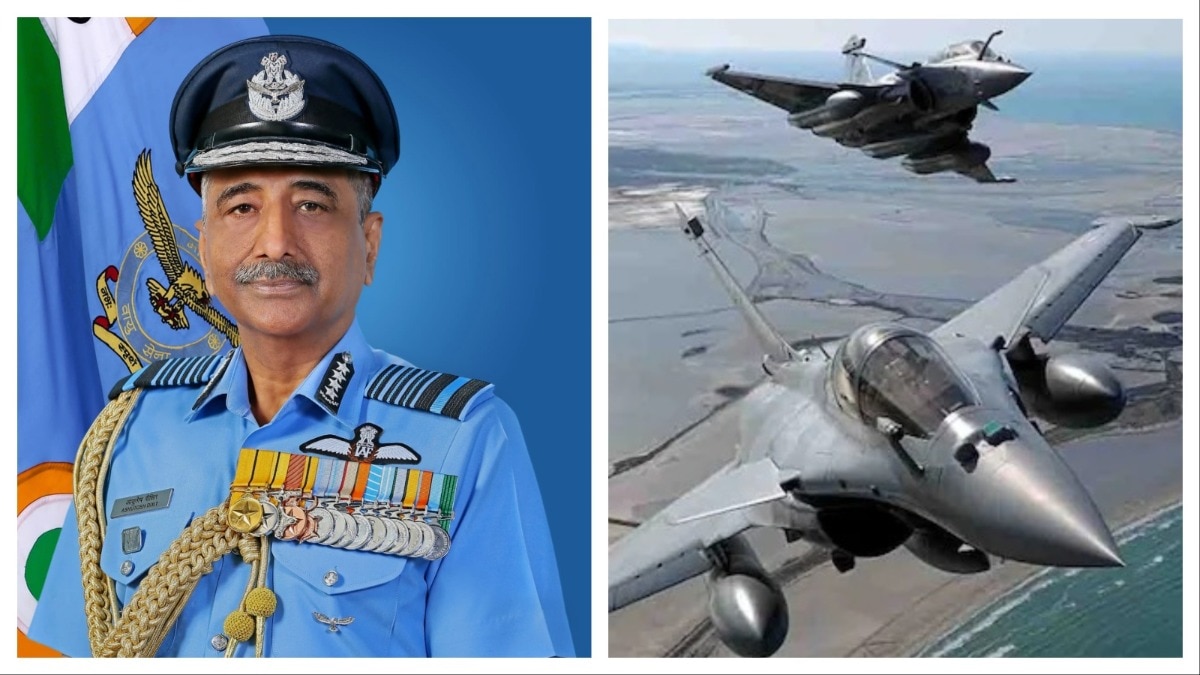
Air Chief Marshal Ashutosh Dixit, who took charge as the 29th Chief of the Air Staff on October 31, 2026, faces a daunting task of rebuilding the Indian Air Force's combat strength, accelerating indigenous fighter aircraft programmes and strengthening its capabilities to meet emerging security threats.With the IAF operating significantly fewer fighter squadrons than its authorised strength, delays in aircraft deliveries and major acquisition programmes awaiting progress, Dixit’s tenure will be crucial for the force’s modernisation and operational preparedness.Dixit succeeded Air Chief Marshal Amar Preet Singh, who retired after a 43-year career.Before taking charge, Dixit served as the Vice Chief of the Air Staff. He was accorded a ceremonial guard of honour as part of the leadership transition. FIGHTER SQUADRON SHORTAGEOne of the most urgent challenges before the new Air Chief is addressing the IAF’s declining fighter strength. The force currently operates around 29 fighter squadrons against an authorised strength of 42.5.The retirement of older aircraft, particularly the MiG-21 fleet, coupled with delays in the induction of replacements, has widened the shortfall. Outgoing Air Chief Marshal AP Singh had said that the IAF needed to induct 36-40 fighter aircraft annually to arrest the decline and rebuild its strength.Dixit will have to ensure that planned acquisitions and production commitments translate into actual deliveries while maintaining operational readiness amid a two-front security challenge.EXPEDITING TEJAS MK-1A DELIVERIESThe delayed induction of the indigenous Tejas Mk-1A is another immediate concern. The IAF ordered 83 aircraft in a Rs 48,000-crore contract signed in February 2021, with deliveries originally scheduled to begin in 2024. However, delays involving GE F404 engines, software validation and other technical issues have affected the programme.With another order for 97 aircraft also in the pipeline, Dixit will have to push Hindustan Aeronautics Limited (HAL) to increase production capacity and meet delivery commitments.ACQUISITION OF 114 RAFALESThe proposed acquisition of 114 multirole fighter aircraft based on the Rafale platform will be another major priority. The Defence Acquisition Council granted Acceptance of Necessity for the programme in February 2026.However, the contract is yet to be signed. Price negotiations, contractual discussions and production planning will determine how quickly the programme progresses.PREPARING FOR NEXT-GEN WARFAREDixit will also have to accelerate the IAF’s transition towards technology-driven warfare. The experience of Operation Sindoor has underlined the growing importance of drones, precision weapons, electronic warfare, integrated air defence and real-time intelligence.Artificial intelligence, unmanned combat systems and advanced surveillance networks are expected to play an increasingly important role.The challenge will be to integrate these technologies with conventional fighter aircraft rather than treat them as replacements.INDIGENOUS FIGHTER PROGRAMMEBeyond Tejas Mk-1A, the Tejas Mk-2 and Advanced Medium Combat Aircraft (AMCA) programmes will require sustained attention.While the Tejas Mk-2 is expected to provide a more capable medium-weight fighter, AMCA is intended to deliver India's indigenous fifth-generation combat aircraft.Timely development, testing, funding and production capacity will be critical. Dixit will have to balance India's self-reliance objectives with the IAF's immediate requirement for additional combat aircraft.BOOSTING SUPPORT SYSTEMS, JOINT OPSThe IAF also needs additional airborne early warning and control systems (AWACS), aerial refuelling aircraft, transport platforms and surveillance capabilities.These force multipliers are essential for effective command and control, air defence and long-range operations.Dixit's previous experience as Chief of Integrated Defence Staff to the Chairman, Chiefs of Staff Committee (CISC) could be valuable in advancing jointness among the Army, Navy and Air Force.Theatre commands, integrated planning and coordinated operations will require close cooperation between the three services.He will also have to strengthen indigenous aerospace manufacturing, particularly the development of domestic aircraft engines, following supply-chain vulnerabilities exposed by delays in foreign engine deliveries.MANPOWER, REGIONAL SECURITY CHALLENGESThe transition of the first batch of Agniveer Vayu personnel completing their four-year engagement will be another task.The IAF retained 712 of the initial 2,850 recruits, while the remaining personnel are set to exit. The service's experience with the scheme will help inform future manpower planning.Meanwhile, China's expanding air power, Pakistan's military modernisation and the growing use of unmanned systems will require sustained operational preparedness along India's northern and western borders.EXPERIENCED PILOT TAKES CHARGEDixit was commissioned into the IAF's fighter stream on December 6, 1986. An experimental test pilot and qualified flying instructor, he has logged more than 3,500 flying hours on aircraft including the Mirage-2000, MiG variants, Jaguar, Hawk and Tejas.His previous assignments include commanding Central Air Command and serving as CISC. He has also participated in operations including Safed Sagar, Rakshak and Sindoor.- Ends
Jet shortage, Rafale deal, Tejas delays: New air chief has daunting task ahead
Full Article
Original Source
Read the full article at Indiatoday →KhanList aggregates and links to publicly available news content. We do not host full articles from third-party sources. Always verify important information with original sources.