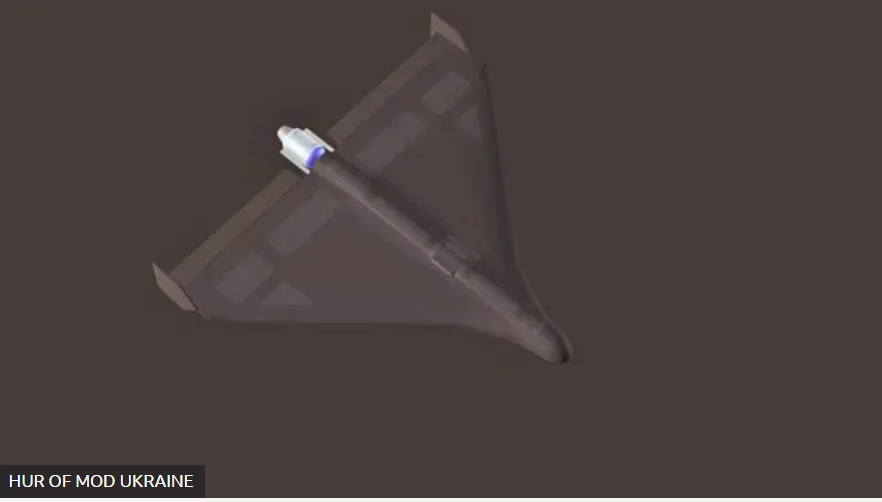
Every day, the Ukraine Battlefield update newsletter offers a clear look at how the war is unfolding on the ground. Subscribe for free here to get the full text delivered to your inbox. Russia is increasingly deploying jet-powered Gerans, which accounted for half of the drones in some attacks. How Geran-4 drones differ from Geran-2s, and why Ukrainians are having greater difficulty shooting them down. Ukraine’s intelligence service has disclosed how many ballistic and other missiles Russia produced in July. The figure is higher than planned. A Ukrainian MiG-29 crashed after one of its missiles reportedly exploded. Maps of the day: Near Dobropillia, Russian forces are advancing faster than the DeepState UA map shows. Videos of the day: A Russian A-50 aircraft over Ufa; another attack on a Wildberries warehouse; what one such burned-out warehouse looks like; anti-drone protection for a Spartan. The information in this text summarises events on Monday (10 August). The situation may have changed since then. The sound of Shahed-136 drones has unfortunately become commonplace in many Ukrainian cities in recent years. Ukrainians also call them mopeds because of it. However, Ukraine’s air defences have learned to destroy these drones — which Russia produces under the designation Geran-2 — very effectively, with their interception rate exceeding 90 percent in recent months. As the BBC’s Russian service wrote in an article, their era appears to be coming to an end. Russia is gradually switching to new jet-powered drones designated Geran-3, Geran-4 and Geran-5. They no longer make the characteristic sound, but they are no less lethal. Quite the opposite. Ukrainians are currently having greater difficulty shooting them down. Russian jet-powered drones have been discussed for some time. The Geran-4 first appeared in action in May. But it is only in recent weeks that they have begun to be used extensively in the war. There have been cases in which they accounted for 50 percent of drones during attacks on Ukrainian cities. For example, on the night of 5 August, 115 attack drones flew towards Ukraine, with missile drones, as they are also called, accounting for more than half. Ukrainians shot down 84 percent of the total. A day later, when there were again more than 100 drones and Geran-4s accounted for over 50 percent of them, the interception rate was only 65 percent. Their main advantage over conventional Geran-2 drones is speed. While Geran-2 drones, based on Iranian Shahed-136s, fly at between 150 and 200 km per hour, Geran-4 drones can fly two to 2.5 times faster. Some reportedly reach speeds of 600 km per hour. Naturally, this is reflected in their price. Although, according to the BBC, Russia would like to manufacture the jet engines used in them domestically, it currently imports them from China. They are valued at $30,000 €26,000 to $40,000, making the drone three times more expensive overall than its predecessor. According to Vadym Skibitskyi, deputy head of Ukraine’s HUR military intelligence service, Russia is currently producing 500 such drones per month. Its plan, however, is for them to account for 50 percent of the production of all drones in this category. The shift in production towards jet-powered Gerans is also linked to a decline in the overall number of drones launched. In June and July, Russia launched one-third fewer of them at Ukraine than in May. Speed, however, is not the only advantage of the new Gerans. Another is their flight altitude: they can fly at an altitude of 5 km. The BBC cited Serhii Beskrestnov, a drone expert and former adviser to former minister Mykhailo Fedorov, as saying that these Gerans are equipped with several cameras operating in different modes, as well as Mesh modems that allow an operator to control them remotely. Geran-4s also have automatic target recognition. There are already dozens of videos showing jet-powered Gerans striking targets directly. They have hit several vessels and infrastructure near Ukrainian ports on the Black Sea, effectively halting an important part of Ukraine’s maritime exports. On land, they have struck locomotives, electrical substations, warehouses, hangars and other military and civilian targets. Russian operator-controlled Geran-4 jet-drone strike on a dry cargo ship in the western Black Sea, reportedly en route to the Chornomorsk port in Odesa Oblast. pic.twitter.com/lVxB6HwmW1— AMK Mapping 🇳🇿 (@AMK_Mapping_) July 17, 2026 This video, for example, shows the drone striking an Epicentr shopping centre. They also have certain disadvantages, besides the cost already mentioned. One is that, given their speed, they cannot manoeuvre well. Furthermore, according to the BBC, they can only be launched at targets from a distance of 500 km, meaning they can reach only part of Ukraine’s territory. Ukraine is currently seeking ways to defend itself. Conventional interceptor drones fly more slowly, and one officer told the BBC that they shoot down only 10 percent of jet-powered drones with them. According to the outlet, Ukraine uses surface-to-air missile systems such as Vampire, fighter aircraft and mobile teams equipped with man-portable air-defence systems (MANPADS) against Geran-4 drones. Overall statistics show that this is not enough to achieve interception rates comparable to those seen previously. However, Wild Hornet said interceptor drones capable of catching jet-powered Gerans could be available as early as October. Increased production of ballistic missiles. Jet-powered Gerans are not the only challenge Ukraine must address as it prepares for Russia’s winter air campaign. As HUR deputy head Vadym Skibitskyi told RBC Ukraine, Russia is increasing its production of ballistic missiles and cruise missiles. According to him, in July Russia was producing missiles at a rate of 110 to 120 percent of its target. For example, it reached its annual production target for Zircon and Onyx anti-ship missiles in just seven months. Production of Iskander ballistic missiles has also increased, from 60 to 65 per month. These are precisely the missiles that Ukrainians have difficulty shooting down.
Jet-powered Russian drone could cause harsh winter for Ukraine (Ukraine Battlefield update, Day 1,629)
Full Article
Original Source
Read the full article at Euobserver →KhanList aggregates and links to publicly available news content. We do not host full articles from third-party sources. Always verify important information with original sources.