
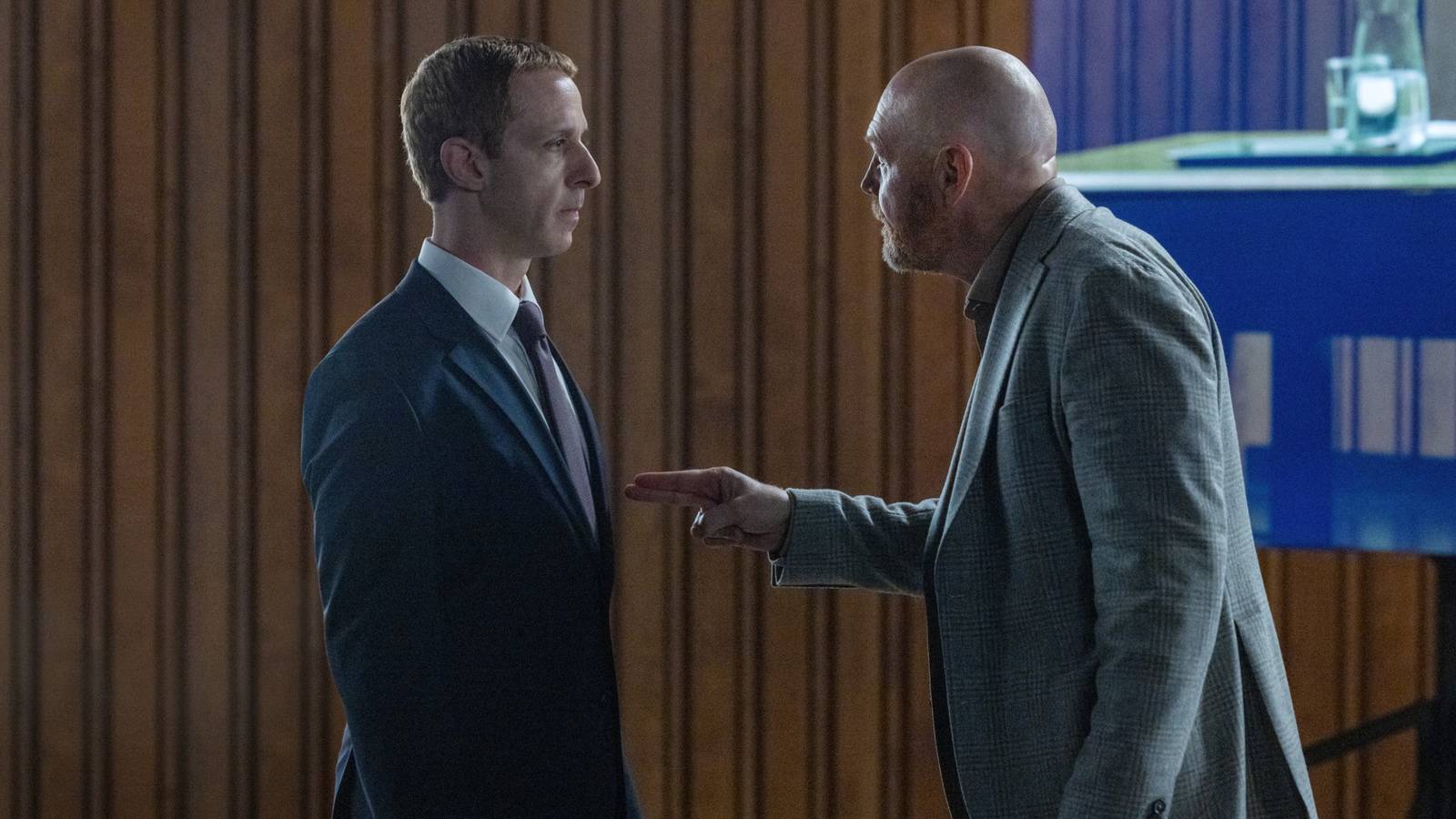
Published Oct 9, 2026, 4:20 PM EDT George is a film critic and journalist with over nine years of experience in the entertainment industry. Beginning as the Co-Creator and Co-Editor of Star Wars Holocron, the most followed Star Wars fan account on Twitter/X, George went on to develop The HoloFiles, a movie and television-focused website with his brother and writing partner Josh. A member of the Hollywood Creative Alliance, Chicago Indie Critics, Online Film and Television Association, and the Internet Film Critic Society, George has covered major industry events as credentialed media, including D23, CinemaCon, SXSW, Fantastic Fest, Star Wars Celebration, Tribeca Festival, and more. He also regularly writes reviews and contributes articles to ScreenAnarchy, BRWC, Film Obsessive, TV Obsessive, and Under the Radar. George's work has been featured in various esteemed publications, including the BBC, Associated Press, Forbes, and The New York Times. It’s not uncommon for numerous acclaimed actors to play the same real-life person in different projects. Gary Oldman, John Lithgow, and Brendan Gleeson have all played Winston Churchill in projects over the past 20 years. Queen Elizabeth II, meanwhile, has been brought to life by Claire Foy, Olivia Colman, Imelda Staunton, and Helen Mirren. This week, Mark Zuckerberg becomes the latest real-life figure to be depicted on-screen by multiple performers via The Social Reckoning. The new film from writer-director Aaron Sorkin serves as a follow-up to David Fincher’s The Social Network and chronicles Facebook engineer Frances Haugen (Mikey Madison) and Wall Street Journal reporter Jeff Horwitz (Jeremy Allen White) as they collaborate to expose Facebook’s unethical practices. While Zuckerberg was played by Jesse Eisenberg in Fincher’s 2010 film, the two-time Academy Award nominee declined the opportunity to reprise his role in Sorkin’s sequel. Stepping into the shoes of the Meta CEO is Jeremy Strong, best known for his portrayal of Kendall Roy in Succession. Both Eisenberg and Strong are powerful, singular performers and offer different takes on Mark Zuckerberg across their respective films. The following article will assess the strengths of both Eisenberg and Strong’s performances, in part by evaluating how closely they capture Zuckerberg, before arriving upon a judgment as to who does the better job. The Case For Jesse Eisenberg Jesse Eisenberg was a known entity prior to headlining The Social Network, but his performance as Mark Zuckerberg propelled him into the stratosphere, earning him a Best Actor nomination at the Academy Awards. For as critical to The Social Network’s success as Fincher’s directing and Sorkin’s writing were, the bulk of the film’s success relies on Eisenberg to pull off an extraordinarily complex and morally questionable protagonist. Eisenberg takes Sorkin’s rhythmic, razor-sharp dialogue in his stride with rapid-fire delivery. In turn, Eisenberg makes Zuckerberg sound and appear lightyears ahead of everyone else in the room. It’s not just verbal velocity that makes Eisenberg’s performance so great, however. Over the course of the film, Eisenberg evolves Zuckerberg from a geeky, awkward young man into something decidedly more unnerving. His transformation into a villain is never cartoonish or heavy-handed; instead, it plays like a rigid, hyper-rational mind whose deep-rooted insecurities and desire for complete control lead to a total collapse of morals. Mesmerizingly cold and hyper-fixated on a need for validation and status, The Social Network's Zuckerberg never feels like an actor doing an impression of a real-life figure, as is often the case in biopics. While some claim that Eisenberg’s performance is more of an extension of his offbeat persona than a profound transformation, it goes without saying that Eisenberg nails the essence, personality, brilliance, and socially maladroit nature of Zuckerberg. The Case For Jeremy Strong © 2026 CTMG, Inc. In The Social Reckoning, Jeremy Strong plays Mark Zuckerberg at a different point in his life, years after Facebook has become a global behemoth of a social media service. And, unlike in The Social Network, Zuckerberg is not the lead character in Sorkin’s sequel, instead serving more so as the film’s antagonist who sporadically appears throughout the film. Due to these fundamental differences, comparing Eisenberg and Strong’s performances is admittedly challenging. That being said, there is quite a bit to admire about what Strong does with Zuckerberg. Although at times Strong seems like he is just playing Kendall Roy transplanted into an Aaron Sorkin movie, he steadily grows into the film as its runtime progresses. Fitting to Sorkin’s script and characterization of Zuckerberg as a more traditional antagonist than layered anti-hero, Strong leans into the ruthlessness and dead eyes of Zuckerberg, playing the Meta CEO more like a replicant from Blade Runner than a real life person. The nerdier, glassy-eyed side of Zuckerberg from The Social Network is gone and in its place is a rigid, hardened personality sculpted by years of the pursuit of power and control. If The Social Network is a movie about a villain winning by the end, The Social Reckoning is a movie about what happens in the aftermath of that villain’s victory. With this in mind, Strong does well to deprive his Zuckerberg of humanity and portray him as an almost otherworldly robot, exacting in his decision-making and calculated in the corruption of society. Verdict: Jesse Eisenberg Again, comparing Eisenberg and Strong is a tall task, as the two occupy different roles in their respective films, which themselves vary greatly in quality. But, ultimately, Eisenberg’s performance as Mark Zuckerberg is the more powerful and lasting portrayal. Whereas Strong’s performance leans a bit further into mimicry, Eisenberg is less concerned about nailing every mannerisms of Zuckerberg and more concerned about capturing the complex psychological underpinnings of a genius intellect marred by insecurity. In part due to his positioning in the story, Eisenberg’s Zuckerberg has a level of nuance that Strong’s does not. At times brilliant, Strong’s performance potentially plays a tad too robotic and renders Zuckerberg more of an alien inhabiting a human’s body than the ill-intentioned, morally compromised genius the movie paints him to be. It is always an interesting exercise seeing two accomplished performances inhabit the same role and seeing how they approach capturing a real-life individual’s personality, mannerisms, and attitudes differently. In the case of Mark Zuckerberg, the controversial figure has now been brought to life by two of the most acclaimed actors of the 21st century upon the release of The Social Reckoning this week. While Jeremy Strong nails certain aspects of Zuckerberg, however, Eisenberg’s career-defining portrayal contains an added layer of complexity and vulnerability that makes it more powerful and lasting. The Social Reckoning Release Date October 9, 2026 Runtime 112 Minutes Director Aaron Sorkin Writers Aaron Sorkin Producers Stuart M. Besser, Todd Black, Aaron Sorkin, Peter Rice Prequel(s) The Social Network Cast Mikey Madison Frances Haugen A recount of the true story behind The Facebook Files investigation, when a collaboration between Facebook engineer Frances Haugen and journalist Jeff Horwitz uncovered damning confidential company secrets about the ubiquitous social network.
Jesse Eisenberg Vs. Jeremy Strong: Who Delivers The Better Mark Zuckerberg Performance?
Full Article
Original Source
Read the full article at Screenrant →KhanList aggregates and links to publicly available news content. We do not host full articles from third-party sources. Always verify important information with original sources.