
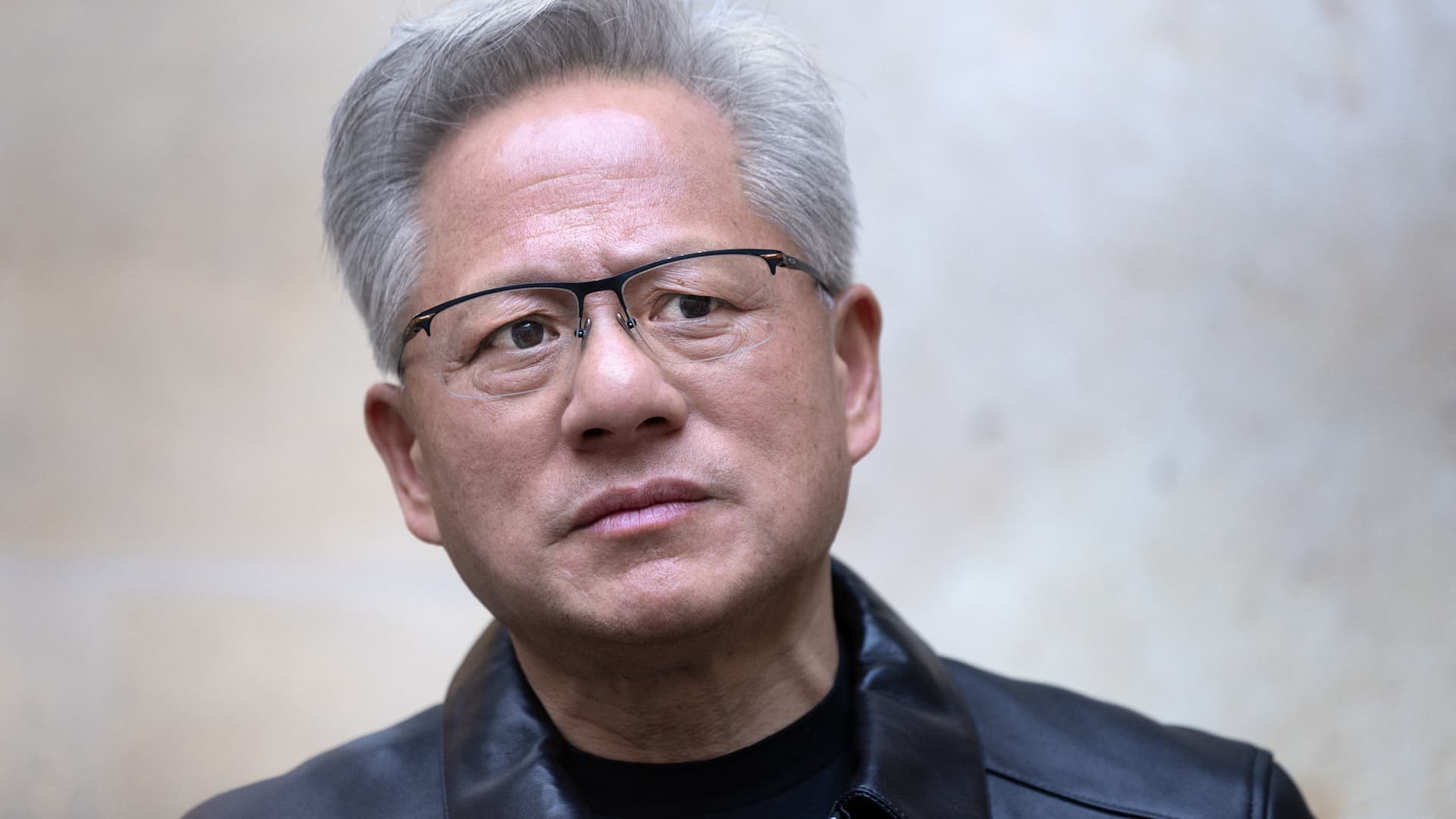
Co-founder, President and CEO of US Technology company Nvidia, Jensen Huang, looks on during a press briefing in Paris, Oct. 13, 2026.Joel Saget | Afp | Getty ImagesThe fallout from Jensen Huang's affair with an alleged Chinese spy as well as an Nvidia executive that led to his resignation as CEO of Nivida, the company he founded and grew into a $4 trillion chip giant, will likely go on for some time. But the missteps of Nvidia's board of directors offer immediate lessons, say talent and leadership experts. It shows what happens when there's no clear succession plan, the dangers of an overly decentralized leadership structure, and how companies built around one powerful, controlling leader create the kind of risk boards are responsible for preventing. In the span of less than a week — from the time Huang admitted that he was unfaithful to his wife until the board announced that he was resigning — the question became: could Nvidia, a company at the epicenter of the AI build-out, operate without him? With Huang's ouster and the appointment of CFO Colette Kress as interim CEO, Nvidia's employees, customers, and investors will begin to find out. The process will also put a glaring spotlight on why the Nvidia board wasn't better prepared for Huang leaving the company for whatever reason."Succession planning is an ongoing, fundamental responsibility of the board, not something to do when a crisis hits," says Lisa Calicchio, chief human resources officer at WCG Clinical and a member of the CNBC Workforce Executive Council. She described what happened at Nvidia as "a failure of epic proportion, both on the part of the board for not fulfilling its fiduciary responsibility to ensure continued viability of the organization by having a robust succession plan, and for the behavior and risks created by the CEO.""What they're doing now is flying by the seat of their pants," she added.Nvidia's 10-member board of directors is a collection of early investors, long-time partners and business executives across a range of industries. Before Nov. 12, the company did not have a chair of the board or any clear succession plan. The board also includes directors who expressed "confidence in Jensen" before they had even begun their own independent internal review of his actions. In addition to naming Kress to the top job, the company appointed Harvey C. Jones, a tech investor and Nvidia director for the past 33 years, as its first-ever chair. After his appointment, the company announced that the board would be conducting a search of both internal and external candidates to find a permanent chief executive. 'All the risk centered on the shoulders of one man'Alan Fleischmann, founder and CEO of business advisory firm Laurel Strategies and a member of the CNBC CEO Council, says that while "the DNA of any organization is defined by the CEO, there must be a stronger board dynamic and strong leadership surrounding the CEO." "Succession planning is not simply about identifying who takes over when a CEO leaves," Fleischmann said. "It's about building an institution that can thrive beyond any one individual." The outsized role Huang played at Nvidia — in September 2025 he told CNBC's Becky Quick that he had as many as 60 direct reports — makes it even more difficult for the board to find someone who can understand the inner workings of the company while being such a visible and active hype man for its all-important AI chips. In corporate governance circles this is known as "key man" risk and it points to a company being overly reliant on one person whose death, departure, or financial or moral compromise could materially damage the organization. "This is the world's most valuable company and all the risk centered on the shoulders of one man," Calicchio says. "Flat organizations can be remarkably effective…but there are tradeoffs," Fleischmann added. "When too many decisions, relationships and reporting lines converge around one individual, the organization can become more vulnerable than it appears." Calicchio acknowledged that a CEO having numerous direct reports isn't problematic in the early days of a company, when the founder knows everyone, but becomes concerning "when a company is the size of Nvidia. I really question the rigor and discipline of their organizational policies."This same absence of rigor is evident in the lack of any obvious successors to Huang. "You would expect the board to have recognized at some point there was going to be an increasing need to look beyond Jensen," says Tim Wentworth, the former CEO of Walgreens Boots Alliance and Express Scripts. "This sounds so fundamental, but you don't wait for the rainy day to have the rainy day plan." Wentworth says that when he was running both Walgreens and Express Scripts, he had a single board member assigned to each one of his direct reports so that "when we had board discussions, somebody in the room could speak about them and their strengths." At WCG Clinical, succession and talent discussions are done quarterly, says Calicchio. "We're always looking at time frames," she says. "Is this person a definite successor, ready now, or is this someone you're grooming for the long term? Everyone wants to think that replacing the CEO is going to happen in an orderly way, but as we just saw at Nvidia, that's not always the case." "Boards need to expect the unexpected," she adds. Huang's powerful grip at Nvidia was great, "until it wasn't," says Wentworth. "It's really hard for a board to have a sense of urgency and the depth of intrusiveness necessary in that process when everything is going great with the company. No one wants to be the contrarian, but that's your job as a board member."
Jensen Huang's Nvidia exit exposes succession and governance risks for companies and boards
Full Article
Original Source
Read the full article at Cnbc →KhanList aggregates and links to publicly available news content. We do not host full articles from third-party sources. Always verify important information with original sources.