
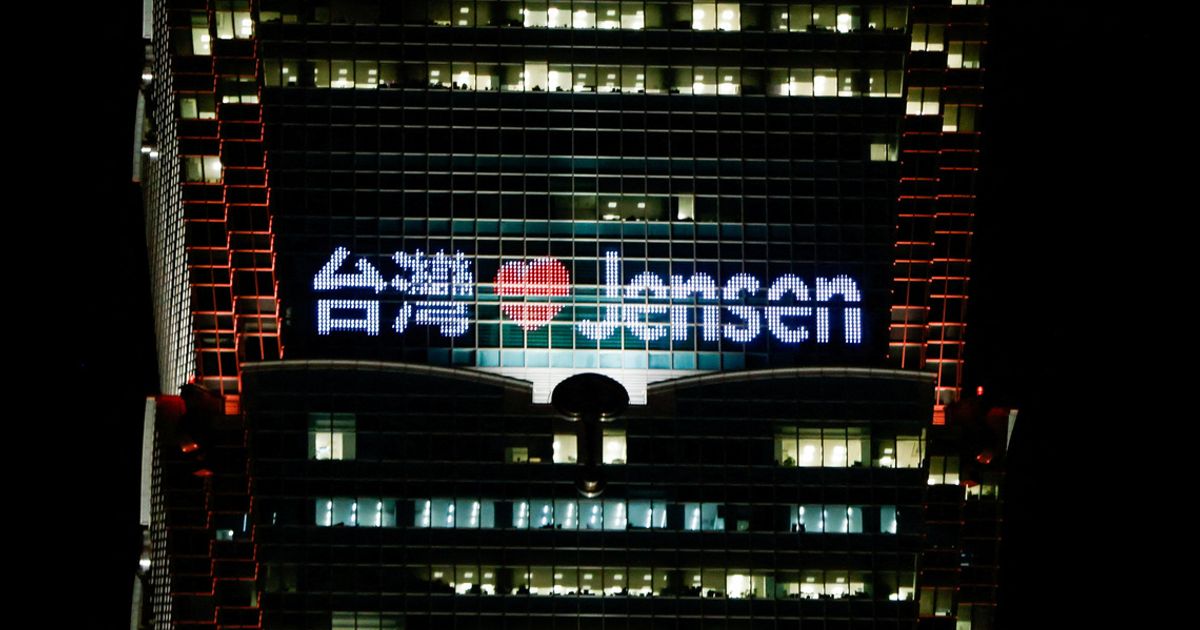
TAIPEI – Jensen Huang’s return to Nvidia was a shot in the arm for the Taiwan stock market, with investors and tech players heaving a sigh of relief.But observers say it will not be business as usual for Taiwan’s tech industry, as manufacturers will now have to tread carefully around the geopolitics of the AI supply chain.Huang, a Taiwanese-American, was reinstated as Nvidia’s CEO on Nov 23, 11 days after he resigned over a scandal linked to an alleged Chinese spy.Taiwan’s stock market was hit hard. Taiwan Premier Cho Jung-tai had on Nov 23 met executives from tech companies and financial firms to discuss ways to stabilise the stock market, after Taiwanese shares plunged almost 18%, their worst week since 1991.After news broke that Huang was back, Nvidia shares soared 31.5%, while Taiwan’s main index TAIEX jumped 9%.Hsu Ching Sheng, who owns Nvidia shares, said he was so excited after seeing the late night news that he could not sleep.“It’s been a real roller coaster lately - going from initial disbelief… to holding on to the firm belief that (Nvidia shares) would bounce back,” the 26-year-old personal trainer told The Straits Times.“Jensen Huang’s return is definitely a huge plus for the Taiwan stock market. Everyone knows he’s a staunch supporter of Taiwan’s supply chain… it’s fair to say he’s a major driving force behind the Taiwan stock market.”Huang’s resignation from Nvidia, the company he co-founded and had run for 33 years, came after he admitted to infidelity. He was linked to Alice Huang, a woman US officials suspect of links to Chinese intelligence.‘Stand with Jensen’Calls for the “godfather of AI” to return soon began and a “Stand with Jensen” petition was backed by more than 200,000 signatures, including that of tech tycoon Elon Musk.Last week, the Taipei 101 skyscraper even lit up with messages such as “Taiwan loves Jensen” and “Taiwan AI co-create the future”, organised by prominent figures from Taiwan’s technology industry.The 63-year-old was reinstated after lobbying from US President Donald Trump, who said he spoke to Nvidia’s board directly to press for Huang’s return.Chang Ruay-shiung, honorary chair professor of National Taipei University of Business (NTUB), said Huang has played a major role in building Nvidia’s technological advantage, corporate culture and global business relationships.“Finding someone who can replace him at this stage of the AI race would be extremely difficult,” he told The Straits Times.Nvidia had issued a press release reaffirming its support for Taiwan’s supply chain, but it will be hard to replace Huang’s own personal relationships with Taiwanese suppliers.The Nvidia CEO has made a habit of publicly thanking his Taiwanese suppliers, and is known for hosting “trillion-dollar dinners” with their bosses, named after the combined market value of the firms at the table.Lien Hsien-ming, president of Chung-Hua Institute of Economic Research, said that Huang did not encourage aggressive price-cutting among suppliers and did not squeeze their margins.“We can say that Jensen Huang was friendlier to Taiwan (than other US tech firms),” he said. “He prefers to collaborate to build up the supply chain.”Saga not over yetNTUB’s Chang noted that Huang’s return to Nvidia will not be the end of the controversy, as the US’ investigation into the loopholes that allowed advanced Nvidia chips to be routed to China remains unfinished.While the affair captured headlines, Alice Huang is just one thread of a US probe into a cross-border network of server makers, AI data centres and shell companies that allegedly moved export-banned Nvidia chips into China.Under US export rules, Nvidia’s most advanced AI chips cannot be shipped to China without a US licence, and re-exporting them from other countries without one is also a violation.In its Nov 23 statement, the Nvidia board said it has formed a National Security and Export Control Committee made up of independent directors to oversee trade compliance and national security risks. Nvidia also has a new job opening – a chief compliance officer to oversee compliance across the firm.Huang, who apparently had 60 executives reporting directly to him, is expected to face more checks and balances going forward.Taiwan manufacturers and suppliers are also likely to face greater responsibility for identifying the final customers and tracking where their products are used, said analysts.“Taiwanese companies may consequently face higher compliance costs, longer approval procedures and greater legal risks. But they will benefit from the so-called non-red supply chain,” said Chang, referring to supply chains that exclude Chinese companies.“In the future, export control compliance will become an important part of the competitiveness of Taiwan’s semiconductor industry.”Lien of the Chung-Hua Institute of Economic Research said smaller companies that cannot meet compliance costs may be in trouble.“Now you have to be very careful, if you are caught, the consequences will be grave. The fines for (violating) national security regulations can be huge,” he said.NTUB’s Chang said Huang’s return has ended Nvidia’s immediate leadership crisis, but the whole saga has opened a much larger debate about the relationship between technology companies, government power and national security.“Taiwan, given its central role in the global semiconductor industry, cannot afford to ignore that debate,” he said.
Jensen Huang is back, but it won’t be business as usual for Taiwan’s tech industry
Full Article
Original Source
Read the full article at Straitstimes →KhanList aggregates and links to publicly available news content. We do not host full articles from third-party sources. Always verify important information with original sources.