
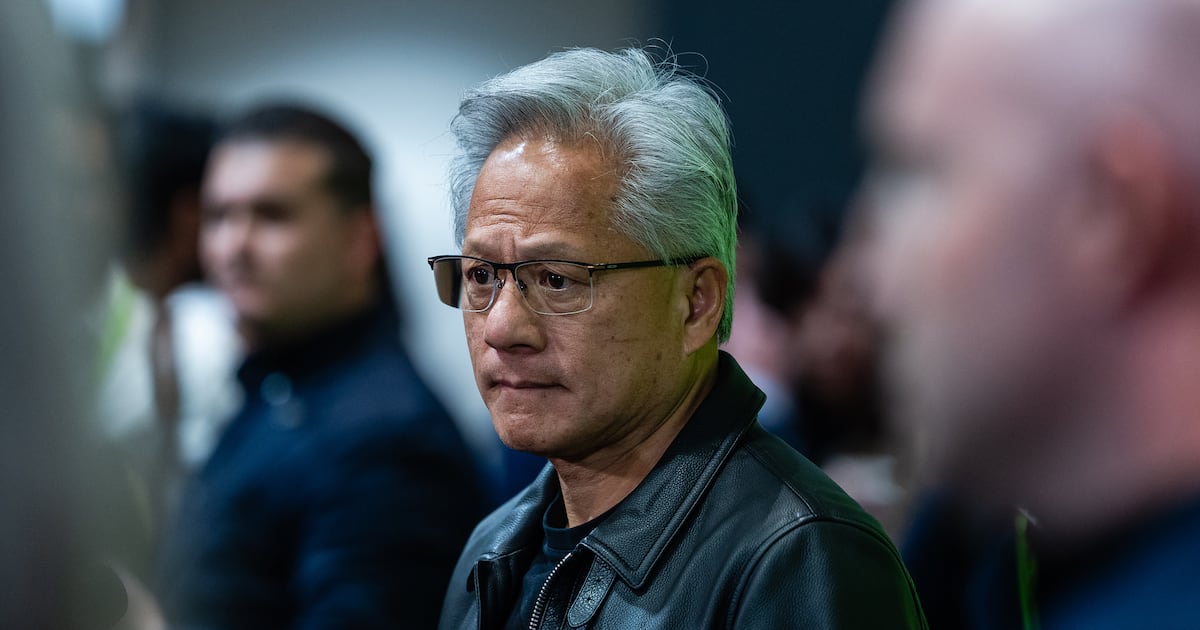
The Nvidia boss is the latest in a long of CEOs to lose their jobs for having affairs. Should they have? And what does it say about the companies such men work for?Jensen Huang, former chief executive of Nvidia. Photograph: Eric Lee/The New York Times When does the bedroom impinge on the boardroom? Jensen Huang’s unedifying departure from his role as chief executive of global-chip giant Nvidia has again posed that question.Huang resigned after details of two affairs emerged earlier this month: one with a businesswoman who had alleged links to the Chinese government – and another with a company executive.But questions have swirled around his departure. Was the business woman he had an affair with, Alice Huang, actually a Chinese spy? The US intelligence community could not say with certainty last week – and Donald Trump has suggested that, if not, then the Nvidia chief shouldn’t have stepped away.If it were simply an extramarital affair, with no implications for the company or US security, is Trump right to say Huang should have remained in post?READ MORE“We’ve got a long history of CEOs being removed for having affairs,” says Alison Taylor, associate professor at the New York Stern School of Business.“The McDonald’s CEO [Steve Easterbrook] got fired, [Co Kerry native] Bernard Looney at BP, Kohl’s CEO [Ashley Buchanan] – he was sleeping with a major supplier – and then you had the ‘jumbotron’ case of the chief executive and the head of HR.”The “jumbotron” case is well known. The former chief executive of the data operations company Astronomer resigned after he appeared on a big screen at a Coldplay concert embracing the company’s chief people office Kristin Cabot. Andy Byron stepped aside after the incident went viral on social and mainstream media. His company launched an investigation, saying leadership standards had not been met.Former Astronomer chief executive Andy Byron and the firm's chief people officer, Kristin Cabot, caught on camera at a Coldplay concert Taylor says there is an argument to be made that people should, within reason, be allowed to pursue whatever they wish in their personal lives. “I tend to have some sympathy sometimes,” she says. “At the start in the case of the McDonald’s CEO, I thought that it was overblown. I’m European and Americans tend to take this kind of thing more seriously. But it then emerged it was not isolated to just an affair. [ BP toughens workplace intimacy rules in wake of Looney sackingOpens in new window ]“In each of these cases there has been some further conflict of interest or power dynamic at play.”However, if there is no confirmation of spying or espionage having taken place, Taylor does see a way back for Huang.“The cynic in me says you’ll have him on podcasts in six months time, being thoughtful about what he has learned,” she says.The affairs of other prominent chief executives are a sign that companies are failing to do their due diligence, says Tom Fox – a former chief compliance officer in the US and author on corporate ethics.“Companies need to perform a very deep dive before they hire someone,” he says. “Nobody just wakes up one morning and says ‘I’m going to be a philander and cheat on my wife’ – they are likely to have been like that their entire life and entire career.[ Jensen Huang has the affair – his wife gets the performance review. Some things never changeOpens in new window ]“Everybody knows who those people are – who the guys are who do that. That type of information is available. If you hire someone who has never done that you are hopefully preventing that from occurring in your company.”Fox says that even if investors or shareholders have no concerns about the moral aspects of extramarital affairs, they should be concerned about the deception that is involved.“As a board member of a company once said to me: ‘If he is willing to lie to his wife he’s willing to lie to anyone’.”In Huang’s case, Fox believes that even if there is no criminal aspect relating to the export of microchips to Chinese front companies, he is likely to have broken Nvidia’s code of conduct by having an affair with a subordinate. “He could have been terminated on that basis alone,” he says.The sort of high-profile cases seen in the United States are much less common on this side of the Atlantic. This has something to do with the prominence enjoyed by some of the executives involved but possibly also reflects cultural and legal differences.Jennifer Cashman is head of employment at the Irish corporate law firm RDJ.“It does seem different here to the US,” she says. “There is constitutional protection here around employees’ privacy and there is a fairly high bar for interfering with that.”Cashman says that while many contracts for senior business people will include clauses about behaviour that would bring a company into disrepute, it can be “a bit tricky” in trying to pin this down or establish exactly what this might entail.“For senior execs, their contracts will have fairly weighty clauses about conducting themselves with integrity and will require certain disclosures about relationships with subordinates or anything that might create the perception of a conflict of interest.”However, Cashman says the area of extramarital affairs can be a “minefield” for employers.Jennifer Cashman, head of employment at corporate law firm RDJ “Employers are better off not knowing lots of things,” she says. “They have to balance the risks”.The legal expert says it is difficult to assess how many such incidents occur in corporate Ireland. The fact that employment cases are heard in public acts as a disincentive for going the legal route.“There’s not a huge amount of litigation,” she says. “The reality, I suppose, is that a lot of people in this position may just resign because they don’t want to draw more attention to it. There are probably a lot of situations that never become legal and people will quietly go on their way.”Huang certainly doesn’t have the option of walking away quietly. He is such a key figure in the artificial intelligence ecosphere that he was part of the conversations between Trump and his Chinese counterpart Xi Jinping last week. Trump referred to his departure as “a tragedy” and called Huang a “brilliant man”. Elon Musk, head of SpaceX and Tesla, also rushed to Huang’s defence, describing him as “irreplaceable”.For Alison Taylor, Huang’s story is a continuation of a baffling trend, one in which high-profile men get caught out having affairs with people either within their own company or with whom they do business.“I’m not super judgmental – but just keep it out of your organisation,” she says. “Maybe don’t have an affair with your suppliers or your biggest customers or your competitors. Why can’t you go on a dating app and find somebody not connected to your business?[ How to navigate the workplace relationship minefieldOpens in new window ]“What this all suggests is that there is a bigger problem with leadership. It feels like the people running these kinds of companies are surrounded by people who don’t say no – and they lose their sense of judgment”.Tom Fox has a very straightforward piece of advice for high-ranking businessmen – as he says, it is nearly always men who are revealed as having affairs.“I hate to sound like a complete prude,” he says, “but maybe being faithful to your wife is a good start.”IN THIS SECTION
Jensen Huang and CEO affairs: ‘Americans tend to take this kind of thing more seriously’
Full Article
Original Source
Read the full article at Irishtimes →KhanList aggregates and links to publicly available news content. We do not host full articles from third-party sources. Always verify important information with original sources.