
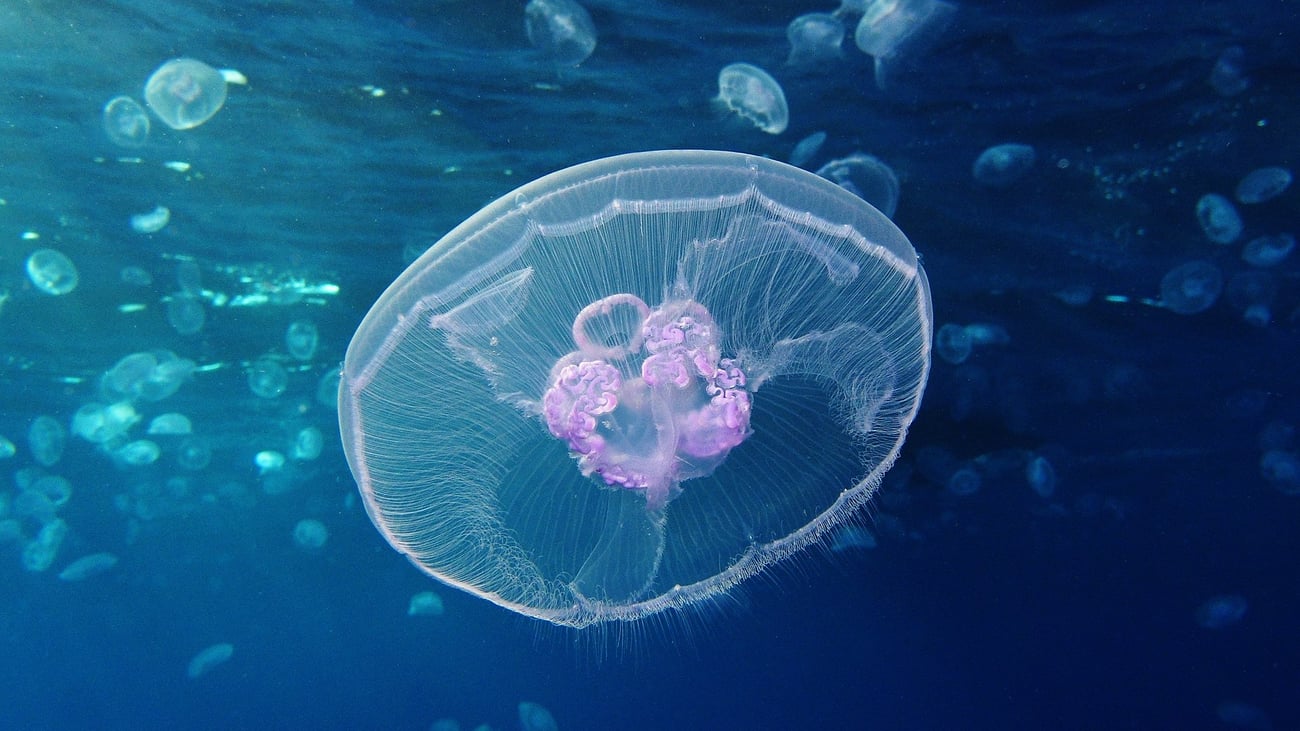
Caltech researchers experimented with moon jellyfish to assess the risk of developing cancer through cell proliferation.(CN) — Jellyfish are often seen as mysterious and ethereal creatures, yet scientists commonly use the marine animals as test cases for understanding biological functions on a molecular level.In a paper published in the journal Proceedings of the National Academy of Sciences, moon jellyfish helped researchers get new insights on cell proliferation and how cancers form — or don’t.Cell proliferation — the process where a cell grows and divides to make more cells — routinely maintains tissues. However, when cell proliferation occurs, there is a risk of mutation that could result in cancer.Scientists from Caltech developed a mathematical framework to evaluate a cell’s need to proliferate and its relationship to risk of cancer. The study was a collaborative project between the laboratories of Lea Goentoro, a biology professor and John Doyle, the emeritus Jean-Lou Chameau Professor of Control and Dynamical Systems, Electrical Engineering, and Bioengineering.“The mathematical analysis shows that proliferation, as expected, can drive cancers under some conditions,” the researchers wrote in the paper published Tuesday. “But under other conditions, unexpectedly, increasing proliferation can suppress cancers. We find that indeed, moon jellyfish become vulnerable to developing neoplasia when cell proliferation is suppressed.”Cancer risk increases when the cells divide. As organisms age, and cell division accumulates, mutations are passed down and potentially cause tumors. That’s why tissues, like in the skin and colon, are more susceptible to cancer risk, because they highly proliferate.Yet, the scientists noted, large animals like elephants, that proliferate many cells, rarely get cancer, while small animals like mice often do.In his models, former Caltech graduate student Anish Sarma — currently a resident physician in pediatrics at Boston Children’s Hospital and Boston Medical Center — asked if it’s possible for an organism to attain normal tissue maintenance while also having low rates of abnormal growths called neoplasias. And the results showed that high cell proliferation led to fewer instances of neoplasias.Moon jellyfish are highly cancer resistant, even after being exposed to carcinogens. After conducting experiments, the researchers observed evidence that high rates of cellular proliferation enable tissues to conduct quality control or “proofreading” in order to eliminate cells that potentially become cancerous.“Proofreading using cell turnover was a surprise to all of us,” said Sarma. “We saw the possibility mathematically and thought, ‘That can’t be right,’ and then experiments confirmed it.”The jellyfish species, common worldwide, can regenerate tissues after injury. In the experiments, Sarma disabled the jellyfishes’ ability to proliferate cells and neoplastic growths formed.The study’s findings move the needle forward for potential therapeutic strategies, including the idea that cell proliferation is universal, and “proofreading” may also be present in human tissues.Categories / Health, ScienceSubscribe to our free newslettersOur weekly newsletter Closing Arguments offers the latest about ongoing trials, major litigation and rulings in courthouses around the U.S. and the world, while the monthly Under the Lights dishes the legal dirt from Hollywood, sports, Big Tech and the arts.Additional Reads
Jellyfish help scientists understand cancer
Full Article
Original Source
Read the full article at Courthousenews →KhanList aggregates and links to publicly available news content. We do not host full articles from third-party sources. Always verify important information with original sources.