
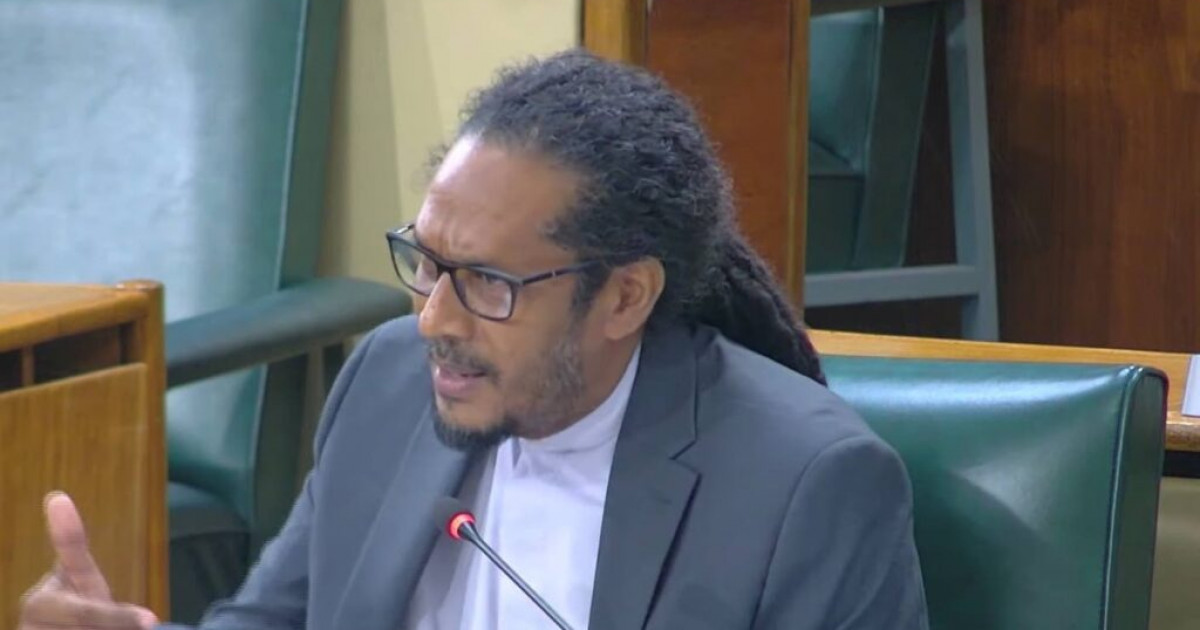
Opposition Senator Allan Bernard questioned whether Jamaica should move beyond the criminalisation of ganja and address the historical tensions between the police and the Rastafari community. THE Jamaica Constabulary Force (JCF) is calling for a comprehensive review of the Dangerous Drugs Act, saying gaps and ambiguities in the law governing sacramental ganja use by Rastafarians must be addressed to clarify the community’s religious protections and guide police enforcement. The force says uncertainty over how officers should verify religious authorisation, identify approved cultivation sites and recognise places of worship has contributed to tensions with Rastafari adherents, whose use of ganja is recognised under Jamaican law for sacramental purposes. Head of Legal Affairs at the JCF, Senior Superintendent of Police Arielle Brown Blake, told the Joint Select Committee reviewing the Green Paper on the National Policy for Culture, Entertainment and the Creative Economy 2025–2035 on Wednesday that the force supports a review of the legislation and a move towards a framework that better protects the community’s rights. She said the force recognised that the current system had created difficulties for both police officers and members of the Rastafari community, adding that the law’s gaps and the lack of updated information on authorised spaces had contributed to disputes. Brown Blake said the JCF had already been discussing a review of the legislation with its parent ministry, the Ministry of National Security and Peace, and the Ministry of Justice and Constitutional Affairs. She added that the force supported reform that would improve Rastafari adherents’ ability to practise their religion, while allowing police to enforce the law with greater certainty. The JCF’s submission also focused on the practical challenges officers face when determining whether ganja-related activities fall within the law’s sacramental exemptions. It called for clear guidance covering possession, cultivation, storage, transportation, smoking, and events where ganja is used as a sacrament. The force recommended that the policy explain when authorisation is required, what conditions apply and how officers should verify relevant information. It also called for clarity on identification letters or other documents issued by recognised Rastafari priests, elders and leaders, including how their authenticity should be checked. JCF Legal Officer Jamie Brown-Bailey said the proposed policy should establish clear procedures for transferring responsibility for sacramental ganja matters from the Ministry of Justice and Constitutional Affairs to the ministry responsible for culture. She said the transfer should identify the functions being moved, explain how decisions and authorisations would be communicated to police, and ensure that existing authorisations remain valid while outstanding applications are addressed. The force also recommended that the responsible ministry maintain current records of designated cultivation lands, authorised individuals and organisations, and events exempted under the law. Senior Superintendent of Police Arielle Brown Blake (left), head of the Jamaica Constabulary Force’s Legal Affairs branch, speaks as JCF Legal Officer Jamie Brown-Bailey looks on during Wednesday’s meeting of the Joint Select Committee reviewing the Green Paper on the National Policy for Culture, Entertainment and the Creative Economy 2025–2035. She said the policy should also clarify how places of Rastafari worship are identified and registered for relevant legal purposes, with accessible procedures and clear criteria. The debate comes amid ongoing Government consultations on Jamaica’s sacramental cannabis framework, which were announced in July following recommendations from the Cannabis Industry Development Taskforce. The consultations are aimed at clarifying the rules governing sacramental organisations, approved cultivation sites, possession and transportation, as well as enforcement procedures. The earlier discussions also followed reports of Rastafari members facing prosecution despite legal provisions for sacramental ganja use. On Wednesday, Committee chair and Culture Minister Olivia Grange acknowledged that practical difficulties remained and said the policy must allow Rastafari adherents to exercise their rights with certainty while enabling the police to enforce the law fairly. Opposition Senator Allan Bernard questioned whether the difficulties identified by the JCF pointed to a deeper problem with the continued criminalisation of ganja, rather than administrative shortcomings alone. He asked whether the policy should address the historical relationship between the Jamaican state, the police and Rastafarians, including decades of discrimination and criminalisation alleged by members of the community. Bernard also asked whether Jamaica should consider replacing the existing prohibition-based approach with modern legislation that distinguishes ganja from more harmful controlled substances. Brown Blake said she believed the policy should focus on protecting Rastafarians’ identity and rights and look towards the future, rather than detailing past tensions. Government Senator Kavan Gayle, meanwhile, said the JCF’s participation would be valuable when Rastafari representatives appear before the committee, arguing that engagement could help address perceptions of conflict between the community and the police. The Green Paper on the National Policy for Culture, Entertainment and the Creative Economy 2025–2035, which proposes transferring specific responsibilities relating to sacramental ganja use from the justice ministry to the ministry responsible for culture.
JCF calls for review of ganja law amid tensions with Rastas
Full Article
Original Source
Read the full article at Jamaicaobserver →KhanList aggregates and links to publicly available news content. We do not host full articles from third-party sources. Always verify important information with original sources.