
When Jason Moran played Guinness Cork Jazz Festival early in his career, he received a very welcome surprise. The American pianist and composer, who was 27 at the time, had already been given considerable critical acclaim – he had signed to the celebrated Blue Note label in 1998 and released four diverse and widely praised albums – but he was still largely regarded as an exceptionally promising New York newcomer rather than being recognised internationally as one of the more important emerging figures in jazz.Moran maintains that being presented with the 2002 festival’s rising star award helped change that. “To receive that kind of push and acknowledgment as a young artist just felt like I was being seen,” he says from the music room in his apartment in Harlem, New York City. “That small gesture really helped me stand up. So I have a lot of gratitude for the Cork festival. And I still have that wonderful crystal vase.”In the intervening years Moran (pronounced muh-ran rather than Mor-un) has continued to stand tall and be counted, so much so that he’s now firmly established as one of the defining and most creative jazz pianists of his generation.He made five more albums for Blue Note, and has released 12 further records on the independent label Yes Records, which he set up in 2016 with his wife, the mezzo-soprano Alicia Hall Moran – all united by a commitment to innovation, experimentation and a certain multiplicity of approach. “I’ve tried to build my career on the premise that no one in the public would ever know what I’m going to do next,” Moran once said. READ MOREHe has succeeded. While his agile and highly interactive trio The Bandwagon, with Tarus Mateen on bass and Nasheet Waits on drums, has remained together since 1999, Moran has also embarked on a series of historical projects that have celebrated and reimagined the music of such wildly original pianists as Thelonious Monk and Fats Waller.He has also shone a light on the pioneering early jazz bandleader and composer James Reese Europe, who led the all-black “Harlem Hellfighters” regimental band during the first World War, both surviving brutal combat and helping to bring jazz to Europe. Moran is interested in who gets remembered and how.This month, in a solo concert that sees him return to Guinness Cork Jazz Festival for his first Irish performance in nearly nine years, he turns his “deconstructionist” gaze – a perspective that advances both personal interpretation and contemporary relevance – to one of the greatest (if sometimes criminally overlooked) composers in 20th-century music, Duke Ellington.“I’m always looking for that single thread from the past that is still evident and continues to resonate today,” Moran says. “It could be, ‘This is how you lift people’s spirits up.’ Fats Waller is able to do that. Or it could be, ‘This is how you create a kind of bravery that has never been witnessed before.’ That’s what James Reese Europe and his band do.” Moran’s method is about looking backwards as a way of moving forwards. He was awarded a $500,000 MacArthur fellowship, the so-called genius grant, in 2010, the same year Moran joined the faculty of the illustrious New England Conservatory in Boston.In 2014 he became artistic director for jazz at the Kennedy Center in Washington, DC. During his 11-year tenure Moran played a crucial role in radically expanding the programme of jazz-related concerts and events, taking what he calls a cross-discipline approach to the role by exploring jazz’s relationship to, among others, opera, dance, theatre, visual art, poetry, hip-hop, comedy and skateboarding.He also helped redefine what the organisation meant as a national cultural hub – in 2017, for example, Moran was instrumental in bringing Q-Tip to the Kennedy Center as its first director for hip-hop culture. “People didn’t have to like it all, but I wanted to see if I could change the blood flow of the centre and bring in as many people as possible,” he says. “Our mandate was: support the artists, let the art show the people, and let it be provocative and make people ask questions.”[ ‘It was like Moses coming down from the mountain’: John Coltrane and the creation of A Love SupremeOpens in new window ]Moran resigned on Juneteenth last year, following the organisation’s extreme political upheaval under US president Donald Trump. “There was no way to work in an environment like that,” he says. “But nothing has stopped because the building is closed and vacant. I continue to do work that was spawned during my time at the Kennedy Center. As artists we keep it moving; we and our ideas are mobile.”A number of jazz musicians have made visual art. A shortlist would include Ornette Coleman, Miles Davis, Cécile McLorin Salvant, Milford Graves and Sun Ra. Yet Moran is highly unusual in that he has made music and visual art symbiotic and inseparable parts of the same practice.As well as collaborating with some of the United States’ most prominent contemporary artists, including Adrian Piper, Glenn Ligon, Kara Walker, Theaster Gates and, in particular, Joan Jonas, Moran has made drawings, paintings, sculptures and installations, often linked to, or generated by, live performance. He has exhibited at the Venice Biennale and in 2019 had his first solo museum show at the Whitney in New York. Some of this artistic and intellectual fire comes from his upbringing. Moran grew up as the middle child of three boys in a culture-loving, middle-class family in Houston, Texas. His father, Andy, was an investment banker with a strong interest in art, photography and music (he played the flute, and his record collection was 10,000-strong); his mother, Mary, was an educator, mentor and entrepreneur who started a bakery. “They were both really loving, caring and supportive,” Moran says. He also once explained that “a lot of my confidence comes from my parents; they really instilled a sense of self-worth in my brothers and me”. It is part of the reason, you suspect, why Moran left Blue Note and went out on his own. Yes Records’ releases are not on streaming services and are available only on Bandcamp; valuing, controlling and “owning your own canon” are critical to Moran.He began classical piano lessons, through the Suzuki method, at the age of six, but he only really discovered a love for the instrument at 13, after hearing his parents play Monk’s haunting and enigmatic ballad ’Round Midnight. Moran was drawn to the tune’s deceptively simple melody and sense of space. Later he would also find a connection between Monk’s offbeat rhythms and rebellious nature and the late-1980s hip-hop he was avidly listening to.“The big thing, though, was: he’s playing the same instrument as me, but why does my piano not sound like that?” he says. “I was jealous; I wanted to try to find Monk’s notes, to search for his sound.”At 18 Moran made a conscious choice to move to New York to study at Manhattan School of Music for four years with a respected elder, the hugely versatile pianist Jaki Byard, whose playing ranged across the broad sweep of jazz history. Through the pianist’s deep knowledge and experience, Moran came to think of the piano’s potential as limitless. “Jaki Byard says to always keep your hands in history because it’ll free you in the future,” Moran recently told JazzTimes. That combination and aesthetic have been defining characteristics of his music ever since – none more so than on Jason Moran Plays Duke Ellington, an album he released earlier this year. It’s a wonderfully engaging and surprising solo piano recording that honours both Ellington the incomparable composer and, more unusually, spotlights Ellington the too-often-undervalued pianist. It also manages to be faithful and highly original at the same time.Moran has a long history with Ellington, right back to playing his tunes with the saxophonist Greg Osby, whose band he joined in 1997. He also has a deep connection to the long and expansive solo-piano tradition in jazz; his landmark 2002 solo album, Modernistic, brilliantly synthesised such divergent elements as stride, Schumann and Afrika Bambaataa’s Planet Rock into a cohesive and compelling whole.[ Cécile McLorin Salvant: ‘My sister was, like, you don’t have to fit in – you’re weird, and it’s okay that you’re weird’Opens in new window ]But he waited to combine the two, regarding Ellington’s music as “too important” and his contribution “so monumental ... so vast, so complex”. Is he ready now? “Yes, because, at 51, I feel like it’s my turn to be in the garden and tend to the big trees,” he says. “Do they need a little pruning? Do they need some water and nutrients? Do they need some sun? Or do they simply need someone to sit under them for a while?”Jason Moran plays Triskel Christchurch on Friday, October 23rd, as part of Guinness Cork Jazz Festival. The festival runs from Thursday, October 22nd, until Monday, October 26th. Jason Moran Plays Duke Ellington, and other Yes Records albums, are available digitally on Bandcamp and physically via yesrecords.bigcartel.comA Conversation with Yourself: Three further solo-piano concertsBill LauranceMusic Network tour (Letterkenny, Dublin, Dún Laoghaire, Naas, Cork, Tralee), Sunday, October 18th, until Sunday, October 25th, musicnetwork.ieLyrical and cinematic English pianist and keyboardist best known as an original member of the popular modern fusion band Snarky Puppy.Craig TabornECM2026, National Concert Hall, Dublin, Thursday, October 29th, nch.ieLeading American pianist and keyboardist – playing here solo and in duo with the trumpeter Peter Evans – whose adventurous music ranges from free improvisation and contemporary classical to rock, hip-hop and electronics.Vijay IyerECM2026, National Concert Hall, Dublin, Saturday, November 7th, nch.ieLauded American pianist and composer (and tenured professor at Harvard) who vividly reconceives jazz as something that can encompass chamber, contemporary classical, Asian, hip-hop, film music and more.
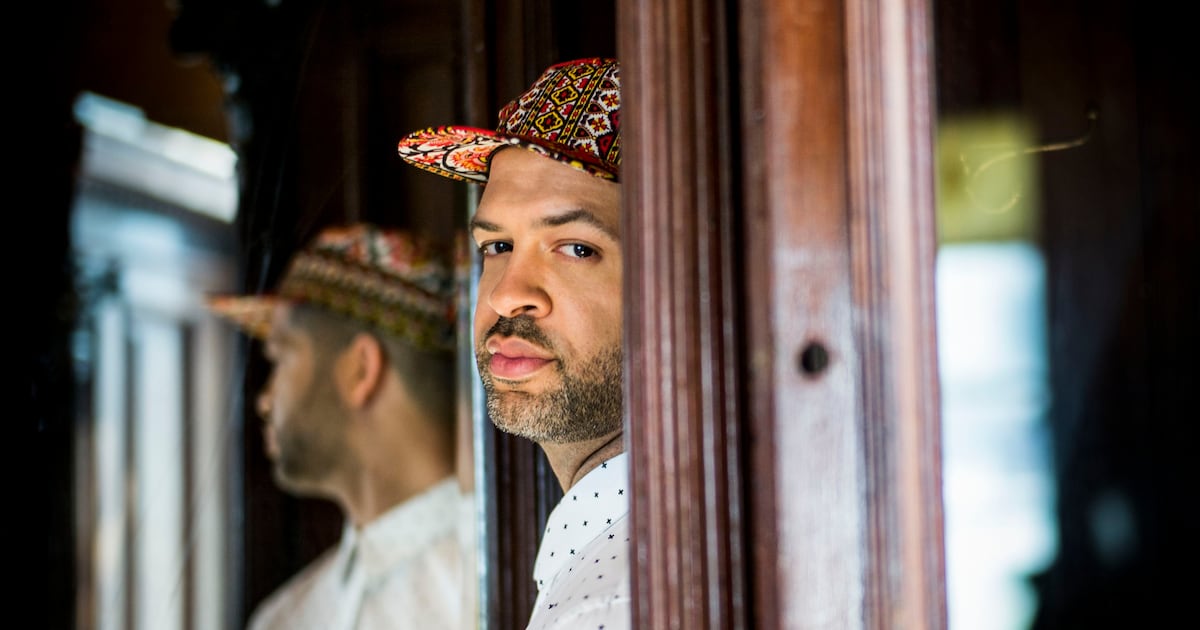
Jason Moran: ‘I have a lot of gratitude for Cork Jazz Festival. And I still have that wonderful crystal vase’
Full Article
Original Source
Read the full article at Irishtimes →KhanList aggregates and links to publicly available news content. We do not host full articles from third-party sources. Always verify important information with original sources.